


- Male
- 18 Years
- 07/02/2025
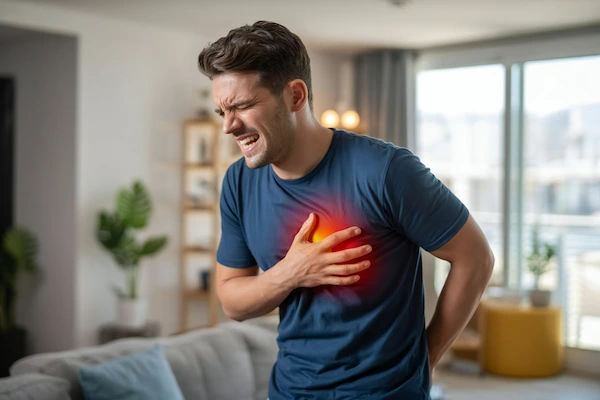
I think I might have angina because I'm experiencing chest pains. I also have high blood pressure and was born with a slight blockage. I'm just 18 and I'm not sure how to talk to my parents about this. Honestly, I'm scared to go to a hospital. If I manage to lower my blood pressure, do you think it'll help with these symptoms? This has been happening for the past two days and I'm pretty worried. Could you give me some advice on what to do?

Answered by 1 Apollo Doctors

It sounds like you may be experiencing symptoms of angina, especially given your history of high blood pressure and a slight blockage. Lowering your blood pressure may help alleviate some symptoms, but it is important to seek medical attention for a proper diagnosis and treatment plan. In the meantime, you can take aspirin to help with chest pain. Please take one low-dose aspirin (81mg) and chew it to help reduce the risk of a heart attack. Make sure to inform your parents about your symptoms and seek medical help as soon as possible.
Dr. Dhankecha Suggests...
Consult a Cardiologist
Answered 04/07/2025
0
0

More Cardiology Health Queries
View allI'm Sanjay, and I've been dealing with this small pin-point pain in my chest for the last two months. I saw a local doctor who suggested getting an ECG and blood tests. After the tests, he said my heart's fine and linked the pain to gastric issues. He prescribed Rablet D and Met XL. Could you have a look at my ECG and let me know if there's really no heart issue? I'm a non-smoker, non-drinker, weighing 59 kg, and I'm 158 cm tall. I've uploaded my ECG, blood test, and TMT 2D Echo reports. Can you help me figure this out?
As per your ECG report, there is no problem with your heart. The chest pain you are experiencing is likely due to gastric issues, as mentioned by your doctor. The medications prescribed to you are: - Rablet D (Dosage: 1 tablet before breakfast) - Met XL (Dosage: As prescribed by your doctor) Continue taking these medications as advised by your doctor. Additionally, you can try to avoid spicy and oily foods, eat smaller meals more frequently, and avoid lying down immediately after eating to help with your gastric symptoms. If the chest pain persists or worsens, please follow up with your doctor for further evaluation.


Answered by 1 Apollo Doctors
I've noticed that when I'm running, my heart rate is pretty slow at about 59 bpm, but when I'm just resting, it shoots up to somewhere between 80 to 90 bpm. Is that normal? It seems a bit odd to me and I'm starting to get worried. Could it mean something's up with my heart health?
A slow heart rate during exercise can sometimes be a sign of good cardiovascular fitness. However, if you are experiencing symptoms such as dizziness, lightheadedness, or chest pain, it's important to consult a healthcare professional. For a faster heart rate at rest, you may consider taking a beta-blocker medication like Metoprolol. The usual dosage for Metoprolol is 25-100mg once or twice daily, as prescribed by your doctor
Answered by 1 Apollo Doctors
Can my dad take Metloc and Telmisartan at the same time? I'm worried because he forgot to tell the doctor that he's already taking Telmisartan. Should I be concerned about any interactions or side effects from combining these medications?
Metoprolol is a beta-blocker and Telmisartan is an angiotensin II receptor blocker. They can be safely taken together to manage high blood pressure. The usual dosage of Metoprolol is 25-100mg twice daily, and Telmisartan is typically taken at a dosage of 40-80mg once daily.
Answered by 1 Apollo Doctors
Health Articles for you
View all


Disclaimer: Answers on Apollo 247 are not intended to replace your doctor advice. Always seek help of a professional doctor in case of an medical emergency or ailment.