


Blood Donation Facts What You Need to Know
Essential blood donation facts in one guide. Boost donor awareness, learn who can donate, what to expect, risks, benefits, and how to prepare.

Written by Dr. Siri Nallapu
Reviewed by Dr. Shaik Abdul Kalam MD (Physician)
Last updated on 13th Jan, 2026
Introduction
Donating blood saves lives every day, from people undergoing surgery or cancer treatment to trauma and childbirth emergencies. In this friendly guide, you’ll find clear, trustworthy answers to common questions, plus a simple text version of an infographic you can share to support donor awareness in your community. Whether it’s your first time or your fiftieth, understanding the process helps you feel confident and prepared.
Blood Donation Basics: What It Is And Why It Matters?
What Does Donating Blood Provide?
• Whole blood can be separated into components: red blood cells (RBCs), plasma, and platelets. This lets hospitals treat different medical needs with a single donation.
• Who benefits: patients with cancer, trauma, surgery, severe anemia, sickle cell disease, complications in pregnancy/childbirth, and more.
• Types of donation
• Whole blood: the most common; draws about 1 pint (approximately 470–500 mL).
• Platelets (apheresis): helpful for cancer care and surgeries; your platelets are collected and other components returned.
• Plasma (apheresis): often used for bleeding disorders and emergencies.
• Double red cells (apheresis): collects two units of RBCs while returning plasma and platelets.
• Blood types and compatibility
• Type O negative red cells are often used in emergencies because they’re compatible with most patients.
• AB plasma is considered universally compatible for plasma transfusions.
• Hospitals still prefer type-matched blood when time allows; all donations are valuable.
Who Can Donate? Eligibility At A Glance
Eligibility rules vary by country and collection center, so always check your local guidelines before you go. In general:
General Requirements
• Age: Many centers accept donors starting at age 17 (some 16 with parental consent). In other regions, eligibility commonly begins at 18. Upper age limits may apply depending on health.
• Weight: Many centers require at least 110 lb (50 kg).
• Health screening: A brief questionnaire and mini-physical (temperature, pulse, blood pressure, and a finger-stick hemoglobin check) ensure it’s safe for you to donate that day.
• Consent: You must be able to give informed consent; additional requirements may apply for minors.
Common Temporary Deferrals
• Recent illness: Colds, flu-like symptoms, or fever typically delay donation until you are fully recovered.
• Travel: Visits to regions with malaria or other infections may require a waiting period.
• Recent tattoos or piercings: Rules vary by location and whether a state-regulated facility performed the procedure; some centers require a short waiting period.
• Pregnancy and recent childbirth: Typically deferred during pregnancy and for a period after.
• Medications and procedures: Certain antibiotics, blood thinners, or recent surgeries can delay donation. Bring a list of your medications to your appointment.
• Low iron or low hemoglobin: You may be deferred until your levels recover.
Longer-Term Considerations
• Some chronic conditions, certain heart or lung diseases, or uncontrolled health issues may limit eligibility. Many stable conditions are compatible with donating, and speak with the donor center for individual guidance.
• Many countries now use individualized risk assessments for sexual behavior and other factors. If you have questions about your personal eligibility, ask your local center.
Consult a Top General Physician
How To Prepare For Blood Donation?
The Day Before
• Hydrate well, aim for water and other non-alcoholic fluids.
• Eat iron-rich, vitamin C–rich meals to support red blood cells (for example, beans, lean meats, leafy greens, fortified cereals, citrus fruits).
• Get a good night’s sleep.
The Day Of Your Appointment
• Have a balanced meal with protein and complex carbs; avoid heavy, fatty foods right before donating.
• Drink 16–24 oz (about 0.5–0.7 L) of water beforehand unless your clinician advises otherwise.
• Bring a photo ID and a medication list.
• Wear sleeves that roll up easily.
After You Donate
• Enjoy the snacks and fluids offered; continue hydrating for the next 24 hours.
• Keep the bandage on for several hours and avoid heavy lifting or high-intensity exercise for the rest of the day.
• If you feel lightheaded, sit or lie down and elevate your feet until the feeling passes.
• To support iron recovery, include iron-rich foods in your diet; frequent donors can ask a clinician about low-dose iron supplements.
What Happens During Donation?
1) Check-In And Registration
• You’ll provide ID and basic information. Staff review your health questionnaire.
2) Mini Health Check
• A quick screening measures temperature, pulse, blood pressure, and hemoglobin to confirm it’s safe to proceed.
3) The Draw
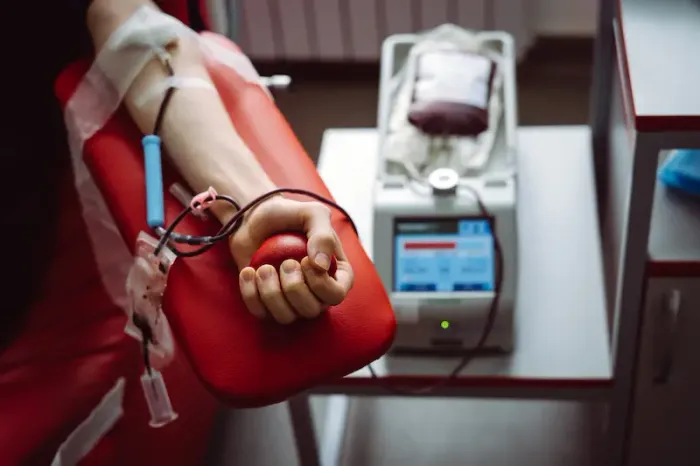
• A sterile, single-use needle is placed in a vein in your arm. Whole-blood collection usually takes about 8–10 minutes.
• Expect to donate about 1 pint (approximately 470–500 mL) for whole blood.
4) Refreshments And Recovery
• You’ll rest briefly and have a snack. Plan for 45–60 minutes total for a whole-blood visit, though times can vary.
5) After Donation
• Your donation is sent for testing and processing before being distributed to hospitals.
Safety, Risks, And Side Effects
Safety Measures
• Needles are sterile and single-use, so there’s no risk of infection from the donation needle.
• All donations are tested for certain transfusion-transmissible infections before use.
Common, Usually Mild Reactions
• Lightheadedness, dizziness, or fatigue: Hydrate, eat a snack, and rest if needed.
• Bruising or soreness at the needle site: Use a cool compress for the first day; switch to a warm compress later if sore.
Less Common Issues
• Fainting can occur, especially if you arrive dehydrated, haven’t eaten, or are anxious. Staff are trained to assist.
Iron Considerations
• Donating red cells removes iron. Occasional donors typically recover with a balanced diet. Frequent donors should discuss iron-rich foods and whether a short course of low-dose iron is appropriate with their clinician.
How Often Can You Donate?
Intervals Differ By Donation Type And Local Regulations:
• Whole blood: commonly every 8 weeks (56 days) in many U.S. centers.
• Platelets (apheresis): often every 7 days, up to a set number of times per year.
• Plasma (apheresis): often every 28 days (varies by center).
• Double red cells (apheresis): often about every 16 weeks (112 days).
• Always follow the schedule your donation center recommends.
Donor Awareness Tips: Spread The Word And Support Others
• Share your reason for donating: A short story can inspire friends and coworkers.
• Set reminders: Put your next eligible date on your calendar before you leave the center.
• Team up: Organize a workplace, school, or community blood drive with a local center’s help.
• Make it social: Post a photo (no needles shown) and a few facts, from this guide or the infographic, to encourage others.
• Be a reliable donor: If your schedule allows, commit to a regular cadence. Hospitals need steady supplies year-round.
Consult a Top General Physician
Consult a Top General Physician

Dr Aakash Andgi
General Physician/ Internal Medicine Specialist
9 Years • MBBS MD
Bengaluru
Apollo Clinic, JP nagar, Bengaluru

Dr. Swarna Deepak K
General Physician/ Internal Medicine Specialist
20 Years • MBBS: MD (Internal Medicine) MRCP (UK), EDIC (European Diploma in Critical Care), IDCCM, IFCCM (Critical Care), FID (Royal Liverpool Academy)
Hyderabad
Apollo Hospitals Jubilee Hills, Hyderabad

(450+ Patients)

Dr. Dhanraj K
General Physician/ Internal Medicine Specialist
25 Years • MBBS, MD Internal Medicine - Osmania Medical College, Hyderabad
Hyderabad
Apollo Hospitals Jubilee Hills, Hyderabad
(450+ Patients)

Dr. Meenakshi N
Family Physician
28 Years • MBBS DNB family medicine MPH FIMSA MNAMS
Noida
Apollo Hospitals Sector 26, Noida

Dr. Renu Saraogi
General Physician/ Internal Medicine Specialist
21 Years • MBBS, PGDFM
Bangalore
Apollo Clinic Bellandur, Bangalore
(275+ Patients)
Consult a Top General Physician
Dr Aakash Andgi
General Physician/ Internal Medicine Specialist
9 Years • MBBS MD
Bengaluru
Apollo Clinic, JP nagar, Bengaluru
Dr. Swarna Deepak K
General Physician/ Internal Medicine Specialist
20 Years • MBBS: MD (Internal Medicine) MRCP (UK), EDIC (European Diploma in Critical Care), IDCCM, IFCCM (Critical Care), FID (Royal Liverpool Academy)
Hyderabad
Apollo Hospitals Jubilee Hills, Hyderabad
(450+ Patients)
Dr. Dhanraj K
General Physician/ Internal Medicine Specialist
25 Years • MBBS, MD Internal Medicine - Osmania Medical College, Hyderabad
Hyderabad
Apollo Hospitals Jubilee Hills, Hyderabad
(450+ Patients)
Dr. Meenakshi N
Family Physician
28 Years • MBBS DNB family medicine MPH FIMSA MNAMS
Noida
Apollo Hospitals Sector 26, Noida
Dr. Renu Saraogi
General Physician/ Internal Medicine Specialist
21 Years • MBBS, PGDFM
Bangalore
Apollo Clinic Bellandur, Bangalore
(275+ Patients)
More articles from Anemia




Frequently Asked Questions
1. Does donating blood hurt?
You’ll feel a quick pinch when the needle goes in, then usually only mild pressure. Most donors are comfortable throughout.
2. Can I get an infection from donating?
No. Centers use sterile, single-use needles and strict protocols. Your blood is also tested for certain infections before it’s used.
3. What should I eat and drink before and after?
Before: a balanced meal with protein and complex carbs; drink water. After: keep hydrating and have a snack. Include iron-rich foods (beans, lentils, leafy greens, lean meats, fortified cereals) and vitamin C sources to support recovery.
4. How long does my body take to replace what I donated?
Your body replaces plasma volume within about a day and red blood cells over several weeks. That’s why centers set waiting periods between donations.
5. Can I donate if I have a cold, take medications, or have recently gotten a tattoo?
You’ll likely be asked to wait until you feel well after a cold. Some medications and recent procedures (including tattoos/piercings) may require a short deferral. Rules vary; bring your medication list and ask your local center.