


Laparoscopic Hysterectomy Vs C Section Recovery
Compare recovery after laparoscopic hysterectomy vs C-section. Understand differences in healing time, pain levels, and aftercare for better post-surgery planning.

Written by Dr. Rohinipriyanka Pondugula
Reviewed by Dr. Md Yusuf Shareef MBBS, Advanced Certificate Course in Dermatology
Last updated on 13th Jan, 2026
Introduction
If you're considering a laparoscopic hysterectomy or have recently had a C-section, understanding the recovery process can help you prepare and heal better. Both procedures involve abdominal surgery but differ in purpose, technique, and recovery. This article will guide you through the key differences, what to expect, and tips for a smoother recovery.
Understanding the Procedures
1. Laparoscopic Hysterectomy
A hysterectomy is the surgical removal of the uterus, and a laparoscopic hysterectomy is a minimally invasive approach. Instead of a large incision, the surgeon makes small cuts in the abdomen and uses a tiny camera (laparoscope) and specialised tools to remove the uterus.
Why is it done?
Uterine fibroids
Endometriosis
Chronic pelvic pain
Abnormal uterine bleeding
Gynecologic cancers
2. Cesarean Section (C-Section)
A C-section is a surgical procedure to deliver a baby through an incision in the abdomen and uterus. It can be planned (elective) or done in emergencies when vaginal delivery isn’t safe.
Why is it done?
Baby in breech position
Placenta previa
Fetal distress
Multiple pregnancies
Previous C-section
Recovery Comparison
Here’s the comparison between hysterectomy and C-section surgery:
1. Hospital Stay
Laparoscopic Hysterectomy: Usually 1-2 days in the hospital.
C-Section: Typically 2-4 days, depending on complications.
2. Pain & Discomfort
Laparoscopic Hysterectomy: Less pain due to smaller incisions, but some cramping and bloating may occur.
C-Section: More post-operative pain due to a larger incision. Pain may persist for weeks, especially with movement.
3. Physical Activity & Restrictions
A. Laparoscopic Hysterectomy:
Light walking is encouraged immediately.
Avoid heavy lifting (over 10 lbs) for 4-6 weeks.
No strenuous exercise or sex for 6 weeks.
B. C-Section:
Walking is encouraged to prevent blood clots.
Avoid lifting anything heavier than the baby for 6-8 weeks.
No driving for 2-3 weeks (until pain subsides).
4. Scarring
Laparoscopic Hysterectomy: Small scars (usually 3-4 tiny marks).
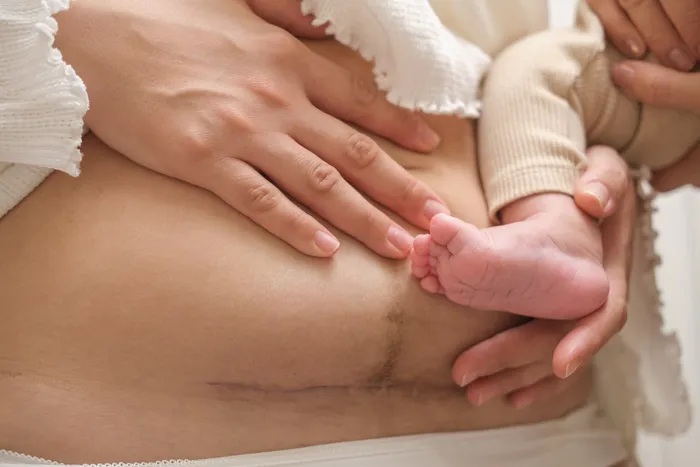
C-Section: A horizontal scar (about 4-6 inches) near the bikini line.
5. Emotional & Hormonal Changes
Laparoscopic Hysterectomy: If ovaries are removed, menopause symptoms (hot flashes, mood swings) may start.
C-Section: Postpartum hormonal changes (baby blues, fatigue) are common.
Consult Top Specialists for Personalised Tips
Tips for a Smooth Recovery
Some of the tips for a smooth recovery are:
1. For Laparoscopic Hysterectomy
Rest but stay mobile: Gentle walks prevent blood clots.
Manage pain: Take prescribed medications as directed.
Hydrate & eat fibre-rich foods: Prevents constipation from anesthesia.
Avoid bending or twisting: Strains the healing incisions.
Follow up with your doctor: Ensure proper healing.
2. For C-Section Recovery
Support your incision: Hold a pillow against it when coughing or laughing.
Use a belly binder: Provides support and reduces pain.
Breastfeeding positions: Try side-lying or football hold to avoid pressure on the incision.
Watch for infection signs: Redness, swelling, or pus at the incision site.
Ask for help: Avoid overexertion; let others assist with chores.
When to Seek Medical Help?
Contact your doctor if you experience:
High fever (over 100.4°F)
Severe pain not relieved by medication
Heavy bleeding or foul-smelling discharge
Redness, swelling, or pus at the incision site
Difficulty breathing or chest pain
Conclusion
Recovery from laparoscopic hysterectomy is generally quicker than a C-section, but both require patience and self-care. Listen to your body, follow medical advice, and don’t rush the healing process. If you're considering a hysterectomy or have concerns about C-section recovery, Apollo 24|7 offers expert consultations and post-operative care. Book an appointment today for personalised guidance!
Consult Top Obstetrics and Gynaecology Surgeon
Consult Top Specialists for Personalised Tips

Dr Chanda Chowdhury
Obstetrician and Gynaecologist
23 Years • MBBS, DNB (Obstetrics & Gynaecology)
Kolkata
Apollo Multispeciality Hospitals , Kolkata, Kolkata

(200+ Patients)

Dr. Mona Yadav
Obstetrician and Gynaecologist
19 Years • MBBS, MD (Obstetrics & Gynaecology)
Dombivli
Nulife multispeciality, Dombivli

Dr. Parul Sharma
Obstetrician and Gynaecologist
8 Years • MBBS, MS (Obstetrics & Gynaecology)
New Delhi
THE DOCTORS NESST, New Delhi

Dr. Aanchal Agarwal
Obstetrician and Gynaecologist
9 Years • MBBS, MS, DNB,( Fellowship in Obst. Gynae. ultrasound )
Kolkata
Sanjeewan clinic, Kolkata

Dr. Debajyoti Goswami
Obstetrician and Gynaecologist
10 Years • MBBS,D.G.O(DNB),Adv. Infertility Tech.(AIIMS, Delhi),Fellowship in Diabetes(U.K),Comprehensive Abortion Care(Govt. Of W.B), Certificate in Clinical Embryology(AIIMS, BHUBANESWAR)
Bankura
D.G Clinic, Bankura
(25+ Patients)
Consult Top Obstetrics and Gynaecology Surgeon
Dr Chanda Chowdhury
Obstetrician and Gynaecologist
23 Years • MBBS, DNB (Obstetrics & Gynaecology)
Kolkata
Apollo Multispeciality Hospitals , Kolkata, Kolkata
(200+ Patients)
Dr. Mona Yadav
Obstetrician and Gynaecologist
19 Years • MBBS, MD (Obstetrics & Gynaecology)
Dombivli
Nulife multispeciality, Dombivli
Dr. Parul Sharma
Obstetrician and Gynaecologist
8 Years • MBBS, MS (Obstetrics & Gynaecology)
New Delhi
THE DOCTORS NESST, New Delhi
Dr. Aanchal Agarwal
Obstetrician and Gynaecologist
9 Years • MBBS, MS, DNB,( Fellowship in Obst. Gynae. ultrasound )
Kolkata
Sanjeewan clinic, Kolkata
Dr. Debajyoti Goswami
Obstetrician and Gynaecologist
10 Years • MBBS,D.G.O(DNB),Adv. Infertility Tech.(AIIMS, Delhi),Fellowship in Diabetes(U.K),Comprehensive Abortion Care(Govt. Of W.B), Certificate in Clinical Embryology(AIIMS, BHUBANESWAR)
Bankura
D.G Clinic, Bankura
(25+ Patients)


.webp)