


Ghee: Health Benefits, Uses, and Daily Consumption Tips
Discover ghee benefits and how this ayurvedic fat fits into a healthy diet. Get safe daily intake tips, cooking ideas, FAQs, and trusted medical references.

Introduction
Ghee—clarified butter long cherished in Indian and South Asian cooking—has recently risen to global popularity. Its rich, toasted aroma and impressive heat tolerance have earned it a devoted following among both home cooks and culinary professionals. At the same time, you’ll encounter a variety of claims about ghee’s nutritional value and its place in traditional wellness systems. Understanding the difference between culinary tradition, cultural context, and evidence-based nutrition can help you decide how ghee fits into your lifestyle.
This guide explains what ghee is, how it compares with other fats, its advantages and limitations, and how to use it sensibly within a balanced, heart-friendly diet. You’ll find clear, trustworthy explanations of its benefits, cautions, and practical daily recommendations so you can enjoy its flavour without compromising your health goals.
Consult a Top Nutritionist for Personalised Advice
What Is Ghee? The Classic Ayurvedic Fat
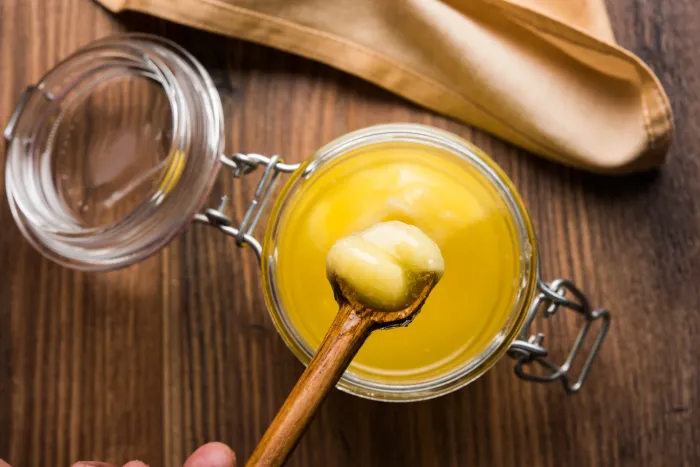
Ghee is produced by gently heating butter to remove moisture and milk solids, leaving behind a concentrated golden fat with a nutty, aromatic character. Its long shelf life, versatility, and distinctive taste make it a treasured ingredient in countless households.
Culinary heritage
• Used across South Asia as an everyday cooking fat
• Favoured for sautéing, frying, and finishing dishes
• Valued for its ability to deepen flavour in savoury and sweet recipes
Traditional context
• In Ayurveda, viewed as a nourishing fat and carrier for herbs
• Used historically in rituals, medicinal preparations, and daily meals
• Cultural significance remains strong even as modern nutrition focuses on overall diet quality
Taste and texture
• Delivers a toasty, buttery richness
• Adds depth without needing large quantities
• Enhances grains, legumes, vegetables, and desserts
Ghee Benefits: What the Science Says
Ghee certainly has practical advantages, particularly in cooking. Yet its high saturated fat content means mindful intake is important for most people.
Cooking and kitchen advantages
• High smoke point, making it less prone to burning than butter
• Shelf stable due to removal of water and milk solids
• Concentrated flavour, meaning small amounts offer a strong culinary impact
Nutrition notes
• Fat-soluble vitamins A, E, and K are present in modest amounts
• Minimal lactose and casein, as most milk solids are removed
• Calorie-dense, meaning portion size is key for weight-conscious diets
Heart health considerations
• High in saturated fat, which can raise LDL cholesterol
• Health guidance encourages limiting saturated fat intake
• Replacing some saturated fats with unsaturated fats supports heart health
• Most people benefit from using ghee sparingly within broader dietary patterns rich in plant-based foods
How Much Ghee Per Day? Practical, Safe Guidelines
Your ideal daily amount depends on your overall eating habits and health targets. Nutrition guidelines recommend keeping saturated fat below 10% of total daily calories. On a 2,000-calorie diet, this equates to roughly 22 grams of saturated fat.
Practical implications
• Ghee contains about 9 grams of saturated fat per tablespoon
• Concentrated nature means smaller portions deliver strong flavour
• Using 1–2 teaspoons per day is a balanced approach for many people
• Individuals with high LDL cholesterol, diabetes, or cardiovascular concerns may require stricter limits based on medical advice
How to Use Ghee in Healthy Cooking
With thoughtful use, ghee can add richness and complexity to meals without overwhelming them with saturated fat.
Smart ways to add ghee
• Finish cooked lentils, grains, or vegetables with a teaspoon for silkiness
• Bloom spices in a small amount to build aromatic foundations
• Use sparingly in weekend breakfasts or traditional dishes for a flavourful touch
When to choose other oils
• For everyday sautéing, olive, canola, and avocado oils are preferable
• Salad dressings benefit from unsaturated oils with pleasant raw flavour profiles
• Baking often accumulates saturated fat quickly, so moderation matters when using butter or ghee
Storage and kitchen safety
• Store in an airtight jar away from moisture, heat, and light
• Use dry utensils to prevent spoilage
• Avoid reheating the same batch repeatedly; discard leftover cooking fat
Who Should Limit or Avoid Ghee?
Some individuals benefit from stricter caution regarding ghee intake.
Recommended limits
• Those advised to reduce saturated fat due to cholesterol concerns
• Anyone with cardiovascular risk factors
• People following fat-restricted eating plans under clinical supervision
Avoid entirely
• Individuals with milk allergies due to possible traces of milk proteins
• People with certain digestive conditions, unless guided otherwise by a clinician
Ghee vs. Other Fats: A Quick Comparison
A quick comparison includes:
Ghee vs. butter
• Similar sources and saturated fat levels
• Ghee is more concentrated and has a higher smoke point
• Butter contains milk solids and water, making it more prone to burning
Ghee vs. olive and canola oil
• Plant oils are richer in heart-friendly unsaturated fats
• Associated with improved cholesterol balance
• Better suited for daily cooking and dressings
• Ghee works best as a flavour enhancer rather than a primary cooking fat
Ghee vs. coconut oil
• Both are high in saturated fat
• Most people benefit from moderating both
• Unsaturated oils, nuts, seeds, and fish provide more cardio-protective options
Ayurveda and Ghee: Tradition vs. Evidence
Ghee’s role in Ayurveda spans nourishment, ritual, and the preparation of herbal formulations. Its cultural importance remains deeply valued. Modern nutrition, however, focuses on measurable outcomes related to fat quality and heart health. In this context, ghee is best appreciated as a flavourful cooking fat used in moderation. While traditional perspectives are meaningful, current scientific evidence does not support claims that ghee treats diseases or produces unique therapeutic effects. Balancing cultural practices with contemporary health guidance ensures you can enjoy ghee responsibly.
Simple Daily Game Plan
A simple game plan includes:
• Use unsaturated oils as primary cooking fats
• Add small amounts of ghee to enhance flavour, not to dominate meals
• Build meals around vegetables, fruits, legumes, whole grains, and lean proteins
• Keep saturated fat within recommended limits
• Seek individual guidance if you have elevated cardiovascular risk markers
Conclusion
Ghee is a flavorful, traditional ayurvedic fat with some practical kitchen advantages. Use it to enhance taste in small amounts, but let unsaturated oils and whole foods carry your diet. That balance helps you enjoy ghee benefits while aligning with evidence-based heart health guidance. If you have specific medical concerns or cholesterol goals, check in with your healthcare professional for personalised advice.
Consult a Top Nutritionist for Personalised Advice
Consult a Top Nutritionist for Personalised Advice

Dr Sumanth R
General Physician
2 Years • MBBS
Bengaluru
PRESTIGE SHANTHINIKETAN - SOCIETY CLINIC, Bengaluru

Dt. Ila Sharma
Clinical Nutritionist
18 Years • Master in food & Nutrition
Gurugram
VIPUL GREENS - SOCIETY CLINIC, Gurugram

Dr. Ramalinga Reddy
General Physician
5 Years • MBBS MD General medicine
Bengaluru
PRESTIGE SHANTHINIKETAN - SOCIETY CLINIC, Bengaluru

Ms. Bhavana Shetty
Dietician
7 Years • DDHN & Masters in Clinical Nutrition & Dietetics
Bangalore
Apollo Sugar Clinic, Seetha circle bangalore, Bangalore
Ms. Lakshmi Tejasvi
Clinical Nutritionist
14 Years • M.Sc - Clinical Nutrition
Hyderabad
Vibgyor Nutri, Hyderabad
Consult a Top Nutritionist for Personalised Advice
Dr Sumanth R
General Physician
2 Years • MBBS
Bengaluru
PRESTIGE SHANTHINIKETAN - SOCIETY CLINIC, Bengaluru
Dt. Ila Sharma
Clinical Nutritionist
18 Years • Master in food & Nutrition
Gurugram
VIPUL GREENS - SOCIETY CLINIC, Gurugram
Dr. Ramalinga Reddy
General Physician
5 Years • MBBS MD General medicine
Bengaluru
PRESTIGE SHANTHINIKETAN - SOCIETY CLINIC, Bengaluru
Ms. Bhavana Shetty
Dietician
7 Years • DDHN & Masters in Clinical Nutrition & Dietetics
Bangalore
Apollo Sugar Clinic, Seetha circle bangalore, Bangalore
Ms. Lakshmi Tejasvi
Clinical Nutritionist
14 Years • M.Sc - Clinical Nutrition
Hyderabad
Vibgyor Nutri, Hyderabad
More articles from General Medical Consultation
_0.webp)

Frequently Asked Questions
1) Is ghee healthy?
Ghee can be part of a wholesome diet when used in small portions. It contributes an appealing flavour and withstands high heat well. Because it’s rich in saturated fat, many people benefit from using it sparingly while relying more on unsaturated oils for most meals.
2) What are the top ghee benefits?
Its key advantages include heat stability, rich taste, and low lactose and casein compared with butter. Although it contains vitamins A, E, and K, these do not outweigh the importance of moderating saturated fat.
3) Can people with lactose intolerance use ghee?
Most people with lactose intolerance tolerate ghee because the milk solids are removed during preparation. Those with milk allergies, however, should avoid ghee entirely due to potential trace proteins.
4) How much ghee can I eat per day?
Keeping saturated fat under 10% of total daily calories is a sensible guideline. For many, 1–2 teaspoons of ghee per day fits this framework when the rest of the diet emphasises unsaturated fats. Anyone with heart-related conditions should personalise this with medical guidance.
5) Does ghee help with weight loss?
No single fat actively promotes weight loss. Ghee is energy-dense, so mindful use is key. Sustainable weight management comes from balanced eating patterns, activity, and portion control rather than relying on any specific fat.