


Mandukasana Health Benefits & How to Do It
Discover Mandukasana benefits, how to do Frog pose yoga safely, and how it fits into digestive yoga. Get tips, FAQs, and trusted health references.

Written by Dr. Mohammed Kamran
Reviewed by Dr. Shaik Abdul Kalam MD (Physician)
Last updated on 14th Jan, 2026
Introduction
Tight hips from long hours of sitting? Looking for a calming stretch that might also ease digestive discomfort from stress? Mandukasana, often called Frog pose yoga, is a gentle but powerful hip-opening posture used in many classes. People often ask about Mandukasana benefits and whether it belongs in a digestive yoga routine. This guide explains what the pose is, how to do it safely, who should be cautious, and how it may support mobility and relaxation.
Consult a Top General Practitioner for Personalised Advice
What Is Mandukasana (Frog Pose)?
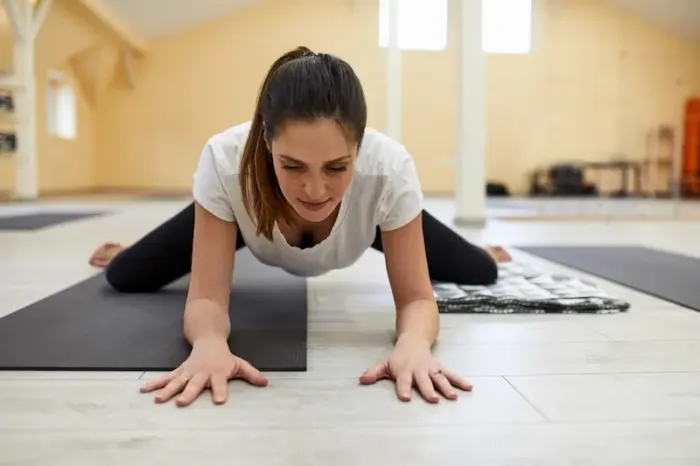
In most modern yoga classes, Mandukasana (Frog pose) is a wide-knee, floor-based hip opener. You start on hands and knees and slide your knees apart, with shins roughly parallel to the sides of your mat. You then lower to your forearms and breathe as your inner thighs (adductors) gently stretch.
Note: In some traditions, “Frog pose” may refer to a different posture (Bhekasana), a prone quad stretch. This article focuses on the hip-opening version commonly taught as Frog pose yoga.
Mandukasana Benefits: Why It Matters
Everybody is different and unique in their own way, and experiences vary. Still, the following potential benefits are commonly discussed by clinicians and yoga educators, and align with what major health organisations say about stretching, gentle movement, and stress reduction:
1. Hip mobility and inner-thigh flexibility: Frog pose targets the adductors (inner thigh muscles), which can tighten from prolonged sitting. Improving flexibility can support everyday movements like squatting, walking, or getting up from the floor.
2. Lower back comfort (indirect): Tight hips can contribute to low back discomfort for some people. Gentle hip-openers may reduce overall tension and support comfortable movement. Yoga in general has been studied for back pain management and flexibility.
3. Posture relief: Counteracts the stiffness that builds up from desk work, driving, or standing for long periods.
4. Stress relief and relaxation: Slow breathing in supported floor poses can calm the nervous system. Mind-body practices like yoga are often used to manage stress, which may improve overall well-being.
5. Digestive support (via stress management): Stress can influence digestive symptoms. Practices that activate relaxation, such as slow, steady breathing, may help some people feel more comfortable. Mandukasana can be a soothing addition to “digestive yoga” routines, especially when paired with breathwork. It’s not a cure for digestive conditions, but it may help with day-to-day comfort.
How to Do Mandukasana (Frog Pose) Safely: Step-by-Step
Before you start, follow the step-by-step procedure:
Warm up lightly (e.g., a short walk or a few minutes of gentle cat–cow, lunges, or dynamic hip openers).
Gather props: two folded blankets or towels for under your knees, and yoga blocks for your forearms if needed.
Step-by-step
1) Set up on all fours (tabletop)
• Place hands under shoulders and knees under hips.
• Put a folded blanket under each knee for cushioning.
2) Slide into the pose
• Slowly widen your knees apart to a mild stretch in your inner thighs.
• Turn your shins so they’re roughly parallel to the sides of your mat, ankles in line with knees. Keep feet and ankles comfortably engaged (a light flex) to protect your knees.
3) Lower down and align
• Lower to your forearms. Place blocks under your forearms if the floor feels far away.
• Keep your hips roughly in line with your knees rather than sinking forward.
4) Find gentle engagement
• Lightly engage your lower belly to support your spine.
• Press your outer knees gently down and away as you lengthen through your spine.
5) Breathe and hold
• Take slow, even breaths—try exhaling slightly longer than you inhale.
• Hold 20–60 seconds at first. Over time, work up to 1–2 minutes if it feels comfortable.
6) To come out
• Press your hands into the floor, draw your knees toward each other, and return to the tabletop.
• Move your hips in a small circle or sit back into Child’s Pose for a few breaths.
Beginner-Friendly Modifications
1. Extra padding: Place soft blankets under your knees and ankles.
2. Blocks for support: Rest your forearms on blocks or a bolster under your chest to keep your spine long.
3. Gentle range: Keep your knees closer together; a mild stretch is effective and safer than forcing a deep position.
4. Dynamic frog: Gently rock your hips forward and back with small movements to explore sensation without holding a deep static stretch.
5. Alternative shapes: Reclined Bound Angle (lying on your back with the soles of the feet together) can be a gentler inner-thigh opener on days you need less intensity.
Common Mistakes to Avoid
1. Forcing the knees too wide too soon.
2. Letting feet drift toward each other (can twist the knees). Keep ankles roughly in line with knees.
3. Collapsing into the lower back, keep a neutral spine with gentle core support.
4. Holding your breath. Smooth breathing helps your body release tension.
5. Pushing through pain or sharp sensations. Back off to a mild, stretchy feeling only.
Who Should Be Cautious or Avoid the Pose
Be cautious or avoid the pose if:
1. Current or recent knee, hip, or groin injury (including meniscus issues, MCL/inner knee pain, groin strains).
2. Recent hip or knee surgery.
3. Significant hypermobility—avoid end-range forcing; focus on control.
4. Pregnancy: Wide-knee positions can be fine for some with props and guidance, but always check with your clinician and a qualified prenatal instructor for modifications.
If any condition causes pain or instability, skip the pose and consult a healthcare professional or experienced instructor.
How Mandukasana Fits into a Digestive Yoga Routine?
“Digestive yoga” often focuses on calming the nervous system, gentle twisting or bending, and relaxed breathing. While Mandukasana does not “treat” digestive diseases, it can support:
1. Relaxation: Slow exhalations can help activate the body’s rest-and-digest response.
2. Comfortable breathing: Belly and diaphragmatic breathing in supported poses may ease tension in the abdomen.
3. Stress management: Since stress can aggravate digestive symptoms in some people, yoga practices that reduce stress may help with day-to-day comfort.
Try this short sequence:
1) 2–3 minutes of relaxed belly breathing or box breathing.
2) Cat–Cow for 6–8 rounds to warm the spine.
3) Gentle low lunge (each side) to open hip flexors.
4) Mandukasana (Frog pose) for 30–60 seconds, 1–2 rounds.
5) Reclined twists (each side) for 3–5 breaths.
6) Legs up the wall for 3–5 minutes to finish.
Tip: Keep your effort at a “5 out of 10” or less; softer practices often feel better for the belly.
How Often and How Long to Practice?
The frequency and duration of mandukasna include:
1. Frequency: 2–4 times per week is reasonable for most people.
2. Duration: Start with 20–30 seconds; build up to 1–2 minutes if comfortable.
3. Intensity: Gentle stretch only; no sharpness, numbness, or joint pain.
Evidence-Based Context: What Health Organisations Say?
The opinions and views of various health organisations are:
1. Yoga and gentle stretching can improve flexibility, strength, balance, and stress management, all of which support overall health.
2. World Health Organisation and CDC guidelines encourage regular physical activity. Yoga can be part of a weekly routine that includes aerobic activity and muscle-strengthening.
3. Major medical centres note yoga’s role in managing stress and helping some people with back discomfort and overall well-being.
4. Harvard Health has discussed the gut–brain connection, how stress can worsen digestive symptoms, supporting the idea that relaxation practices may help symptom management.
While these organisations do not single out Frog pose specifically, their guidance supports including safe, mindful stretching and yoga in a holistic wellness plan.
Safety Tips to Protect Your Knees and Hips
The safety tips to protect include:
• Always pad your knees.
• Keep knees and ankles in line; avoid twisting the knee joint.
• Stay in a pain-free range. You should feel a stretch in the inner thighs, not pain in the knees or hips.
• Warm up first, then cool down after.
• If you have knee sensitivity, try a narrower stance or choose a different inner-thigh stretch recommended by a professional.
Simple Breathing to Pair with Frog Pose
1. 4–6 breath: Inhale through the nose for 4 counts, exhale for 6 counts. Repeat 6–10 rounds.
2. Belly breathing: Let your belly gently expand on inhale and soften on exhale, avoiding force.
Both techniques can enhance the relaxing effects many people seek from Mandukasana benefits and digestive yoga practices.
Where Mandukasana Belongs in Your Workout or Yoga Flow?
Mandukasna can be done with other relaxation techniques, which include:
1. After a gentle warm-up, before deeper hip stretches or lower-body strength work.
2. As a recovery pose on rest days to maintain mobility.
3. Near the end of a yoga session, to downshift your nervous system.
Remember: Consistency, not intensity, creates progress. Short, regular sessions beat occasional “max out” stretches.
Key Takeaways
1. Mandukasana benefits include improved hip mobility, inner-thigh flexibility, and relaxation, making it a helpful addition to many routines.
2. It can fit into a digestive yoga approach by supporting stress relief and comfortable breathing.
3. Protect your knees with padding, alignment, and a gentle range of motion.
4. If you have any medical concerns, check with a healthcare professional before starting new exercises.
Consult a Top General Practitioner for Personalised Advice
Consult a Top General Practitioner for Personalised Advice

Dr. Anand Ravi
General Physician
2 Years • MBBS, FEM
Bengaluru
PRESTIGE SHANTHINIKETAN - SOCIETY CLINIC, Bengaluru

Dr. Vivek D
General Physician
4 Years • MBBS
Bengaluru
PRESTIGE SHANTHINIKETAN - SOCIETY CLINIC, Bengaluru

Dr. Gunashree V L
General Physician/ Internal Medicine Specialist
3 Years • MBBS
Bengaluru
Apollo Clinic, JP nagar, Bengaluru

Dr Syed Mateen Pasha
General Physician
2 Years • MBBS
Bengaluru
PRESTIGE SHANTHINIKETAN - SOCIETY CLINIC, Bengaluru

Dr Suseela
General Physician
5 Years • MBBS
Bengaluru
Apollo Medical Center, Marathahalli, Bengaluru
Consult a Top General Practitioner for Personalised Advice
Dr. Anand Ravi
General Physician
2 Years • MBBS, FEM
Bengaluru
PRESTIGE SHANTHINIKETAN - SOCIETY CLINIC, Bengaluru
Dr. Vivek D
General Physician
4 Years • MBBS
Bengaluru
PRESTIGE SHANTHINIKETAN - SOCIETY CLINIC, Bengaluru
Dr. Gunashree V L
General Physician/ Internal Medicine Specialist
3 Years • MBBS
Bengaluru
Apollo Clinic, JP nagar, Bengaluru
Dr Syed Mateen Pasha
General Physician
2 Years • MBBS
Bengaluru
PRESTIGE SHANTHINIKETAN - SOCIETY CLINIC, Bengaluru
Dr Suseela
General Physician
5 Years • MBBS
Bengaluru
Apollo Medical Center, Marathahalli, Bengaluru
More articles from General Medical Consultation
.webp)


Frequently Asked Questions
1) What muscles does Mandukasana (Frog pose) stretch?
Primarily the inner thighs (adductors), including muscles like adductor longus and magnus. You may also feel a stretch around the hips and groin. Keep the sensation gentle and avoid knee discomfort.
2) Is the Frog pose yoga good for digestion?
It can be part of a digestive yoga routine by promoting relaxation and slow breathing, which may help with day-to-day comfort. It’s not a treatment for medical digestive conditions. If you have ongoing symptoms, speak with your healthcare provider.
3) How long should I hold Mandukasana?
Start with 20–30 seconds and see how your body responds. Over time, 1 to 2 minutes can be helpful for many people, provided there’s no pain. Breathe steadily and come out slowly.
4) I have sensitive knees. Can I still try it?
Possibly with caution. Use thick padding under your knees, keep your ankles in line with knees, and reduce the width of your stance. If you feel knee pain, skip the pose and consult a professional for alternatives.
5) What’s the difference between Mandukasana and Bhekasana?
Both are sometimes called “Frog pose,” but they’re different:
1. Mandukasana (covered here): A hip and inner-thigh opener on hands/forearms and knees.
2. Bhekasana: A prone (face-down) backbend and quad stretch where you reach for your feet.
Make sure your instructor clarifies which one you’re practising.