


Neem Juice: Health Benefits, Uses, and Possible Side Effects
Discover neem juice benefits, neem uses, side effects, and safety. Evidence-based guide to how to use neem, who should avoid it, and FAQs.

Introduction
Neem (Azadirachta indica) has been valued in traditional medicine systems, especially Ayurveda centuries. It has been used for skin conditions, oral hygiene, scalp care, wound support, and even insect control. Recently, neem juice has become trendy as a “detox drink” or immune booster. Many wellness communities promote it as a cure-all, but the real question is:
1. What does science actually say about drinking neem juice?
2. Are the neem benefits proven through research, or mostly traditional belief?
3. How safe is neem juice, and who should avoid it completely?
This expanded guide looks at what is known today: the benefits supported by studies, where evidence is weak, how people commonly use neem, side effects, interactions, and safe-use tips. The purpose is to be balanced—not to hype neem as a miracle supplement or discourage thoughtful use.
Important: Neem can affect people differently. This article is for general education and does not replace professional medical advice.
What Is Neem Juice?
Neem is a tropical evergreen tree native to India and several Asian countries. The leaves, bark, seeds, and oil are used for different health-related purposes.
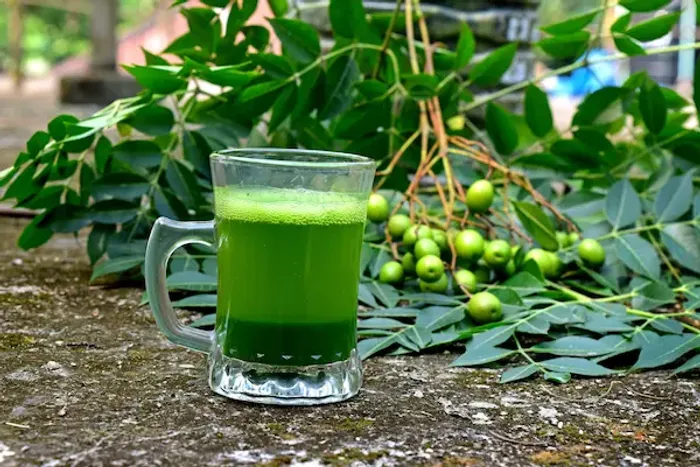
Neem juice typically means a liquid extract made from fresh neem leaves, or a diluted concentrate sold commercially. It may be marketed as a drink for skin clarity, digestion, blood sugar balance, or body “detox.”
Key things to know:
- Not all neem products are the same. Strength and concentration vary widely between brands.
- Neem juice and neem oil are completely different. Neem oil should never be ingested. It has been linked to serious poisoning, especially in children.
- There is no globally recognised safe dosage for neem juice.
Many people believe that if a herb is natural, it must be harmless. Neem shows that “natural” and “safe” are not always the same—especially when taken internally.
Consult a Top Ayurveda Doctor for Personalised Advice
Possible Benefits of Neem Juice (What Research Suggests)
Research on neem juice for internal consumption is limited, but neem leaves and leaf extracts have been studied in several areas.
The most promising evidence today is related to oral hygiene and antimicrobial benefits. For other uses, results are preliminary or limited to animal or lab studies. Possible benefits include:
1. May Support Oral Health (Most Supported Benefit)
- Neem extracts have demonstrated antibacterial activity against plaque-causing microbes.
- Some small clinical studies found that neem-based mouthwash can help reduce plaque and gingivitis when used along with regular brushing.
Practical takeaway:
If you are seeking dental benefits, neem toothpaste or mouthwash may be more effective and safer than drinking neem juice.
2. Skin Health (Mainly Topical, Not Juice)
Neem has traditionally been used for acne, redness, or irritated skin because:
- Neem leaf extracts have shown anti-inflammatory effects in lab tests.
- Antimicrobial activity may help reduce acne-causing bacteria.
- However, drinking neem juice has not been proven to clear acne or eczema.
Better approach:
For skin benefits, topical neem (creams, diluted neem oil, face packs) is more relevant.
3. Possible Blood Sugar Effects (Requires Caution)
Some small studies and animal data suggest neem may influence blood sugar levels.
That does not mean neem juice treats diabetes.
If you take diabetes medication:
Neem may cause blood sugar to drop too low. You should only use neem with clinician's guidance.
4. General Antimicrobial and Anti-Inflammatory Properties
Lab studies show neem can:
- Block the growth of certain bacteria, fungi, and parasites
- Show antioxidant and inflammation-modulating activity
- Lab studies are promising, but do not prove that neem juice cures infections or chronic inflammation in humans.
Bottom line on benefits:
- Benefits are plausible but not strongly proven, especially for internal use.
- Claims like “neem detoxifies the blood” or “neem cures disease” are not supported by clinical research.
How Neem Is Used: Traditional vs Modern
Traditional versus modern uses include:
Traditional Uses (Ayurveda)
- Chewing fresh neem twigs for dental hygiene
- Applying neem paste/oil to acne, small cuts, or eczema
- Using neem oil for scalp issues
- Using neem leaves as a natural pesticide or insect repellent
Modern Uses (Supplements & Commercial Products)
- Neem toothpaste and mouthwash
- Topical neem creams or diluted neem oil
- Neem capsules, powders, or juice are marketed as supplements
What’s important:
- Traditional use does not guarantee modern safety.
- Supplement companies often use terms like “detox” without explaining what that means medically.
Safety, Side Effects, and Who Should Avoid Neem Juice
Neem products vary from mild to potentially harmful. Side effects depend on the form, dose, duration, and the person’s health status. It includes:
Possible Side Effects (Internal Use)
Some people may experience:
- Nausea, stomach pain, or diarrhoea
- Headache or dizziness
- Drowsiness
- Low blood sugar (especially if diabetic)
- Allergic reactions (rashes, itching)
Serious Risks (Less Common but Important)
- Neem oil ingestion is dangerous and can cause seizures, metabolic issues, and even coma.
Children are especially vulnerable.
Rare but real reports of acute liver injury from neem leaf extracts or teas exist. Symptoms include:
- Yellowing of eyes or skin
- Dark urine
- Severe fatigue
If these appear, stop neem immediately and seek care.
Who Should Avoid Neem Juice?
- Children and teenagers
- Pregnant individuals
- Breastfeeding individuals
- Anyone trying to conceive (possible antifertility effects observed in animal studies)
- People with liver disease
- People on immunosuppressive therapy
- Individuals undergoing surgery in the next 2 weeks
If you have diabetes, use neem only with doctor's supervision.
Drug Interactions
Neem may interact with:
- Diabetes medications (risk of low blood sugar)
- Immunosuppressants
- Medications that may affect the liver
Always share your supplement list with your clinician.
How to Use Neem Products Safely (If You Choose To)
If you decide to try neem juice:
- Choose reputable brands
- Start with the smallest possible amount
- Limit use to short periods
- Never ingest neem oil
- Patch test topical neem products
Stop neem and seek medical advice if you notice:
- Rash
- Persistent stomach upset
- Yellowing of eyes/skin
- Unusual fatigue
When to Seek Medical Care?
Seek immediate help if someone experiences:
- Severe vomiting
- Seizures
- Confusion or extreme sleepiness (especially after ingesting neem oil)
- Signs of liver distress: yellowing skin/eyes, dark urine, pale stools
Practical Takeaways (The Bottom Line)
The takeaway points include:
- Neem has real antimicrobial and oral health properties, supported by some research.
- Neem juice benefits are often overstated—especially claims about “detoxification.”
- Neem oil should never be ingested. Neem leaf products can also cause side effects or liver injury in rare cases.
- Certain people (pregnant/breastfeeding individuals, children, those with liver disease) should avoid neem completely.
If considering neem juice, always involve your healthcare professional.
Conclusion
Neem offers valuable traditional benefits, particularly for oral health and certain topical skin applications, but its internal use—especially neem juice—lacks strong scientific evidence. While some studies suggest antimicrobial and anti-inflammatory properties, claims of “detox,” curing diseases, or rapid skin transformation are not proven. Safety is crucial: neem oil must never be ingested, and neem juice should be used cautiously due to possible side effects and rare liver risks. Certain people, including children, pregnant individuals, and those with liver disease, should avoid neem altogether. Neem can be part of a wellness routine, but it should complement, not replace, evidence-based medical care and professional guidance.
Consult a Top Ayurveda Doctor for Personalised Advice
Consult a Top Ayurveda Doctor for Personalised Advice

Dr. Shiv Prakash Singh
Ayurveda Practitioner
19 Years • BAMS
Kolkata
Vedhive Ayurveda College Street, Kolkata

(50+ Patients)

Dr. Anjan Das
Ayurveda Practitioner
8 Years • Ayurvedacharya ( B.A.M.S )
Dumdum
Vedhive Ayurveda Clinic, Dumdum

Dr. Rik Sadhukhan
Ayurveda Practitioner
8 Years • BAMS
Kolkata
Vedhive Ayurveda, Ballygunge, Kolkata
Consult a Top Ayurveda Doctor for Personalised Advice
Dr. Shiv Prakash Singh
Ayurveda Practitioner
19 Years • BAMS
Kolkata
Vedhive Ayurveda College Street, Kolkata
(50+ Patients)
Dr. Anjan Das
Ayurveda Practitioner
8 Years • Ayurvedacharya ( B.A.M.S )
Dumdum
Vedhive Ayurveda Clinic, Dumdum
Dr. Rik Sadhukhan
Ayurveda Practitioner
8 Years • BAMS
Kolkata
Vedhive Ayurveda, Ballygunge, Kolkata
More articles from General Medical Consultation




Frequently Asked Questions
Can I drink neem juice every day?
Daily internal use is not well studied. Long-term daily use is not recommended.
Will neem juice cure acne or diabetes?
No. It may support oral health or inflammation, but it is not a cure.
What is the best time to drink neem juice?
There is no medically proven “best time.” Follow product label instructions.
Can I ingest neem oil?
Absolutely not. Ingestion of neem oil can be life-threatening.
Is neem safe during pregnancy?
No. Neem should not be taken during pregnancy or breastfeeding.