


Pigeon Pose: Steps & Benefits
Learn pigeon pose yoga safely. Step-by-step guide, benefits, modifications, and FAQs to improve hip mobility, reduce tension, and relax your mind.

Written by Dr. Siri Nallapu
Reviewed by Dr. D Bhanu Prakash MBBS, AFIH, Advanced certificate in critical care medicine, Fellowship in critical care medicine
Last updated on 13th Jan, 2026
Introduction
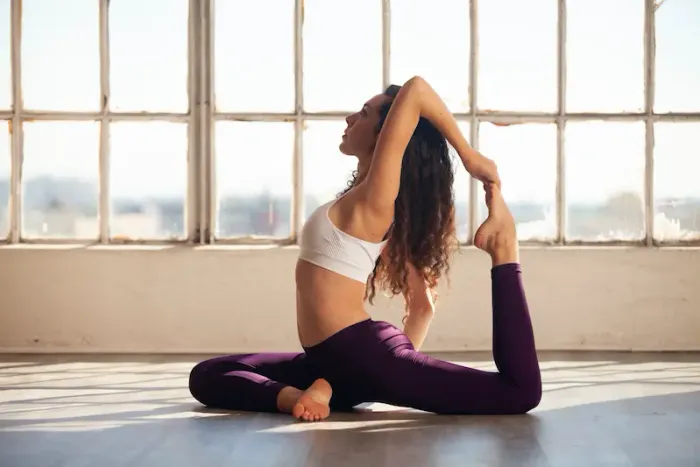
If your hips feel tight from sitting or you’re looking for a calming stretch after a long day, pigeon pose can help. Often taught in yoga classes, the pigeon pose gently targets your hips, glutes, and hip flexors while encouraging deeper breathing and relaxation. Practicing the pigeon pose yoga thoughtfully can improve your sense of mobility and ease in daily movement. This guide walks you through safe steps, benefits, modifications for all bodies, and answers to common questions, so you can practice with confidence.
What Is Pigeon Pose?
Pigeon pose is a floor-based hip-opening posture commonly taught as a preparatory stretch for the classic Eka Pada Rajakapotasana (one-legged king pigeon). In most general classes, you’ll encounter the “prep” version, which avoids the deep backbend and focuses on stretching the outer hips and glutes of the front leg and the hip flexors of the back leg. While it appears simple, alignment and support are key to keeping your knees and lower back comfortable.
Why Pigeon Pose Matters?
The Pigeon Pose is a fundamental yoga posture that opens the hips and stretches the external rotators:
- Many of us sit for prolonged periods, which can leave our hips and lower backs feeling stiff and uncomfortable.
- Yoga, when done safely, may improve flexibility, balance, stress levels, and overall well-being. Leading medical sources note that yoga can support flexibility and stress management, and may help with certain types of back discomfort for some people when used thoughtfully as part of a broader care plan.
- Pigeon pose yoga offers a focused way to explore hip mobility and a calm breathing rhythm.
Benefits Of Pigeon Pose Yoga
Evidence-informed potential benefits include:
Hip Mobility And Flexibility
- Targeted stretch for the gluteal muscles and deep external rotators of the front leg, and for the hip flexors and quadriceps of the back leg. Regular stretching can help maintain or improve joint range of motion, supporting daily activities like walking, squatting, and climbing stairs.
Lower Back Comfort, Indirectly
- Gentle hip-focused stretching and mindful breathing may help some people feel less tightness around the lower back and pelvis. Research on yoga suggests benefits for some forms of back discomfort when practiced carefully and consistently as part of a comprehensive approach. Always avoid pain and modify or skip if symptoms worsen.
Posture And Movement Ease
- Opening the front of the hips can complement postures that encourage an upright spine and may help counteract the effects of prolonged sitting.
Relaxation And Stress Relief
- Slow breathing in a supported stretch can trigger a relaxation response, helping you unwind. Large medical organizations highlight yoga’s role in stress management and mind-body wellbeing.
Body Awareness And Balance
- Spending time in a stable shape with mindful breathing improves proprioception (sense of position), which can carry over to safer movement patterns in daily life.
Consult a Top General Physician
How To Do Pigeon Pose Yoga? Step By Step
Start with a brief warmup: a few cat cow spinal movements, gentle lunges, and low dynamic hip openers help your tissues feel ready for stretching.
Step-by-step From Downward-Facing Dog
1) From Downward-Facing Dog, inhale to lengthen your spine.
2) As you exhale, bring your right knee toward your right wrist. Place your right shin on the mat at a comfortable angle. It’s fine if your right foot is closer to your left hip; you do not need a parallel shin.
3) Extend your left leg straight back with the top of the foot on the mat, toes pointing straight back. Keep your hips facing forward as much as is comfortable.
4) Support your pelvis: If your right hip hovers off the floor or tips to one side, slide a folded blanket, cushion, or yoga block under your right sitting bone to keep your hips level and reduce knee strain.
5) Keep your front knee comfortable: If you feel knee discomfort, draw your right foot closer to your body to reduce rotation, add more support under the hip, or come out and try a reclined alternative (see Modifications).
6) Inhale and lift your chest, lengthening through your spine. Option to stay upright for a hip flexor emphasis.
7) To add a glute/outerhip stretch, exhale and hinge forward from the hips, lowering onto your forearms or a bolster. Keep your spine long rather than rounding deeply.
8) Breathe slowly into your belly and ribs. Aim for 30–60 seconds at first, working up to 90 seconds or longer if it feels comfortable and you can relax without pain.
9) To exit, press your hands into the mat, tuck your back toes, and step back to Downward-Facing Dog. Take a few breaths, then switch sides.
Alternative Entry From Tabletop
From hands and knees, slide your right knee toward your right wrist and your right foot toward your left side. Extend your left leg back and follow the same alignment and support steps.
Key Alignment Tips
• Square your hips gently forward; a small natural tilt is normal. Use support under the front hip to avoid collapsing to one side.
• Keep the front knee comfortable at all times. Think “sensation in the hip, not sharpness in the knee.”
• Lengthen through the spine. If folding forward, hinge at the hips and support your torso with blocks or a bolster.
• Point the back leg straight back with the kneecap and top of the foot facing down; avoid letting the leg drift outward.
• Distribute weight evenly through both hips as much as your anatomy allows, using props to balance.
Common Mistakes To Avoid
• Forcing the shin parallel to the mat. Your shin angle varies by anatomy; forcing it can strain the knee.
• Pushing into pain. Sharp, pinching, or electric sensations—especially in the knee—are a signal to back off or switch to a modification.
• Collapsing the chest and rounding the spine excessively. Use props so you can maintain length and breathe freely.
• Skipping warmup. Cold tissues are more prone to discomfort. Take a few minutes to prepare.
Modifications And Props For All Bodies
If kneeling or deep hip rotation is uncomfortable or not advised for you, try these alternatives:
Reclined (Supine Pigeon)
- Lie on your back, cross the right ankle over the left thigh, and gently draw the left thigh toward your chest, keeping the spine neutral. This mimics the outer hip stretch without knee pressure. You can use a strap behind the thigh.
Seated Figure4
- Sit on a chair, cross the right ankle over the left knee, and hinge forward slightly with a long spine. Great for office or travel.
Walls-upported
- Lie near a wall, place your left foot on the wall with the knee bent, and cross your right ankle over your left thigh. Adjust distance for comfort.
Bolstersupported Pigeon
- Place a bolster or firm pillow along your front leg and torso so you can rest forward without strain. Add a folded blanket under the front hip as needed.
Block Under Hip
- If the front hip is far from the floor, a yoga block or stack of books under the sitting bone brings the floor up to you and reduces torque on the knee.
Safety, Contraindications, And When To Skip?
Your safety comes first. Consider the following:
- Knee issues or history of knee injury: Use reclined or seated instead of classic pigeon. Avoid any knee pain.
- Acute hip, lower back, or sacroiliac joint pain: Try gentler alternatives and consult a healthcare professional if symptoms persist.
- Pregnancy: Many find a reclined or seated figure more comfortable than a prone pigeon due to pressure on the belly.
- Numbness or tingling: These signs may indicate nerve irritation. Exit the pose and choose a less intense variation.
- Recent surgery or joint replacement: Get clearance from your healthcare provider before attempting deep stretches.
- General rule: You should feel a gentle, sustainable stretch—not pain. If in doubt, modify or skip.
How Long And How Often To Practice?
• Hold time: Start with 30–60 seconds per side. Over time, you can extend to 90 seconds or up to 2–3 minutes if it remains comfortable and you can breathe smoothly.
• Repetitions: 1–3 rounds per side can be sufficient in a session.
• Frequency: Consistency matters. Add pigeon or a gentler alternative to your routine several days per week, alongside broader physical activity as recommended by public health guidelines.
Warmup And Poses To Pair With Pigeon
Prepare your hips for the deep opener with these essential warmups and counter poses:
• Warmup ideas: Catcow, low lunges, dynamic hamstring stretches, gentle hip circles, and a few rounds of Downward-Facing Dog.
• Pair with: Low lunge (for hip flexors), variations, Child’s Pose or Sphinx (for recovery), and gentle twists to balance your practice.
• Cooldown: End with a neutral shape like constructive rest (lying on your back, knees bent, feet on the floor) or a brief relaxation.
What You Should Feel And Not Feel?
• You should feel: A broad, gentle stretch in the outer hip/glute of the front leg, and possibly the front of the hip of the back leg; steady, unforced breathing; a sense of release over time.
• You should not feel: Sharp or stabbing pain, especially in the knee or groin; tingling or numbness; strain in the lower back. If you do, ease out and try a modified version.
Beginner-friendly Mini Sequence
Try this 8–10 minute flow:
1) CatCow, 6 slow rounds.
2) Low Lunge, 3–5 breaths each side.
3) Reclined, 30–60 seconds each side.
4) Supported Pigeon (with bolster under torso and blanket under front hip), 45–90 seconds each side.
5) Child’s Pose, 5–8 breaths.
Breathe evenly, move mindfully, and adjust for comfort.
How Pigeon Fits Into A Healthy Lifestyle?
Yoga is one piece of a larger wellness picture. Major health organizations encourage regular physical activity for overall health, stress reduction, and mobility. Combine pigeon pose yoga with aerobic activity, strength training, balance work, and adequate rest. If you have a medical condition or persistent pain, check with your healthcare provider to tailor an approach that suits you.Consult a Top General Physician
Consult a Top General Physician

Dr. Sougata Kumar
General Practitioner
9 Years • MBBS
East Midnapore
VIVEKANANDA SEBA SADAN, East Midnapore

Dr. Vivek D
General Physician
4 Years • MBBS
Bengaluru
PRESTIGE SHANTHINIKETAN - SOCIETY CLINIC, Bengaluru

Dr. Abhishek Ranjan
General Practitioner
4 Years • MBBS
Kolkata
VDC Clinic, Kolkata

Dr. Shamanth Y B
General Physician/ Internal Medicine Specialist
5 Years • MBBS
Bengaluru
Apollo Medical Center, Marathahalli, Bengaluru

(50+ Patients)

Dr. Arthi S
Family Physician
3 Years • MBBS
Bengaluru
PRESTIGE SHANTHINIKETAN - SOCIETY CLINIC, Bengaluru
Consult a Top General Physician
Dr. Sougata Kumar
General Practitioner
9 Years • MBBS
East Midnapore
VIVEKANANDA SEBA SADAN, East Midnapore
Dr. Vivek D
General Physician
4 Years • MBBS
Bengaluru
PRESTIGE SHANTHINIKETAN - SOCIETY CLINIC, Bengaluru
Dr. Abhishek Ranjan
General Practitioner
4 Years • MBBS
Kolkata
VDC Clinic, Kolkata
Dr. Shamanth Y B
General Physician/ Internal Medicine Specialist
5 Years • MBBS
Bengaluru
Apollo Medical Center, Marathahalli, Bengaluru
(50+ Patients)
Dr. Arthi S
Family Physician
3 Years • MBBS
Bengaluru
PRESTIGE SHANTHINIKETAN - SOCIETY CLINIC, Bengaluru
More articles from General Medical Consultation

.webp)


Frequently Asked Questions
1. Is pigeon pose good for beginners?
Yes, with modifications. Beginners often do well with a reclined or seated figure, or a well-propped pigeon. Avoid forcing your shin parallel to the front of the mat and never work through knee pain.
2. Does pigeon pose help with sciatica?
It can feel helpful for some people by easing muscle tension around the hips and piriformis. However, sciatica has several possible causes. If symptoms are present, consult a healthcare professional and use gentle, pain-free variations. Stop if symptoms worsen.
3. How long should I hold the pigeon pose?
Start with 30–60 seconds per side and build gradually if it remains comfortable. Focus on steady breathing and a mild stretch, not maximum intensity.
4. What if my knee hurts like a pigeon?
Stop immediately. Try drawing the front foot closer to the body, add support under the front hip, or switch to the reclined position. Knee discomfort is a sign to modify or skip this pose.
5. Which muscles does a pigeon pose stretch?
Primarily the outer hip/gluteal muscles and deep external rotators of the front leg, and the hip flexors of the back leg. You may also sense a gentle stretch through the lower back if you fold forward with a long spine.