Understanding Inguinal Hernia and Its Management
Know about the inguinal hernia, what it is, its causes, symptoms, diagnosis and treatment options. Learn about the home-based and lifestyle tips for inguinal hernia.

Introduction
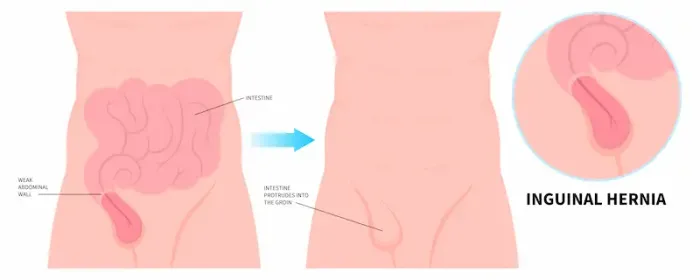
An inguinal hernia is a common health issue that affects many people, especially men. It occurs when a part of the intestine or fatty tissue pushes through a weak spot in the abdominal muscles near the groin area. While it may not always be painful, it can cause discomfort and, if left untreated, may lead to serious complications.
This article will help you understand what an inguinal hernia is, its symptoms, causes, and how to manage it effectively.
What Is an Inguinal Hernia?
An inguinal hernia happens when soft tissue (usually part of the intestine) bulges through a weak spot in the lower abdominal wall. This creates a noticeable lump in the groin area, which may become more prominent when you cough, bend, or lift heavy objects.
There are two main types of inguinal hernias:
1. Direct Inguinal Hernia – Caused by weakened abdominal muscles, often due to ageing or strain.
2. Indirect Inguinal Hernia – More common in men and occurs due to a natural weakness in the abdominal wall present from birth.
Consult a Gastroenterologist for Personalised Advice
Symptoms of an Inguinal Hernia
Not all hernias cause pain, but common symptoms include:
• A visible bulge in the groin or scrotum (in men)
• Aching or burning sensation in the affected area
• Discomfort or pain when coughing, bending, or lifting
• Heaviness or pressure in the groin
• Swelling around the testicles (in men)
In rare cases, a hernia can become strangulated, meaning the blood supply to the trapped tissue is cut off. This is a medical emergency and requires immediate treatment.
Symptoms of a strangulated hernia include:
• Severe pain and tenderness
• Nausea and vomiting
• Fever
• Red or dark discolouration of the bulge
If you experience these symptoms, seek medical help right away.
What Causes an Inguinal Hernia?
Several factors can contribute to the development of an inguinal hernia:
• Weakness in the abdominal wall (due to ageing, injury, or congenital factors)
• Chronic coughing or sneezing (from conditions like COPD or allergies)
• Straining during bowel movements or urination (often due to constipation or an enlarged prostate)
• Heavy lifting or physical exertion (especially without proper technique)
• Pregnancy (increased pressure on the abdomen)
• Obesity (extra weight puts strain on abdominal muscles)
Men are more likely to develop inguinal hernias because of a natural weakness in the groin area where the spermatic cord passes through.
How Is an Inguinal Hernia Diagnosed?
A doctor can usually diagnose an inguinal hernia through a physical examination. They may ask you to stand or cough to check for a bulge. In some cases, imaging tests like an ultrasound, CT scan, or MRI may be needed to confirm the diagnosis.
If you suspect you have a hernia, it’s important to consult a doctor rather than self-diagnosing.
Treatment Options for Inguinal Hernia
1. Watchful Waiting (For Small, Asymptomatic Hernias)
If the hernia is small and not causing discomfort, your doctor may recommend monitoring it without immediate surgery. However, hernias do not heal on their own and may worsen over time.
2. Surgical Repair
Most inguinal hernias require surgery to prevent complications. There are two main types of hernia repair:
• Open Hernia Repair – A surgeon makes an incision near the hernia, pushes the tissue back into place, and reinforces the weak area with stitches or a synthetic mesh.
• Laparoscopic (Minimally Invasive) Repair – Smaller incisions are made, and a tiny camera is used to guide the repair. Recovery is usually faster with this method.
3. Emergency Surgery for Strangulated Hernia
If the hernia becomes trapped and cuts off the blood supply, emergency surgery is necessary to prevent tissue damage.
Lifestyle and Home Remedies to Manage Hernia Symptoms
While surgery is the only permanent solution, certain lifestyle changes can help manage symptoms and reduce discomfort:
Dietary Adjustments
• Eat high-fibre foods (fruits, vegetables, whole grains) to prevent constipation and straining.
• Stay hydrated to keep bowel movements smooth.
• Avoid heavy meals that can increase abdominal pressure.
Physical Activity Tips
• Avoid heavy lifting; if necessary, lift with your legs, not your back.
• Strengthen core muscles with gentle exercises (like walking or yoga) to support the abdominal wall.
• Wear a supportive truss (hernia belt) if recommended by your doctor.
Avoiding Strain
• Quit smoking to reduce chronic coughing.
• Treat persistent coughs or allergies to minimise pressure on the abdomen.
• Manage weight to reduce strain on abdominal muscles.
When Should You See a Doctor?
Consult a doctor if you:
• Notice a bulge in your groin or scrotum
• Experience persistent pain or discomfort
• Develop nausea, vomiting, or fever (signs of strangulation)
Early diagnosis and treatment can prevent complications.
Final Thoughts
An inguinal hernia is a common but manageable condition. While it may not always be painful, ignoring it can lead to serious complications. By understanding the symptoms, causes, and treatment options, you can take proactive steps to protect your health.
Consult a Gastroenterologist for Personalised Advice
Consult a Gastroenterologist for Personalised Advice

Dr. Bharani Immaneni
Gastroenterology/gi Medicine Specialist
12 Years • MD DM Gastroentrology
Secunderabad
Apollo Hospitals Secunderabad, Secunderabad

(75+ Patients)

Dr. Jatin Yegurla
Gastroenterology/gi Medicine Specialist
11 Years • MD (PGI), DM (AIIMS Delhi), FAGIE (AIIMS Delhi), ESEGH (UK), Gold Medalist
Hyderabad
Apollo Hospitals Jubilee Hills, Hyderabad
(700+ Patients)

Dr. Amit Pandita
Gastroenterology/gi Medicine Specialist
10 Years • MBBS. MD (INTERNAL MEDICINE) DrNB (GASTROENTEROLOGY AND HEPATOLOGY)
Delhi
Apollo Hospitals Indraprastha, Delhi

Dr Antony Paul Chettupuzha
Gastroenterology/gi Medicine Specialist
22 Years • MBBS, MD, DM , FRCP(Edimburg)
Angamaly
Apollo Hospitals Karukutty, Angamaly

Dr. Aakash Garg
Gastroenterology/gi Medicine Specialist
12 Years • MBBS, DNB (Medicine), DrNB (Gastroentrology).
Bilaspur
Apollo Hospitals Seepat Road, Bilaspur
(200+ Patients)
Consult a Gastroenterologist for Personalised Advice
Dr. Bharani Immaneni
Gastroenterology/gi Medicine Specialist
12 Years • MD DM Gastroentrology
Secunderabad
Apollo Hospitals Secunderabad, Secunderabad
(75+ Patients)
Dr. Jatin Yegurla
Gastroenterology/gi Medicine Specialist
11 Years • MD (PGI), DM (AIIMS Delhi), FAGIE (AIIMS Delhi), ESEGH (UK), Gold Medalist
Hyderabad
Apollo Hospitals Jubilee Hills, Hyderabad
(700+ Patients)
Dr. Amit Pandita
Gastroenterology/gi Medicine Specialist
10 Years • MBBS. MD (INTERNAL MEDICINE) DrNB (GASTROENTEROLOGY AND HEPATOLOGY)
Delhi
Apollo Hospitals Indraprastha, Delhi
Dr Antony Paul Chettupuzha
Gastroenterology/gi Medicine Specialist
22 Years • MBBS, MD, DM , FRCP(Edimburg)
Angamaly
Apollo Hospitals Karukutty, Angamaly
Dr. Aakash Garg
Gastroenterology/gi Medicine Specialist
12 Years • MBBS, DNB (Medicine), DrNB (Gastroentrology).
Bilaspur
Apollo Hospitals Seepat Road, Bilaspur
(200+ Patients)