


Signs Of Hyperthermia And Prevention
Learn to recognize the critical signs of hyperthermia (severe overheating) like heat exhaustion and heat stroke. Discover essential prevention tips, hydration strategies, and emergency steps for hot environments.

Written by Dr. M L Ezhilarasan
Reviewed by Dr. Shaik Abdul Kalam MD (Physician)
Last updated on 13th Jan, 2026

Introduction
Hyperthermia—when your body overheats because it can’t shed heat fast enough—can escalate from “I’m feeling off” to a medical emergency in minutes. You don’t need a desert to be at risk; high humidity, intense sun, poor airflow, or strenuous activity can push core temperature up quickly. Knowing the early signs and having a clear prevention plan helps you protect yourself and your family, whether you’re commuting, working outdoors, training for a race, or caring for older adults and children during a heatwave.
In this guide, we’ll explain how your body cools down, the early signs of hyperthermia to watch for, who’s most at risk, and smart prevention strategies for daily life, work, and sport. You’ll learn first aid steps, how to use tools like heat index and wet-bulb globe temperature (WBGT), and how to prepare your home and community for heatwaves. We’ll also cover practical tips—what to drink, what to wear, when to take breaks, and how to plan your day around the heat—so you can prevent hyperthermia, stay safe, and keep doing what you love, even when temperatures rise.
What Is Hyperthermia and How Your Body Keeps Cool?
Thermoregulation 101: Sweat, blood flow, and heat loss
Your body constantly balances heat production and heat loss. When it’s hot, blood vessels in your skin widen (vasodilation) to move heat out, and sweating ramps up. As sweat evaporates, it cools your skin—and your core. This system can be overwhelmed by high ambient temperature, high humidity (which blocks evaporation), low airflow, heavy clothing/PPE, or vigorous activity. When heat gain exceeds heat loss, core temperature climbs—this is hyperthermia. At the mild end are heat cramps and heat exhaustion; at the severe end is heatstroke, a life-threatening emergency with core temperatures often above 40°C (104°F) and central nervous system dysfunction.
Heat index, humidity, and wet-bulb globe temperature (WBGT)
The heat index combines temperature and relative humidity to reflect “feels-like” conditions. The WBGT adds sun radiation, wind, and humidity, and is the gold standard for work/sport decisions. In practical terms, a moderate temperature with very high humidity can be as dangerous as a much hotter dry day. Using a heat index or WBGT app can help you plan safe activity times and rest breaks.
Why humid heat is more dangerous than dry heat
Evaporation is the main cooling method in hot weather. When humidity is high, sweat can’t evaporate effectively—so you “feel drenched” but don’t cool down. That’s why a 32°C (90°F) day at 80% humidity can be more dangerous than 38°C (100°F) at 20% humidity [10]. This is a key reason heat illness spikes during monsoon seasons and in coastal climates.Consult a Top General Physician
Early Signs of Hyperthermia: Spot the Red Flags
Heat cramps, dizziness, nausea, and heavy sweating
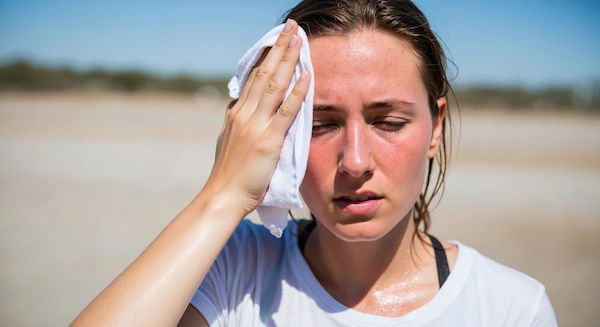
Early warning signs include muscle cramps (often calves, thighs), headache, lightheadedness, heavy sweating, goosebumps on sweaty skin, nausea, and fatigue. These signs often appear during or after exertion in the heat. Prompt action—resting in shade, cooling, and rehydrating with water and electrolytes—usually reverses these symptoms.
From heat exhaustion to heatstroke: how progression happens
Heat exhaustion brings more intense symptoms: weakness, rapid pulse, intense thirst, irritability, clammy skin, and sometimes fainting. If cooling and hydration don’t happen, or if exposure continues, heatstroke can follow. Heatstroke is defined by high core temperature plus central nervous system symptoms such as confusion, seizures, or loss of consciousness. Heatstroke can cause organ damage and death without rapid cooling. In the U.S., hundreds die annually from heat-related causes; globally, heatwaves account for tens of thousands of deaths over recent decades.
Symptoms that demand emergency care now
Call emergency services immediately if you notice confusion, disorientation, slurred speech, seizures, fainting, hot dry skin (or profuse sweating that suddenly stops), very rapid pulse, or a core temperature suspected above 40°C (104°F). Begin aggressive cooling while waiting (details below).
Who’s Most at Risk and Common Triggers
Age, medical conditions, and medications that raise risk
High-risk groups include adults over 65, infants and young children, people with chronic conditions (heart disease, diabetes, kidney disease), people with obesity, and those with previous heat illness. Certain medications increase heat sensitivity by impairing sweating, fluid balance, or heart rate regulation—examples include some diuretics, antihistamines, tricyclic antidepressants, anticholinergics, beta-blockers, stimulants, and antipsychotics. Alcohol and recreational drugs can also worsen risk by causing dehydration or impairing judgment. If you’re unsure how your prescriptions affect heat tolerance, talk to a clinician. If you have persistent heat intolerance, repeated cramps, or dizziness during hot weather, consult a doctor online with Apollo 24|7 for tailored advice, medication review, and a prevention plan.
Outdoor work, athletics, travel, and hot indoor spaces
Outdoor workers (construction, agriculture, delivery), athletes, and travelers moving from cool to hot climates face higher risk, especially without acclimatization [1][7]. Hot indoor environments—poor ventilation, tin/metal roofs, top-floor apartments, kitchens, workshops—also drive hyperthermia, even at rest. Urban heat islands (dense concrete, few trees) keep nights hot, limiting recovery sleep and raising next-day risk [9].
Special considerations for infants, pregnant people, and older adults
Infants and older adults don’t regulate heat as efficiently; they can overheat quickly and may not feel or respond to thirst. Pregnant people face added cardiovascular strain in heat. Never leave children, older adults, or pets in cars—car temperatures can soar 20°C (36°F) in 10 minutes, even with windows cracked [10]. Build daily check-in routines for older relatives and neighbors during heatwaves [8].
Everyday Prevention Strategies That Actually Work
Hydration, electrolytes, and what to drink (and avoid)
Aim to start the day hydrated—pale yellow urine is a simple gauge. During heat, drink small amounts frequently; water is fine for light activity, but prolonged sweating needs electrolytes (ORS or a low-sugar sports drink) to prevent hyponatremia and cramps [1][6]. Limit alcohol and very sugary or caffeinated drinks, which can worsen dehydration. A practical rule: in hot, humid conditions, many adults need at least 250–500 ml every 20–30 minutes during exertion; adjust based on sweat rate and body size. Keep ORS packets handy at home and in your bag for heatwaves—an easy, low-cost step for best hydration during heatwave.
Clothing, shade, and timing your day around heat
Choose light-colored, loose, breathable fabrics; wide-brimmed hats; and UV-rated sunglasses. Use shade and plan tasks in cooler hours (before 10 am and after 5 pm). Build “cooling micro-breaks” into your routine: 5–10 minutes in shade or a fan-cooled area each hour can significantly lower risk. Portable shade (umbrella, canopy), a handheld fan or mister, and a neck cooling towel are small upgrades that make a big difference.
Acclimatization: building “heat fitness” safely
Your body adapts to heat over 1–2 weeks: you start sweating earlier, sweat more efficiently, and conserve electrolytes [1][7]. Start with 20–30 minutes of light activity in the heat, then add 10–20% time or intensity every 1–2 days. Don’t “test yourself” on day one of a heatwave. If you miss a week, scale back and re-acclimatize. This acclimatization to heat guidelines approach is a cornerstone of prevention.
Prevention in Work, Sports, and Travel
Workplace plans: Water–Rest–Shade and break schedules
For outdoor work, OSHA and NIOSH recommend implementing a heat illness prevention plan: provide cool water, enforce scheduled rest in shade, adjust workloads, and use a buddy system for symptom checks [1][7]. Supervisors should monitor heat index/WBGT and modify work/rest cycles accordingly. New or returning workers need gradual exposure (20% more time in the heat each day). Practical tools: rotating tasks, cooling vests for heavy PPE, and misting fans.
Athletes and weekend warriors: pre-cooling and mid-cooling
Evidence-based strategies include pre-cooling (cold drinks, ice slurries, cooling towels before activity) and mid-cooling (ice towels at breaks, cold sponges, shade). Ice slurries can lower core temperature and improve endurance in heat. During matches or long runs, schedule cooling and hydration on the clock, not “as needed”—your perception lags behind your physiology. Use a wet-bulb globe temperature app to decide when to shorten sessions or move indoors. This athletes heat illness prevention approach reduces risk without sacrificing performance.
Travel and urban heat islands: planning, apps, and cooling centers
Traveling from a cool climate to a hot city? Reduce exertion the first 3–4 days, plan indoor sightseeing mid-day, and book accommodations with reliable AC. In cities with urban heat island effects, nights remain hot, so prioritize sleep in a cool room. Download local weather and alert apps, locate cooling centers in advance, and save emergency numbers. Many city health departments and the National Weather Service provide heat alerts and maps of cooling centers [8][10].
First Aid for Hyperthermia: Step-by-Step
Treating heat cramps and heat exhaustion
Move to a cooler place (shade, AC, or a fan). Loosen clothing. Sip water or ORS; for cramps, gently stretch and massage. Apply cool, wet cloths; mist with water and fan the skin to speed evaporation. If symptoms don’t improve within 30–60 minutes—or worsen—seek medical care. Older adults, those with heart/kidney disease, or people on diuretics need careful rehydration guidance; if in doubt, consult a doctor online with Apollo 24|7 for further evaluation and individualized fluid advice [1][3][6].
Heatstroke: cold-water immersion and emergency response
Call emergency services immediately. Begin rapid cooling: the most effective method is cold-water immersion (CWI) in a tub or large container with cold water and ice, agitating the water for maximal heat transfer. If CWI isn’t possible, apply continuous cold wet towels/ice packs to the neck, armpits, and groin; mist and fan aggressively; use a cold shower if safe. Do not give fluids if the person is unconscious or unable to swallow. Aim to reduce core temperature below 39°C (102°F) within 30 minutes if possible [3][4][5]. After stabilization, medical teams will evaluate for complications like rhabdomyolysis, kidney injury, or electrolyte abnormalities.
What not to do (common first-aid mistakes)
Avoid alcohol rubs (they impair cooling and carry risk), ice-only packs on small areas without whole-body cooling, and “waiting it out” in a hot space. Do not give high volumes of plain water to people at risk for hyponatremia without electrolytes.
Preparing for Heatwaves at Home and in Your Community
Home cooling upgrades, fans vs. AC, and cool rooms
Fans help when indoor temperature is below about 35°C (95°F). Above that, fans may move hot air without adequate cooling unless combined with misting/evaporation. Prioritize creating at least one “cool room” with AC or an efficient evaporative cooler (in dry climates), blackout curtains, and reflective shades. Simple retrofits like reflective window film, external shading, cool roofs, and sealing air leaks reduce indoor heat. Keep a stocked “heat kit”: ORS, spray bottles, cooling towels, instant cold packs, and a thermometer.
Checklists for families and caregivers
Identify who’s at risk (older relatives, people with chronic illness). Create a check-in schedule during heat alerts. Pre-cook or choose no-cook meals to reduce indoor heat. Plan medications around heat (some diuretics may require fluid adjustments—ask your doctor). Keep a list of symptoms that require urgent care taped on the fridge.
Community resources: alerts, cooling centers, and heat action plans
Sign up for local heat alerts from meteorological services or health departments [10]. Know the nearest cooling centers (libraries, community halls). Many countries and cities have Heat Action Plans with guidance for schools, workplaces, and neighborhoods [2][8]. In India, the National Disaster Management Authority (NDMA) and IMD provide heatwave guidance and alerts; check state and municipal resources as well.
Monitoring, Tools, and Smart Tech
Using WBGT/heat index apps to plan activity
Install a heat index or WBGT app; set alerts for risky thresholds. For many people, a heat index above 32–40°C (90–104°F) warrants shorter sessions and more breaks; above 41–46°C (106–115°F), consider moving indoors or rescheduling [7][10]. For workplaces, use WBGT-based work/rest schedules.
Wearables, heart rate cues, and urine color charts
Rising heart rate at a fixed effort, early heavy sweating, “chills,” or dizziness are cues to slow down. Use wearables to track exertion and temperature (where available), but trust your symptoms. A simple urine color chart (straw-colored is best) is a practical hydration check. Early signs of heat exhaustion should trigger immediate cooling.
When to pause or stop activity?
Stop immediately if you feel disoriented, nauseated, or faint; if chills or goosebumps appear despite heat; or if you stop sweating during exertion. If symptoms persist or recur despite cooling and hydration, book a physical visit to a doctor with Apollo 24|7. If lab tests are needed (electrolytes, kidney function, creatine kinase after severe heat illness), Apollo 24|7 offers a convenient home collection.
Conclusion
Hyperthermia is highly preventable when you know how heat affects your body and you plan your day accordingly. The key is to recognize early signs—cramps, dizziness, headache, nausea, and heavy sweating—and act fast with shade, cooling, and fluids. Build prevention into your routine: hydrate proactively (use ORS or electrolyte drinks when you sweat a lot), wear light breathable clothing, and schedule strenuous tasks for cooler hours. Use heat index or WBGT apps to make smarter decisions, and add cooling micro-breaks even when you “feel fine.”
If you work outdoors or train in the heat, adopt structured protections: Water–Rest–Shade, acclimatization, and pre- and mid-cooling strategies. For families, create a cool room, stock a heat kit, and check on older relatives and neighbors during heatwaves. Seek urgent care for heatstroke signs—confusion, fainting, seizures, or suspected core temperature above 40°C (104°F)—and start rapid cooling while help is on the way.
If you’re on medications that affect sweating or fluid balance, have chronic conditions, or experience repeated symptoms, consult a doctor online with Apollo 24|7 to personalize your prevention plan. If needed, Apollo 24|7 offers convenient home collections for labs like electrolytes or kidney function after severe heat stress. With awareness and a few smart habits, you can stay active, safe, and resilient—no matter how high the mercury climbs.
Consult a Top General Physician
Consult a Top General Physician

Dr Syed Mateen Pasha
General Physician
2 Years • MBBS
Bengaluru
PRESTIGE SHANTHINIKETAN - SOCIETY CLINIC, Bengaluru

Dr. Anand Ravi
General Physician
2 Years • MBBS, FEM
Bengaluru
PRESTIGE SHANTHINIKETAN - SOCIETY CLINIC, Bengaluru

Dr. Vivek D
General Physician
4 Years • MBBS
Bengaluru
PRESTIGE SHANTHINIKETAN - SOCIETY CLINIC, Bengaluru


Dr. Syed Ismail Ali
General Practitioner
7 Years • MBBS
Hyderabad
Apollo 24|7 Clinic, Hyderabad

Dr. Ajay K Sinha
General Physician/ Internal Medicine Specialist
30 Years • MD, Internal Medicine
Delhi
Apollo Hospitals Indraprastha, Delhi

(225+ Patients)
Consult a Top General Physician
Dr Syed Mateen Pasha
General Physician
2 Years • MBBS
Bengaluru
PRESTIGE SHANTHINIKETAN - SOCIETY CLINIC, Bengaluru
Dr. Anand Ravi
General Physician
2 Years • MBBS, FEM
Bengaluru
PRESTIGE SHANTHINIKETAN - SOCIETY CLINIC, Bengaluru
Dr. Vivek D
General Physician
4 Years • MBBS
Bengaluru
PRESTIGE SHANTHINIKETAN - SOCIETY CLINIC, Bengaluru
Dr. Syed Ismail Ali
General Practitioner
7 Years • MBBS
Hyderabad
Apollo 24|7 Clinic, Hyderabad
Dr. Ajay K Sinha
General Physician/ Internal Medicine Specialist
30 Years • MD, Internal Medicine
Delhi
Apollo Hospitals Indraprastha, Delhi
(225+ Patients)
More articles from Hyperthermia
.webp)
.webp)

Frequently Asked Questions
1) What are the earliest signs of heat exhaustion I should watch for?
Early signs include heavy sweating, muscle cramps, headache, dizziness, nausea, and fatigue. Move to shade, cool your skin, and sip water or ORS—key hyperthermia first aid steps.
2) How much water should I drink in hot weather?
A simple guide during exertion is 250–500 ml every 20–30 minutes, adjusting for your sweat rate and body size. For long sessions, include electrolytes to prevent cramps and hyponatremia. This is among the best hydration practices during a heatwave.
3) Which medications can increase my risk for hyperthermia?
Some diuretics, antihistamines, tricyclic antidepressants, anticholinergics, beta-blockers, stimulants, and antipsychotics may impair heat tolerance. Ask your doctor if your medicines affect sweating or fluid balance. If you’re unsure, consult a doctor online with Apollo 24|7.
4) How can athletes prevent heat illness without losing fitness?
Use acclimatization (gradual exposure over 1–2 weeks), schedule training in cooler hours, pre-cool with ice slurries or cold towels, and plan mid-session cooling and hydration by the clock. A wet-bulb globe temperature app helps set safe training thresholds.
5) When should I go to the hospital for a heat-related illness?
Seek emergency care for confusion, fainting, seizures, very high body temperature, or if symptoms don’t improve within 60 minutes of cooling and rehydration. If your condition does not improve after trying these methods, book a physical visit to a doctor with Apollo 24|7.