



Understanding PRK Eye Surgery: Procedure, Recovery, Risks, and Benefits
Learn about PRK eye surgery, how it works, its benefits, recovery process, and risks. Discover if you’re a good candidate and compare PRK vs LASIK vs SMILE.

Written by Dr. J T Hema Pratima
Reviewed by Dr. Mohammed Kamran MBBS, FIDM
Last updated on 13th Jan, 2026
Introduction
If you’re exploring vision correction beyond glasses or contact lenses, PRK eye surgery is one of the most established laser options. Short for photorefractive keratectomy, PRK reshapes the front surface of the eye to correct refractive errors like nearsightedness, farsightedness, and astigmatism. Unlike LASIK, PRK does not create a corneal flap; instead, it gently removes the surface layer of the cornea before reshaping with an excimer laser. That difference can make PRK a better choice for people with thinner corneas, dry eye risk, or those in jobs or sports where eye trauma could be a concern.
In this comprehensive guide, you’ll learn how PRK surgery works, who’s a good candidate, what to expect during recovery, risks and side effects, costs, preparation tips, and alternatives. We analysed the top-ranking web pages on PRK to ensure you get a balanced view backed by authoritative sources. Whether you’re just starting your research or preparing for a consultation, this step-by-step overview will help you decide if PRK eye surgery is right for you—and how to plan for a smooth recovery and excellent long-term vision.
What is PRK Eye Surgery?
Here’s what PRK eye surgery involves:
- PRK (photorefractive keratectomy) is a type of laser vision correction that reshapes the cornea—the clear front window of the eye—to improve how light focuses on the retina. It uses a cool ultraviolet excimer laser to precisely remove microscopic layers of corneal tissue. This corrects refractive errors such as myopia (nearsightedness), hyperopia (farsightedness), and astigmatism.
- Unlike LASIK, which involves creating a thin flap in the cornea before lasering, PRK removes the outermost corneal layer (the epithelium). The laser reshapes the underlying stromal tissue, and then a bandage contact lens protects the eye while the epithelium grows back over several days. Because there’s no flap, PRK is often recommended for people with thinner corneas, irregular corneal surfaces, or those at higher risk of eye trauma (for example, contact sports, military roles).
- PRK has been performed since the late 1980s and is considered safe and effective for appropriately selected candidates. Visual outcomes are comparable to LASIK once healing is complete, but initial recovery is slower. Most patients experience discomfort for a few days and gradually improving vision over weeks, with full stabilisation often taking 1–3 months or more depending on the prescription and healing responses.
Consult Top Specialists Here
PRK vs LASIK vs SMILE at a Glance
Here’s how PRK compares to other procedures:
- PRK: No flap; surface ablation. Slower recovery; suitable for thin corneas or when flap risks are a concern.
- LASIK: Flap-based; rapid recovery and less discomfort initially; not ideal for very thin corneas or certain occupations.
- SMILE: Small-incision lenticule removal; flapless, fast recovery for many, but not available for all prescriptions or astigmatism types in every region.
Common Vision Issues PRK Corrects
Here’s what PRK can treat:
- Nearsightedness (myopia): commonly corrected with high accuracy.
- Astigmatism: PRK can correct regular astigmatism; topography- or wavefront-guided PRK can help with irregularities.
- Farsightedness (hyperopia): correctable in selected ranges; your surgeon will assess appropriateness.
Who is a Good Candidate?
Here’s who makes a good PRK candidate:
- Most PRK candidates are adults with a stable prescription (typically stable for at least 12 months), healthy eyes, and realistic expectations. A comprehensive pre-operative evaluation determines eligibility.
Eligibility checklist:
- Age 18+ with stable refraction for 1–2 years
- Healthy cornea and retina; adequate corneal thickness for safe ablation
- No active eye infections or significant dry eye
- Prescription within the laser’s treatable range
- Normal corneal topography with no signs of keratoconus or ectasia risk
- Pupils, tear film, and ocular surface assessed and optimised
When PRK may not be recommended:
- Progressive keratoconus or suspicious topography
- Uncontrolled autoimmune disease or severe dry eye
- Pregnancy or breastfeeding (hormonal changes can alter results)
- Unrealistic expectations or inability to comply with aftercare
- Significant corneal scarring in the intended treatment zone
Pre-op evaluation and tests:
- Expect detailed measurements: refraction, corneal thickness (pachymetry), topography/tomography to assess shape, wavefront analysis, tear film tests, and a dilated exam. Your surgeon may advise stopping contact lens wear 1–2 weeks (soft lenses) or 2–4 weeks (rigid gas permeable) before testing to ensure accurate measurements.
- If you have systemic conditions like diabetes, good control is important; some surgeons will check HbA1c or other labs. If relevant, Apollo24|7 offers convenient home collection for tests like HbA1c or vitamin D before PRK.
The PRK Eye Surgery Procedure: Step by Step
Here’s what happens during PRK surgery:
Before the laser:
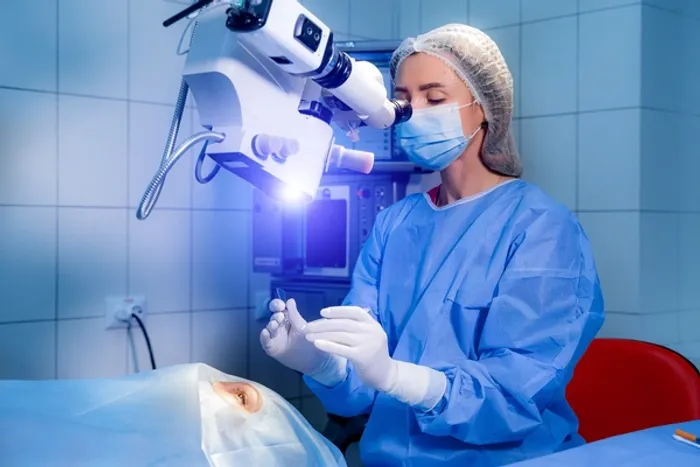
On surgery day, your eyes are numbed with anaesthetic drops. Some clinics give a mild oral sedative to help you relax. The eye is cleaned and a lid speculum gently holds your eyelids open. The surgeon removes the corneal epithelium in the treatment zone—this can be done with a dilute alcohol solution, a mechanical brush, or a laser-assisted approach depending on preference.
During laser reshaping:
An excimer laser reshapes the cornea based on your custom treatment plan to correct myopia, hyperopia, and/or astigmatism. Modern platforms offer wavefront- or topography-guided PRK to address higher-order aberrations or irregular corneal surfaces, potentially improving night vision quality in suitable candidates.
After the laser: bandage lens and medications:
A soft bandage contact lens is placed to protect the healing surface. You’ll receive antibiotic drops to prevent infection and steroid drops to control inflammation and haze, along with lubricating tears for comfort. You’ll go home the same day with eye shields to wear while sleeping to avoid accidental rubbing. Expect a follow-up visit within 24–48 hours to check epithelial healing and lens position.
Benefits and Limitations of PRK
Here’s what makes PRK effective—and what to keep in mind:
Unique advantages:
- No corneal flap: Avoids rare flap-related complications.
- Suitable for thinner corneas: When LASIK would leave insufficient residual thickness, surface ablation may be safer.
- Good option for irregular surfaces: Topography-guided PRK can treat certain surface irregularities or prior surgery issues.
- Comparable long-term outcomes: Visual acuity after full healing can match LASIK for many prescriptions.
Potential drawbacks and how surgeons mitigate them:
- Slower recovery: The epithelium must regrow, so functional vision can take several days to weeks.
- Early discomfort: First 48–72 hours can be painful or light-sensitive.
- Haze risk: Surface healing can produce haze, especially with higher corrections or strong UV exposure.
- Dry eye and night glare: Generally temporary; optimising tear film pre-op and using preservative-free lubricants can help.
Risks, Side Effects, and Safety
Here’s what to know about PRK safety:
Short-term side effects:
Expect transient pain, tearing, light sensitivity, and blurry vision for 3–5 days. Vision fluctuates as the epithelium smooths. Glare and halos at night are common early on and typically improve over weeks.
Long-term complications and their rates:
Serious complications are uncommon with modern PRK and proper screening. Potential issues include:
- Corneal haze: More likely with higher prescriptions; risk reduced with MMC and UV avoidance.
- Infection: Rare with antibiotic prophylaxis and hygiene.
- Regression or under/overcorrection: Some patients may need an enhancement once healing stabilises.
- Dry eye: Usually improves over time; less nerve disruption than flap-based surgery may be an advantage.
- Night vision symptoms: Halos or starbursts typically diminish; wavefront-guided treatments and adequate optical zone sizing help minimise this.
When to seek medical help:
Call your clinic urgently for severe pain that worsens after day 2–3, sudden drop in vision, pus-like discharge, or increasing redness—these can indicate infection or other complications.
Recovery Timeline and Comfort Tips
Here’s what recovery after PRK looks like:
Day-by-day in week 1:
- Days 0–1: Eyes feel gritty or sore; vision foggy. Rest in dim light. Use drops as prescribed.
- Days 2–3: Peak discomfort—burning, tearing, light sensitivity.
- Days 3–5: Epithelial healing often completes; your surgeon may remove the bandage lens when safe. Vision starts improving but can fluctuate.
Weeks 2–12: Vision stabilisation:
- Week 2–4: Clearer vision with occasional haze or starbursts at night; dryness common.
- Month 2–3: Ongoing refinement and stabilisation. Final sharpness can continue to improve; adherence to UV protection and drop schedules supports healing.
Return to work, screens, exercise, travel:
- Work/screens: Many return in 3–7 days depending on job demands.
- Exercise: Light activity after a week; avoid swimming, hot tubs, and contact sports for 2–4 weeks.
- Makeup/facial care: Avoid eye makeup and dusty environments for at least 1–2 weeks.
- Travel: Delay air travel for a week if possible; keep preservative-free tears handy.
Costs, Insurance, and Value
Here’s what to expect about costs:
Typical price range and what’s included:
PRK pricing varies by region, surgeon experience, and technology, but is often similar to LASIK. Many centres bundle pre-op testing, the procedure, and follow-up visits; medications may be separate.
PRK vs contacts/glasses over 5–10 years:
While the upfront cost of PRK feels significant, long-term expenses for contact lenses or glasses can exceed the one-time cost over several years.
Financing options and using HSA/FSA:
Ask about low-interest financing. In many countries, elective refractive surgery isn’t covered by standard insurance, but health savings accounts (HSA) or flexible spending accounts (FSA) can reduce the net cost.
Preparing for PRK: Practical Checklist
Here’s how to prepare effectively:
Two weeks before:
- Stop contact lenses as advised.
- Optimise the ocular surface: warm compresses, lid hygiene, omega-3s if advised.
- Arrange time off work and transportation.
- Discuss pre-op labs if needed.
Day of surgery:
- Wear comfortable clothing; avoid makeup, perfume, and hair products.
- Bring sunglasses for light sensitivity afterward.
- Review your drop schedule and pain-control plan.
First month after:
- Follow drop schedule precisely.
- Wear UV-blocking sunglasses outdoors.
- Avoid rubbing your eyes and use shields at night.
- Resume exercise gradually.
Alternatives if You’re Not a PRK Candidate
Here’s what to consider if PRK isn’t suitable:
LASIK and SMILE:
- LASIK: Rapid recovery and minimal discomfort; better when sufficient corneal thickness and a low risk of flap trauma are present.
- SMILE: Flapless small-incision procedure; fast recovery; currently best for certain myopic ranges.
ICL and RLE:
- ICL (implantable collamer lens): Suitable for higher prescriptions or thin corneas.
- RLE (refractive lens exchange): Often considered for patients in their 40s–50s with presbyopia or very high refractive errors.
Non-surgical options:
- Updated glasses or contact lenses
- Orthokeratology (overnight reshaping lenses) for certain candidates
Conclusion
Here’s what to take away about PRK:
PRK eye surgery remains a trusted, versatile option for people seeking freedom from glasses or contacts—particularly those with thin corneas, higher trauma risk, or certain surface irregularities. By reshaping the cornea without creating a flap, PRK balances long-term safety with excellent vision outcomes for carefully selected patients.
If you’re evaluating PRK vs LASIK or SMILE, start with a thorough consultation and diagnostics to determine the safest, most effective route for your eyes. Consider your lifestyle, job demands, and tolerance for a longer recovery period.
Consult Top Specialists Here
Consult Top Specialists Here

Dr. Ashu Agarwal
Ophthalmologist
24 Years • MBBS, MS
Delhi
Apollo Hospitals Indraprastha, Delhi

Dr. Sharon Dsouza
Ophthalmologist
15 Years • MBBS,MS in Ophthalmology ,Fellowship – Cornea & Refractive Surgery ,PhD in Ocular Immunology
Bengaluru
Apollo Hospitals Bannerghatta Road, Bengaluru

(25+ Patients)

Dr. Indumathy Ramachandran
Ophthalmologist
20 Years • MBBS, DO (CMC, Vellore ), DNB (Ophthal), FICO ( Cambridge, UK ) Cataract, Cornea and Laser Refractive Surgeon
Hyderabad
Apollo Hospitals Jubilee Hills, Hyderabad
(50+ Patients)

Dr. Namrata Dudeja
Ophthalmologist
20 Years • MBBS,MS,FMRF
Bengaluru
Apollo Hospital Sarjapur Road, Bengaluru

Dr. Uma Mallaiah
Ophthalmologist
21 Years • MBBS, DO, FRCS
Delhi
Apollo Hospitals Indraprastha, Delhi
(25+ Patients)
Consult Top Specialists Here
Dr. Ashu Agarwal
Ophthalmologist
24 Years • MBBS, MS
Delhi
Apollo Hospitals Indraprastha, Delhi
Dr. Sharon Dsouza
Ophthalmologist
15 Years • MBBS,MS in Ophthalmology ,Fellowship – Cornea & Refractive Surgery ,PhD in Ocular Immunology
Bengaluru
Apollo Hospitals Bannerghatta Road, Bengaluru
(25+ Patients)
Dr. Indumathy Ramachandran
Ophthalmologist
20 Years • MBBS, DO (CMC, Vellore ), DNB (Ophthal), FICO ( Cambridge, UK ) Cataract, Cornea and Laser Refractive Surgeon
Hyderabad
Apollo Hospitals Jubilee Hills, Hyderabad
(50+ Patients)
Dr. Namrata Dudeja
Ophthalmologist
20 Years • MBBS,MS,FMRF
Bengaluru
Apollo Hospital Sarjapur Road, Bengaluru
Dr. Uma Mallaiah
Ophthalmologist
21 Years • MBBS, DO, FRCS
Delhi
Apollo Hospitals Indraprastha, Delhi
(25+ Patients)
Frequently Asked Questions
Is PRK eye surgery painful?
Expect discomfort for 48–72 hours after PRK, peaking around days 2–3. Your surgeon will use a bandage contact lens, pain medication, and lubricants to control symptoms.
How long is the PRK recovery timeline?
Functional vision often returns within 1–2 weeks, with stabilisation over 1–3 months depending on your prescription and healing.
Who is a better candidate for PRK vs LASIK?
If you have thin corneas, are in contact sports or high-trauma environments, or have surface irregularities, PRK may be preferred.
What are the common PRK side effects?
Temporary pain, light sensitivity, dry eye, night glare, and fluctuating vision are common early on.
How much does PRK cost and is it covered by insurance?
Costs vary by region and technology; many clinics offer financing. Standard health insurance often doesn’t cover elective refractive procedures, but HSA/FSA funds may be used.