Guide to Sleep Endoscopy: Procedure, Uses, and Results
Learn about sleep endoscopy, its procedure, uses, and results. Discover how this advanced diagnostic test helps identify airway obstruction for personalised sleep apnoea treatment.

Written by Dr. Dhankecha Mayank Dineshbhai
Reviewed by Dr. Siri Nallapu MBBS
Last updated on 13th Jan, 2026
Introduction
Do you or a loved one struggle with loud snoring, choking sensations at night, or debilitating daytime fatigue? These are classic signs of obstructive sleep apnoea (OSA), a condition where your airway repeatedly collapses during sleep. While a sleep study diagnoses the problem, it doesn't always show where or why the collapse is happening. This is where sleep endoscopy comes in. Imagine a doctor being able to look inside your throat while you sleep to precisely identify the source of the obstruction. That’s the power of this innovative diagnostic procedure. This comprehensive guide will walk you through everything you need to know about sleep endoscopy—from its purpose and preparation to the procedure itself and how its results pave the way for effective, personalised treatment options to finally reclaim your sleep.
What is a Sleep Endoscopy? A Closer Look
A sleep endoscopy is a specialised diagnostic procedure used primarily by ear, nose, and throat (ENT) specialists to dynamically visualise the upper airway of a sleeping patient. Unlike a standard endoscopy performed on an awake individual, this procedure is designed to see how the soft tissues in your throat—the palate, tongue, and throat walls—behave during the compromised state of sleep. This provides a real-time, moving picture of the airway collapse that causes events like snoring and apnoea.
The Formal Name: Drug-Induced Sleep Endoscopy (DISE)
The technical term for the most common type of sleep endoscopy is drug-induced sleep endoscopy (DISE). The "drug-induced" part means a mild sedative is administered through an IV to carefully guide you into a state that closely mimics natural sleep. This is crucial because it allows the medical team to control the depth of sedation, ensuring you are asleep enough to relax the airway muscles but not so deep that your natural breathing patterns are suppressed. It's a delicate balance managed by an experienced anesthesiologist.
The Core Idea: Seeing Your Airway While You "Sleep"
The core principle behind DISE is that the anatomy of an awake person is vastly different from that of a sleeping person. Muscles relax, and tissues can collapse. By observing this process directly with a tiny camera, an ENT surgeon can move from educated guesses to precise knowledge. They can answer critical questions: Is the collapse happening at the level of the soft palate? Is the tongue falling backward? Are the sides of the throat collapsing inwards? This information is gold dust for planning any subsequent treatment.
Health topic carousel:
Doctor's speciality: Otolaryngologist (ENT Specialist)
Text: Consult an Otolaryngologist (ENT Specialist) for the best advice
Why Would You Need a Sleep Endoscopy? Key Reasons
A sleep endoscopy isn't the first step in diagnosing sleep apnoea; that's the role of a sleep study (polysomnogram). Instead, DISE is a targeted tool used in specific clinical scenarios to gather more detailed information.
Pinpointing the Cause of Obstructive Sleep Apnoea (OSA)
The primary reason for a DISE is to identify the specific site(s) and pattern of upper airway obstruction in patients with confirmed OSA. The human airway is like a multi-level tunnel, and collapse can occur at the level of the velum (soft palate), oropharynx (tonsils/tongue base), tongue, or epiglottis (hence the VOTE classification). A sleep study confirms the tunnel is collapsing, but DISE shows exactly which level is the problem.
Planning for Sleep Apnoea Surgery
This is the most common reason for undergoing DISE. If first-line treatments like CPAP or oral appliances are not effective or tolerated, surgery may be considered. However, performing surgery without knowing the exact site of collapse is like repairing a house without knowing where the leak is. DISE for sleep apnoea surgery planning is the standard of care. It directly informs the surgeon whether a procedure on the palate (like UPPP), the tongue (like genioglossus advancement), or a multi-level surgery is needed, dramatically increasing the chances of a successful outcome.
Evaluating Treatment Failures (e.g., CPAP Intolerance)
DISE is also invaluable for patients who have failed previous treatments. For instance, if a patient cannot tolerate CPAP therapy, a DISE can help determine if there is a specific anatomical reason, such as severe collapse that makes CPAP pressure feel suffocating. It can also be used to assess the airway before considering newer technologies like hypoglossal nerve stimulation to ensure the patient is a suitable candidate.
What Happens During the DISE Procedure?
Understanding the process can alleviate much of the anxiety surrounding the procedure. It is typically performed in an operating room setting and takes about 60-90 minutes.
Step 1: Setting Up in the Operating Room
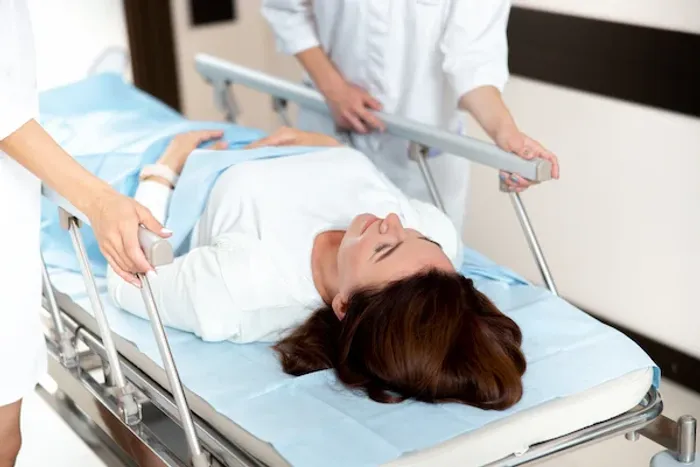
You will be brought into the OR and made comfortable on a bed. Standard monitors will be placed to track your heart rate, blood pressure, and oxygen levels throughout the procedure. The anesthesiologist will place an IV line, usually in your arm.
Step 2: Administering Sedation to Mimic Sleep
The anesthesiologist will slowly administer a sedative drug, most commonly Propofol. The dose is carefully titrated to achieve a depth of sleep that mimics natural stage II or III sleep—the stages where obstructive events most commonly occur. The team uses your breathing patterns, snoring sounds, and brainwave monitoring (in some cases) as guides. You will be completely asleep and unaware during the entire process.
Step 3: Inserting the Endoscope and Visualising the Airway
Once you are in the target state of sleep, the ENT surgeon will gently pass a thin, flexible fiber-optic endoscope (about 3-4 mm in diameter) through one of your nostrils and down into your throat. This camera transmits a live video feed to a screen. The surgeon will systematically examine your airway, looking at how structures move with each breath. They may simulate snoring or an apnoea event to observe the collapse pattern. The entire examination is recorded for later review.
Understanding the VOTE Classification System
To standardise findings, surgeons use the VOTE Classification system. This acronym stands for the four primary levels of obstruction:
Velum (soft palate and uvula)
Oropharyngeal lateral walls (including tonsils)
Tongue base
Epiglottis
For each level, the surgeon notes the degree of collapse (none, partial, complete) and the configuration (anteroposterior, lateral, or concentric). This detailed report becomes the roadmap for your treatment.
Benefits and Potential Risks of DISE
Like any medical procedure, DISE has its advantages and considerations.
Advantages of a Dynamic Airway Assessment
The greatest benefit is the dynamic, real-time visualisation it provides. It directly influences and improves surgical outcomes by allowing for highly personalised and precise interventions. It can prevent unnecessary surgery on the wrong part of the airway and is considered a safe procedure when performed by an experienced team in a controlled setting.
Understanding the Limitations and Risks
The procedure aims to mimic natural sleep, but it is still a drug-induced state, which some argue may not be 100% identical. The risks are generally low but are associated with sedation and endoscopy. These can include adverse reaction to sedative medications, minor nasal bleeding or discomfort, and laryngospasm (a brief spasm of the vocal cords). These risks are minimised by the expertise of the medical team. If you have concerns about your suitability for sedation, it's crucial to discuss your full medical history with your doctor at Apollo24|7 during your pre-procedure consultation.
Conclusion
A sleep endoscopy is a pivotal step for many individuals seeking a permanent solution to their obstructive sleep apnoea. It transforms treatment from a one-size-fits-all approach into a tailored strategy based on the unique architecture of your airway. By providing an unparalleled, real-time view of what happens when you sleep, DISE empowers your medical team to make incredibly precise decisions, significantly boosting the likelihood of a successful outcome, whether that involves surgery or other advanced interventions. If you have been diagnosed with OSA and have struggled with standard treatments, discussing the potential benefits of a drug-induced sleep endoscopy with an ENT specialist is a logical and promising next step. To consult with a leading ENT specialist who can evaluate if a sleep endoscopy is right for you, you can easily book an appointment online with Apollo24|7.
Health topic carousel:
Doctor's speciality: Otolaryngologist (ENT Specialist)
Text: Consult an Otolaryngologist (ENT Specialist) for the best advice
Frequently Asked Questions (FAQs)
1. Is a sleep endoscopy painful?
A. No, the procedure is not painful. You are under sedation and will be asleep throughout the entire process. Afterward, you might experience a mild sore throat or stuffy nose, but this is usually temporary and mild.
2. How long does the drug-induced sleep endoscopy take?
A. The procedure itself, from the start of sedation to the completion of the endoscopic exam, typically takes between 30 to 45 minutes. However, you should plan for a longer overall time at the hospital or surgical center for pre-operative preparation and post-operative recovery.
3. Can I eat or drink before a DISE?
A. No. You will be given strict instructions to fast (no food or drink) for typically 6-8 hours before your procedure. This is a critical safety measure to prevent aspiration during sedation.
4. What is the cost of a sleep endoscopy in India?
A. The cost of a sleep endoscopy can vary significantly based on the city, hospital facility, and the specialists involved. It is best to contact hospitals directly or check with your insurance provider for specific cost estimates.
5. How accurate is the VOTE classification from DISE?
A. The VOTE classification is a widely accepted and standardised tool among ENT surgeons. While it relies on the surgeon's observation and interpretation, it provides a highly accurate and reproducible map of airway collapse patterns, making it the gold standard for guiding sleep apnoea surgery.
Consult Top ent specialist

Dr. Aarshi Gupta
Ent Specialist
10 Years • MBBS, DNB (Apollo Chennai), speacialised in Paediatric ENT and children breathing, swallowing disorder
Delhi
Apollo Hospitals Indraprastha, Delhi

Dr. Pradip Kumar Deka
Ent Specialist
34 Years • MBBS, DLO, MS
Guwahati
Apollo Personalized Health Check Centre, Guwahati

(25+ Patients)

Dr. Ashwani Kumar
Ent Specialist
11 Years • MBBS, DNB (Otorhinolaryngology)
Delhi
Apollo Hospitals Indraprastha, Delhi
(50+ Patients)

Dr. Kinjal Shankar Majumdar
Head, Neck and Thyroid Cancer Surgeon
16 Years • M.B.B.S., MS (ENT & Head and Neck Surgery), MCh (Head and Neck Surgery and Oncology) & Robotic Surgery
Kolkata
Apollo Hospitals, Narendrapur, Kolkata, Kolkata

Dr Chirayata Basu
Ent Specialist
7 Years • MBBS, MS, DNB (ENT), MNAMS, MRCS (London, UK)
Lucknow
Apollomedics Super Speciality Hospital, Lucknow
Consult Top Specialists
Dr. Aarshi Gupta
Ent Specialist
10 Years • MBBS, DNB (Apollo Chennai), speacialised in Paediatric ENT and children breathing, swallowing disorder
Delhi
Apollo Hospitals Indraprastha, Delhi
Dr. Pradip Kumar Deka
Ent Specialist
34 Years • MBBS, DLO, MS
Guwahati
Apollo Personalized Health Check Centre, Guwahati
(25+ Patients)
Dr. Ashwani Kumar
Ent Specialist
11 Years • MBBS, DNB (Otorhinolaryngology)
Delhi
Apollo Hospitals Indraprastha, Delhi
(50+ Patients)
Dr. Kinjal Shankar Majumdar
Head, Neck and Thyroid Cancer Surgeon
16 Years • M.B.B.S., MS (ENT & Head and Neck Surgery), MCh (Head and Neck Surgery and Oncology) & Robotic Surgery
Kolkata
Apollo Hospitals, Narendrapur, Kolkata, Kolkata
Dr Chirayata Basu
Ent Specialist
7 Years • MBBS, MS, DNB (ENT), MNAMS, MRCS (London, UK)
Lucknow
Apollomedics Super Speciality Hospital, Lucknow