Guide to Acl And Meniscus Injuries During Weekend Sports
Learn about the common causes, symptoms, and immediate steps to take for ACL and meniscus tears, frequently sustained during weekend sports. Understand treatment options and prevention.

Guide to Acl And Meniscus Injuries During Weekend Sports
Introduction
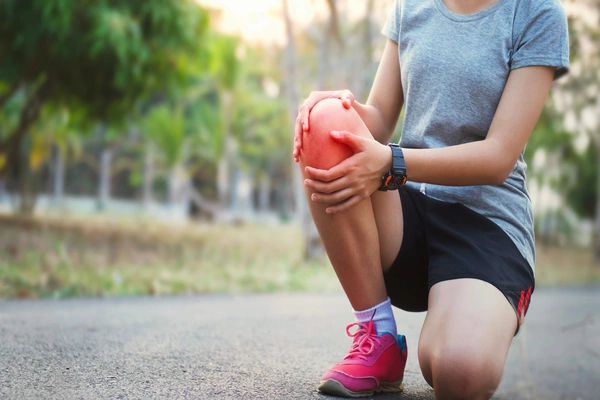
Weekend sports are supposed to recharge you—not sideline you. Yet quick pivots on the football turf, pickup basketball jumps, or a wrong ski edge can suddenly leave your knee swollen, painful, or unstable. Two of the most common weekend sports injuries are ACL and meniscus injuries. The ACL (anterior cruciate ligament) helps stabilize the knee during cutting and landing, while the meniscus cushions and shares load inside the joint. When either structure is injured, the result can be a painful, frustrating pause to your active life.
This guide gives you a clear, no-nonsense plan to spot the signs of ACL and meniscus injuries, decide what to do in the first 48 hours, understand when to get imaging, and choose the right treatment—whether that’s focused rehabilitation or surgery. You’ll also get a phase-by-phase rehab roadmap, objective criteria to return to your sport safely, and practical prevention steps tailored for weekend warriors. If symptoms persist beyond two weeks, consult a doctor online with Apollo 24|7 for further evaluation. Let’s get you back to the activities you love—stronger, smarter, and safer.
Weekend Warrior Reality Check: How ACL and Meniscus Injuries Happen
ACL and meniscus injuries often come from the same weekend scenarios: a sudden change of direction with your foot planted, a pivot with the knee slightly bent, or an awkward landing from a jump. The ACL is a key stabilizer resisting forward slide of the shin and rotational forces; the meniscus—two crescent-shaped pads—shares load, aids stability, and helps nutrition of the knee cartilage [1][2]. In sports like football, basketball, and netball, non-contact pivots can stress the ACL; in skiing, a backward fall with a twisting knee is classic. Many meniscus injuries occur with these same motions, especially when the knee twists under load; in older athletes, the meniscus may tear with more modest forces due to degenerative changes [2][4][6].
Risk is not just about the play—it’s about the player and the conditions. Fatigue increases injury risk by worsening landing mechanics and reaction time. Poorly fitted footwear, slippery or overly grippy surfaces, and insufficient warm-up amplify the problem. Prior knee injuries, reduced quadriceps and hip strength, and limited ankle mobility also raise risk. Women have higher ACL injury rates in many cutting/jumping sports, likely due to a combination of anatomy, hormones, and neuromuscular control patterns [1][3]. A practical insight for weekend athletes: the sprint from desk to sport isn’t just a schedule issue—it’s a tissue issue. A dedicated neuromuscular warm-up plus two short midweek strength sessions can cut your risk substantially, without requiring a pro-level regimen.
Spot the Signs and Decide Your Next Move
Classic ACL injury signs include hearing or feeling a “pop” at the moment of injury, rapid swelling within a few hours (from bleeding inside the joint), and a sense that the knee “gives way” with pivoting or walking on uneven ground [1][3][5]. Meniscus tears more often cause joint-line tenderness, mechanical catching or locking, swelling that may come on more slowly or recur after activity, and pain with squatting or twisting [2][4][6]. A bucket-handle meniscus tear can produce a true locked knee where you cannot fully straighten—this is an urgent scenario.
Red flags needing urgent care:
Inability to bear weight for more than a few steps
Severe instability or a locked knee that won’t straighten
Large, immediate swelling with deformity or suspicion of fracture
Fever or signs of infection after an injury or procedure
For immediate self-care in the first 48 hours, use PEACE & LOVE:
PEACE (Protection, Elevation, Avoid anti-inflammatories early if advised by your clinician, Compression, Education)
LOVE (Load as symptoms allow, Optimism, Vascularization via gentle cardio as appropriate, Exercise progression) [9]
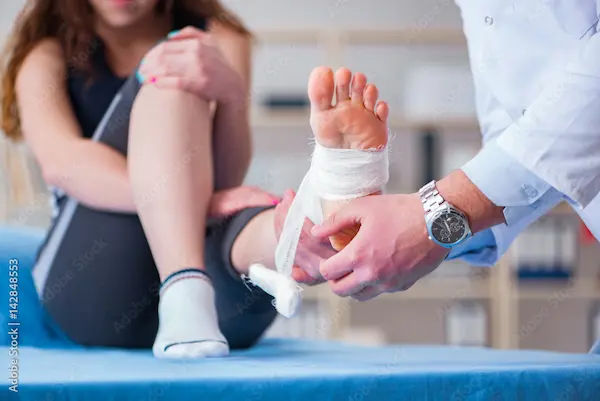
Compression, elevation, and short periods of protected weight-bearing help manage swelling. Gentle quad activation (e.g., quad sets) and regaining knee extension early are critical. If symptoms are severe or do not improve over 1–2 weeks, book a physical visit to a doctor with Apollo 24|7 to evaluate for ACL or meniscus injury. Early guidance helps you avoid secondary damage, especially if the knee is unstable or locking.
Getting the Right Diagnosis Without Over-testing
A careful history plus a skilled exam can often pinpoint the problem. For ACL tears, the Lachman test is considered the most sensitive single physical test; the pivot shift test is highly specific but can be uncomfortable in the acute phase [1][5]. For meniscus tears, joint-line tenderness combined with a positive Thessaly or McMurray test raises suspicion, although accuracy varies outside of specialist hands [2][6]. In real life, clinicians combine multiple tests and your story (pop, swelling timing, instability, locking) to improve accuracy.
Imaging choices:
X-ray: Useful if there’s pain with weight-bearing, a fall, or suspected fracture or avulsion (small bone fragment pulled off by a ligament). It won’t show the ACL or meniscus directly, but it can reveal associated issues and rule out fractures [1].
MRI: The gold standard for soft-tissue visualization, with high sensitivity/specificity for ACL and meniscus injuries.
MRI helps distinguish repairable meniscal tears (e.g., in the vascular “red-red” zone) from those better treated
conservatively or with limited trimming [2][3][6].
Ultrasound: Good for superficial structures and effusions but limited for internal knee ligaments and menisci.
Do lab tests matter? Generally not for mechanical injuries. Rare exceptions include ruling out inflammatory conditions or infection if symptoms are atypical. If your clinician recommends related labs (e.g., vitamin D to support bone and tendon health during recovery), Apollo 24|7 offers a convenient home collection.
Telehealth versus in-person: An online consult can triage, review your injury video, advise on immediate care, and arrange imaging when indicated. But hands-on laxity and meniscus tests, and a true locked knee, require in-person assessment. If instability or locking persists, consult a doctor online with Apollo 24|7 to fast-track an in-person evaluation and MRI, if needed.
Treatment Paths: From Conservative Care to Surgery
ACL: rehab-first vs early reconstruction. High-quality studies show that a structured rehabilitation program can yield
good outcomes for many active adults, with the option of delayed ACL reconstruction if instability persists (e.g.,
KANON trial and follow-ups) [10][11]. Early surgery can be appropriate for those with recurrent giving-way during
daily activities, high-demand pivoting sports, combined injuries (e.g., meniscus bucket-handle tear), or professional sport
timelines. Reconstruction choices (patellar tendon, hamstring, quadriceps tendon graft) involve trade-offs in anterior
knee pain, hamstring strength, and graft size—your surgeon will tailor this to your sport and anatomy [1][5].
Meniscus: Preserve when possible. Meniscus repair is favored for repairable tears, especially in the vascular outer zones and in younger or active adults, as preserving meniscal tissue reduces long-term osteoarthritis risk [2][8]. Partial meniscectomy (trimming frayed tissue) can relieve symptoms for irreparable tears but is linked with higher OA risk over time [2][8]. Meniscus root tears behave like a total meniscectomy biomechanically and often warrant surgical repair to restore load-sharing [2]. A true bucket-handle tear with locking usually needs prompt surgical attention.
Medications and injections: Short courses of NSAIDs can help early pain and swelling if tolerated. Corticosteroid injections are not first-line immediately post-injury for ACL/meniscus, but select cases with persistent synovitis may benefit; discuss timing to avoid impairing tissue healing. PRP (platelet-rich plasma) shows mixed evidence for isolated meniscus tears and is not a stand-alone cure; its role may be adjunctive in certain repairs or persistent symptoms—evidence is evolving [5][6].
Braces, crutches, and activity modification: A hinged knee brace can add perceived stability and protect a meniscus repair during early phases. Crutches are useful short-term to normalize gait and protect healing structures. Progressive loading and gait retraining reduce compensations that can stress the hip and back. Unique insight: weekend athletes often benefit from a “minimum effective dose” plan—two focused PT sessions weekly plus short, daily home exercises—because consistency beats intensity for tissue adaptation and adherence.
Rehab That Works: A Phase-by-Phase Plan
Phase 1 (Weeks 0–2/4): Goals are swelling control, pain reduction, full knee extension, and quadriceps activation. Use
compression, elevation, short bouts of protected weight-bearing, and frequent heel-prop extension holds. Start quad sets,
straight-leg raises (if no lag), gentle heel slides, and patellar mobilizations. Early extension strongly predicts better long-
term outcomes in both ACL and meniscus pathways [1][2]. Add low-impact vascularization (e.g., upper-body ergometer or gentle cycling as tolerated) to promote healing (LOVE) [9].
Phase 2 (Weeks 3–8): Build strength and neuromuscular control. Prioritize closed-chain exercises: sit-to-stand, wall sits,
leg press within pain-free ranges, bridges, lateral step-downs, and anti-valgus mechanics training. Balance drills (single-
leg stance, perturbations), hip abductors/external rotators, and calf strength support knee alignment. If you had a
meniscus repair, respect your surgeon’s loading and flexion limits initially. For non-surgical ACL management,
introduce controlled deceleration and mini-hops once swelling is quiet and control is solid. LSI (limb symmetry index)
targets of 80–85% for key strength groups by the end of this phase are reasonable benchmarks.
Phase 3 (Months 2–6): Return to running, agility, and plyometrics. Start with walk-jog intervals on level ground, progress to straight-line runs, then introduce gentle cuts and shuffles. Plyometrics begin with double-leg landings emphasizing soft, quiet, knee-over-toe tracking, then advance to single-leg hops. Objective milestones include 90%+ LSI for quadriceps and hamstrings, passing hop-test batteries (single, triple, crossover hop for distance; 6-meter timed hop), and demonstrating clean landing mechanics without dynamic valgus. Psychological readiness matters; tools like the ACL-RSI scale can identify fear of movement that needs coaching.
Milestones and criteria, not just the calendar. Many weekend athletes return too soon because pain is low. Evidence suggests that waiting at least 9 months after ACL reconstruction and meeting criteria (strength ≥90%, hop tests ≥90%, quality movement, psychological readiness) significantly reduces reinjury risk [12]. A fresh perspective: film your key movements (drop jump, single-leg squat, lateral shuffle to cut) monthly. Side-by-side video review with your clinician can catch subtle valgus collapse or trunk sway that numbers miss.
Returning to Sport Safely—and Staying There
Why 9–12 months matters after ACL reconstruction: The graft matures slowly and neuromuscular patterns retrain over time. Returning before 9 months is associated with higher reinjury rates; each month of delay until 9 months appears to reduce reinjury odds substantially in athletes who also meet strength/function criteria [12]. For meniscus repair, timelines vary with tear type and repair technique—running may resume by 3–4 months, pivoting sport later, once criteria are met.
Reinjury prevention: The FIFA 11+ and similar neuromuscular warm-ups can reduce lower-limb injuries by 30–50% when done consistently 2–3 times per week [1]. Key elements include single-leg balance, controlled decelerations, hip-dominant hinging, and soft landings with knee tracking over the second toe. Add fatigue-proofing by training under mild fatigue so your mechanics don’t collapse at the end of play. For skiers, pre-season eccentric quads/hamstrings and rotational core drills lower risk.
Bracing and expectations: Functional knee braces may improve confidence during the transition back to cutting sports after ACL reconstruction, though evidence for true reinjury reduction is mixed [5]. Consider temporary use while you build capacity. Tape can cue better knee alignment during squats or hops but is not a substitute for strength and control. A weekend athlete’s advantage: you can periodize your season—build for 8–10 weeks, then maintain—rather than trying to peak every weekend.
Long-term joint health: Meniscus preservation pays dividends by reducing osteoarthritis (OA) risk compared with meniscectomy [2][8]. Keep body weight in a healthy range, vary surfaces and footwear, and include cross-training (cycling, swimming) to distribute joint load. If you’ve had a partial meniscectomy, be extra diligent with strength and movement quality to protect cartilage over the long haul.
When to See a Doctor and Where Apollo 24|7 Fits In
See a clinician promptly if you have any of the following:
True knee locking, severe instability, or inability to fully extend
Immediate massive swelling or inability to bear weight
Recurrent giving-way episodes during daily activities
Symptoms persisting beyond 1–2 weeks despite appropriate self-care
Smart questions to ask:
Is my meniscus tear repairable, and what are the pros/cons versus trimming?
Based on my sport and goals, do you recommend ACL rehab-first or early reconstruction?
What are my objective return-to-sport criteria, and how will we measure them?
What graft options fit my sport (if surgery), and what are the rehab implications?
How Apollo 24|7 can help:
Book an online consultation to triage symptoms, review videos of your movement, and plan next steps.
If your condition does not improve after trying these methods, book a physical visit to a doctor with Apollo 24|7 for
hands-on testing and MRI referrals when needed.
During recovery, if your clinician advises checking supportive labs (e.g., vitamin D for bone/muscle health), Apollo 24|
7 offers a convenient home collection.
Quick takeaways
A pop with rapid swelling suggests ACL; catching or locking suggests meniscus—both warrant early evaluation.
Use PEACE & LOVE in the first 48 hours; early extension and quad activation are crucial.
MRI is the go-to when ACL or meniscus injury is suspected; X-ray rules out fractures.
Many ACL tears can start with rehab-first; meniscus preservation (repair) reduces long-term OA risk.
Return-to-sport decisions should be criteria-based (≥90% strength and hop symmetry, clean mechanics, psychological
readiness), not just time-based.
Neuromuscular warm-ups like FIFA 11+ and consistent strength training cut reinjury risk for weekend athletes.
If symptoms persist beyond two weeks or you have locking/instability, consult a doctor online with Apollo 24|7 to plan appropriate care.
Conclusion
ACL and meniscus injuries don’t have to end your season—or your confidence. Understanding how these injuries happen in weekend sports, recognizing the key symptoms, and acting wisely in the first 48 hours can shorten your downtime and protect your long-term knee health. Diagnosis hinges on a focused history and exam, with MRI when an ACL or meniscus tear is suspected. Treatment should match your goals: many people succeed with structured rehabilitation for ACL injuries, while others—especially those with instability, combined injuries, or high pivoting demands—do better with early reconstruction. For meniscus problems, repair what you can and preserve tissue to reduce osteoarthritis risk down the road.
Your best return to the sport you love is built on a criteria-based plan: restore extension, rebuild strength and control, master movement quality, and confirm readiness with objective tests—not just the calendar. Add a simple neuromuscular warm-up and two brief strength sessions weekly to keep injuries at bay. If symptoms persist, or you experience locking or instability, consult a doctor online with Apollo 24|7 for further evaluation and to arrange in-person assessment or imaging if needed. Smart choices now will help you play longer, feel better, and enjoy your weekends without the worry.