


Oatmeal for Weight Loss
Discover how oatmeal weight loss works. Learn benefits, best types, portions, and tasty, healthy bowl ideas to help you feel full and lose weight.

Written by Dr. Mohammed Kamran
Reviewed by Dr. Dhankecha Mayank Dineshbhai MBBS
Last updated on 13th Jan, 2026
Introduction
A warm bowl of oatmeal can be one of the simplest, most affordable breakfasts for those aiming to manage their weight while still enjoying satisfying, wholesome meals. The soluble fibre in oats absorbs liquid and expands, helping you feel pleasantly full for longer. At the same time, oats deliver steady energy thanks to their whole-grain structure, making them a gentle, balanced choice for busy mornings. When paired with a thoughtful mix of toppings and portion awareness, oatmeal weight-loss strategies can be both realistic and enjoyable.
This guide explains why oats help, how to create balanced bowls, and what to avoid when using oatmeal as part of a health-focused routine. Because oatmeal adapts so well to both sweet and savoury additions, it also reduces breakfast monotony, encouraging long-term adherence to healthy eating.Consult a Top Nutritionist for Personalised Advice
How Does Oatmeal Support Weight Management?
Oatmeal is created from oats, a naturally nutrient-dense whole grain rich in vitamins, minerals, and a unique soluble fibre known as beta-glucan. This fibre forms a thick, gel-like consistency in the digestive tract, slowing digestion and increasing satiety. By helping you feel fuller for longer, oats can make it easier to maintain a calorie deficit, the fundamental element of weight-loss success. Their slow-releasing carbohydrates also support sustained energy, reducing the likelihood of cravings and overeating later in the day. Oats also provide a modest amount of protein, enhancing fullness and supporting muscle maintenance as part of a balanced diet. These combined benefits make oatmeal a practical, flexible tool for healthy weight management.
Fibre and Fullness in Oats
Dietary fibre is widely recognised for promoting satiety and supporting digestive health. Oats are especially valuable because beta-glucan absorbs water and creates a satisfying texture that helps prevent overeating. When oatmeal is prepared with water or milk and supported by protein and produce, the overall meal becomes even more filling.
A well-balanced bowl can delay hunger, stabilise your appetite, and reduce the urge for high-calorie snacks. Fibre also slows the rate at which nutrients enter the bloodstream, contributing to a gentle, sustained release of energy. By encouraging slower eating and prolonged satisfaction, fibre-rich meals can support mindful eating patterns that reinforce healthy habits.
Steady Energy and Reduced Blood Sugar Spikes
Less processed oats, such as steel-cut or old-fashioned/rolled varieties, digest more slowly and tend to have a gentler effect on blood sugar compared with refined grains. This more stable release of energy can prevent the abrupt highs and lows that often trigger cravings. Although instant oats can still be nutritious, flavoured packets often contain added sugars, so choosing plain versions and sweetening them lightly yourself is usually the better option. The steadier blood sugar response from whole oats can also support concentration and productivity throughout the morning. By reducing the temptation to reach for quick snacks, this gradual energy release contributes positively to weight-control goals.
Use of Oatmeal for Weight Loss in Daily Life
Successfully incorporating oatmeal into your daily routine involves mindful portioning, balanced toppings, and choosing the preparation style that suits your lifestyle. When done correctly, oatmeal becomes a reliable anchor for a healthy breakfast. Oatmeal is also versatile enough to serve as a light lunch or even a satisfying snack when portioned thoughtfully. Its adaptable texture accommodates both warm bowls and chilled overnight preparations, making it suitable for different schedules and dietary needs.
Start with Smart Portions
• A standard cooked serving begins with about 1/2 cup dry rolled oats or 1/4–1/3 cup dry steel-cut oats.
• Add enough water or milk to achieve your preferred texture.
• If you find yourself hungry shortly afterwards, increase protein or fruit rather than doubling the oats.
• If you feel overly full, reduce the portion slightly to stay within your energy needs.
• Tracking how long your portion keeps you satisfied can help you tailor servings more effectively to your personal routine and goals.
Build a Balanced Bowl
A satisfying oatmeal meal contains a mix of fibre, protein, and healthy fats. Use the following as simple building blocks for every bowl:
• Protein options: Greek yoghurt, cottage cheese, milk or soy milk, eggs on the side, protein powder, nuts or seeds.
• Produce for volume and fibre: berries, apples, pears, peaches, pumpkin puree, or vegetables such as spinach or courgette for savoury bowls.
• Healthy fats: nut butters, chia seeds, flaxseed, walnuts or almonds.
• Flavour enhancers: cinnamon, nutmeg, vanilla, unsweetened cocoa, citrus zest or a splash of vanilla extract.
Balancing these elements helps regulate appetite, improve nutrient density, and keep meals satisfying without exceeding calorie needs.
Best Types of Oats for Satiety
• Steel-cut oats: chewy and hearty; ideal for slow, sustained energy.
• Old-fashioned/rolled oats: creamy, quick to cook, and versatile for sweet or savoury bowls.
• Instant oats: convenient for busy mornings; choose plain varieties to avoid added sugars.
• Overnight oats: soaked rolled oats offering a thick, portable option that can be prepared in advance.
Texture and cooking methods can also subtly affect satiety, so experimenting with different types may help you discover what keeps you full the longest.
Toppings to Add and Limit
Add freely:
• Fresh or frozen berries
• Chopped apple or pear
• Pumpkin puree
• Cinnamon, ginger, vanilla
• Unsweetened cocoa powder
Use mindfully:
• Nut butters
• Nuts and seeds
• Dried fruit
• Honey, maple syrup, brown sugar
Small changes in toppings can dramatically affect calorie intake, making mindful choices especially important when eating oatmeal regularly.
Easy Oatmeal Weight-Loss Bowl Ideas
The oatmeal bowl ideas include:
• Berry crunch: Rolled oats with milk or soy milk, topped with blueberries, Greek yoghurt, almonds, and cinnamon.
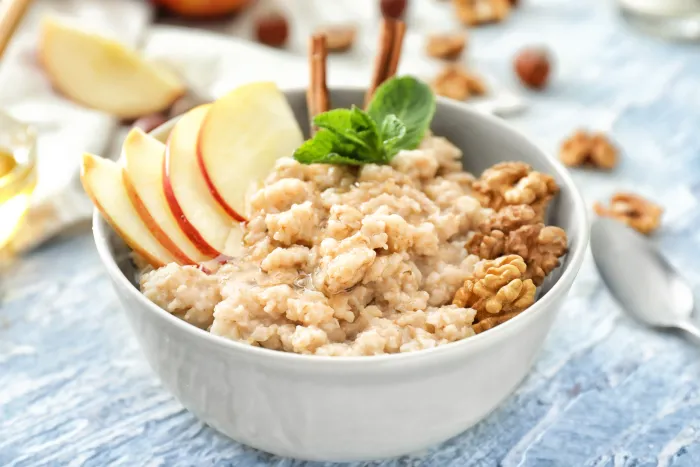
• Apple pie oats: Oats simmered with diced apple, pumpkin pie spice, and vanilla, finished with chopped walnuts.
• Peanut butter banana: Oats with sliced banana, 1–2 teaspoons peanut butter, and chia seeds.
• Savoury spinach and egg: Oats cooked in low-sodium broth with spinach and black pepper, topped with a poached or fried egg.
• Pumpkin pie overnight oats: Rolled oats, milk, pumpkin puree, cinnamon, and a small drizzle of maple syrup, chilled overnight.
• Cocoa cherry: Oats mixed with unsweetened cocoa, frozen cherries, and a spoon of cottage cheese for extra protein.
These bowls offer variety while remaining straightforward to prepare, ensuring you can enjoy diverse flavours without complicating your morning routine.
A 7-day Oatmeal Plan for Variety
The oatmeal plan can be done as:
• Day 1: Blueberry Greek yoghurt oats
• Day 2: Savoury oats with sautéed mushrooms, spinach, and a soft-boiled egg
• Day 3: Peanut butter banana, chia oats
• Day 4: Apple cinnamon walnut oats
• Day 5: Pumpkin pie overnight oats
• Day 6: Cocoa cherry cottage cheese oats
• Day 7: Almond butter, pear oats with a hint of nutmeg
A rotating plan helps maintain enthusiasm, prevents flavour fatigue, and encourages consistent healthy habits.
Common Mistakes That Can Stall Progress
The common mistakes which can stall progress include:
• Oversized portions can increase calories without you realising.
• Sugary flavoured instant packets may reduce the benefits of a wholesome bowl.
• Heavy toppings like nut butter, cream, or dried fruit add calories quickly.
• Skipping protein may leave you hungry before lunchtime.
• Pairing oatmeal with high-calorie drinks like sweet lattes or juice can push you over your daily target.
Paying attention to these pitfalls ensures that your oatmeal routine stays aligned with your nutrition goals.
Special Situations and Safety Tips
Special situations and safety tips include:
Diabetes or Prediabetes
• Choose less processed oats, such as steel-cut or rolled.
• Watch portions closely and pair with protein or healthy fats.
• Limit added sugars and use berries or spices for sweetness.
• Monitor blood glucose to understand your personal response.
These steps help stabilise blood sugar and make oatmeal a safe, supportive option for many people.
Coeliac Disease or Gluten Sensitivity
• Oats are naturally gluten-free, but can be contaminated during processing.
• Look for “certified gluten-free” oats if avoiding gluten is necessary.
• Monitor how you feel after consuming oats to ensure comfort.
Proper selection allows many individuals with sensitivities to enjoy the benefits of oats safely.
Kids, Pregnancy, and Breastfeeding
• Oatmeal can be a nourishing choice for families.
• Focus on balanced meals and adequate calorie intake.
• Those with special dietary needs should consult a healthcare provider.
• Adding fruit and milk can create child-friendly, nutrient-rich versions.
Oats can support both energy needs and nutrition in these stages of life.
Allergies and Intolerance
• Oat allergies are uncommon but can occur.
• If symptoms develop, discontinue consumption and seek medical advice.
• Introduce oats gradually if unsure of tolerance.
Gentle monitoring ensures oatmeal remains a safe choice for most people.
A Quick Grocery Guide
It includes:
• Read ingredient lists carefully: choose plain oats without added sugars.
• Look for higher fibre options to maximise fullness.
• Keep added sugars low and sweeten at home if needed.
• Compare sodium levels in instant cups or packets.
Shopping with awareness helps support your goals and ensures each bowl contributes positively to your daily nutrition.
Evidence at a Glance
It includes:
• Fibre slows digestion and prolongs satiety; oats’ beta-glucan is particularly effective.
• Whole-grain eating patterns are associated with better weight and metabolic outcomes than refined grains.
• Sustainable weight management usually depends on a calorie deficit combined with healthy routines; oatmeal fits well into such patterns.
• Oats provide complex carbohydrates that help stabilise hunger. This combination of benefits makes oatmeal a valuable addition to a balanced diet.
Putting it Together
• Choose a base: steel-cut or rolled oats, plain and unsweetened.
• Portion with purpose: start with common dry servings and adjust to your comfort.
• Add protein and produce for balanced nutrition.
• Use spices and small amounts of sweetener for an enjoyable flavour.
• Prepare ahead with overnight oats or batch-cooked steel-cut oats.
• Track your satisfaction level and adjust toppings or timing accordingly.
Following this simple structure helps make oatmeal a dependable part of your daily routine.
Conclusion
Oatmeal is a versatile, naturally filling food that can support healthy weight management when used thoughtfully. By adding balanced toppings, controlling portions, and including protein, each bowl provides lasting energy and steady appetite control. Whether you prefer warming cooked oats or convenient overnight versions, oatmeal fits easily into many lifestyles. With simple preparation and endless flavour options, it helps build consistent, nutritious habits. Over time, these small choices can contribute to greater well-being and a more enjoyable eating pattern. Oatmeal’s adaptability and simplicity make it a valuable ally in long-term health goals.Consult a Top Nutritionist for Personalised Advice
Consult a Top Nutritionist for Personalised Advice

Dr. Ramalinga Reddy
General Physician
5 Years • MBBS MD General medicine
Bengaluru
PRESTIGE SHANTHINIKETAN - SOCIETY CLINIC, Bengaluru

Mrs Sneha P V
Nutritionist
10 Years • Master of science in Food and Nutrition
Bengaluru
Apollo Clinic, Sarjapur Road, Bengaluru

Adhishesh Kaul
General Physician
6 Years • MBBS
Bengaluru
PRESTIGE SHANTHINIKETAN - SOCIETY CLINIC, Bengaluru

Dt. Ila Sharma
Clinical Nutritionist
18 Years • Master in food & Nutrition
Gurugram
VIPUL GREENS - SOCIETY CLINIC, Gurugram

Dt. Prabhavathy
Clinical Nutritionist
8 Years • Msc Human Nutrition & Nutraceuticals
Madurai
Apollo Sugar Clinics, Madurai, Madurai
Consult a Top Nutritionist for Personalised Advice
Dr. Ramalinga Reddy
General Physician
5 Years • MBBS MD General medicine
Bengaluru
PRESTIGE SHANTHINIKETAN - SOCIETY CLINIC, Bengaluru
Mrs Sneha P V
Nutritionist
10 Years • Master of science in Food and Nutrition
Bengaluru
Apollo Clinic, Sarjapur Road, Bengaluru
Adhishesh Kaul
General Physician
6 Years • MBBS
Bengaluru
PRESTIGE SHANTHINIKETAN - SOCIETY CLINIC, Bengaluru
Dt. Ila Sharma
Clinical Nutritionist
18 Years • Master in food & Nutrition
Gurugram
VIPUL GREENS - SOCIETY CLINIC, Gurugram
Dt. Prabhavathy
Clinical Nutritionist
8 Years • Msc Human Nutrition & Nutraceuticals
Madurai
Apollo Sugar Clinics, Madurai, Madurai
More articles from Weight Loss





Frequently Asked Questions
Q1: Is oatmeal good for weight loss?
Yes. Oatmeal is rich in fiber that promotes fullness, which can help you eat fewer calories overall. It works best as part of a balanced, calorie-aware eating pattern with regular physical activity.
Q2: What kind of oats are best for weight loss?
Steel-cut and old-fashioned/rolled oats are great choices because they’re less processed and tend to be more filling. Plain instant oats can also work—just avoid added sugars by choosing unflavored packets.
Q3: How much oatmeal should I eat?
A common starting point is about 1/2 cup dry rolled oats (or 1/4–1/3 cup dry steel-cut) per person. Adjust up or down based on your hunger, toppings, and overall calorie needs.
Q4: What’s the healthiest way to sweeten oatmeal?
Use fruit (like berries or apples), spices (cinnamon, vanilla), or a light drizzle of honey or maple syrup. Keep added sugars small, and rely on fruit and spices for most of the sweetness.
Q5: Can I eat oatmeal every day?
Many people do. For balance, pair it with protein and produce, vary your toppings, and include other whole grains and nutrient-rich foods throughout the week.