

Fibroscan: A Painless Scan for Early Liver Disease Detection
Know about the fibroscan, what it is, how it helps, cap score, interpretation, limitations and more.

Written by Dr. Dhankecha Mayank Dineshbhai
Reviewed by Dr. Vasanthasree Nair MBBS
Last updated on 16th Sep, 2025

Introduction
Your liver is your body's silent workhorse, performing over 500 vital functions. For decades, diagnosing the severity of liver disease, like fibrosis (scarring) or cirrhosis, relied on an invasive and anxiety-inducing procedure: the liver biopsy. But what if you could assess your liver's health as easily as getting an ultrasound? Enter Fibroscan, a revolutionary, non-invasive technology that has transformed the landscape of hepatology. This guide will walk you through everything you need to know about Fibroscan how this simple method enables the early diagnosis of liver disease, who it's for, what the results mean, and why it's become a critical tool in protecting your long-term health.
Understanding Liver Disease and Why Early Detection is Crucial
Liver disease is a growing global health concern, often fueled by factors like obesity, alcohol consumption, and viral hepatitis. The insidious nature of these conditions is that the liver can sustain damage for years without showing obvious symptoms. Fatigue or mild discomfort is often dismissed, while underneath, inflammation can lead to fibrosis—the formation of scar tissue.
The Silent Progression of Liver Conditions
Conditions like Non-Alcoholic Fatty Liver Disease (NAFLD) and its more aggressive form, NASH (Non-Alcoholic Steatohepatitis), progress silently. By the time symptoms like jaundice (yellowing skin), abdominal swelling, or confusion appear, the liver may already be severely scarred, leading to cirrhosis or liver failure. Early diagnosis is the key to halting or even reversing this damage through lifestyle changes and medical intervention.
Consult a General Practitioner for Personalised Advice
The Gold Standard That Wasn't Golden: Liver Biopsy
For years, the liver biopsy was the only way to accurately stage liver fibrosis. This procedure involves inserting a needle into the liver to extract a small tissue sample. While informative, it is invasive, carries risks like pain and bleeding, requires hospitalisation, and only examines a tiny fraction of the organ, which can lead to sampling errors. The need for a better, safer, and more comprehensive tool was clear.
What is a Fibroscan? The Technology Explained Simply
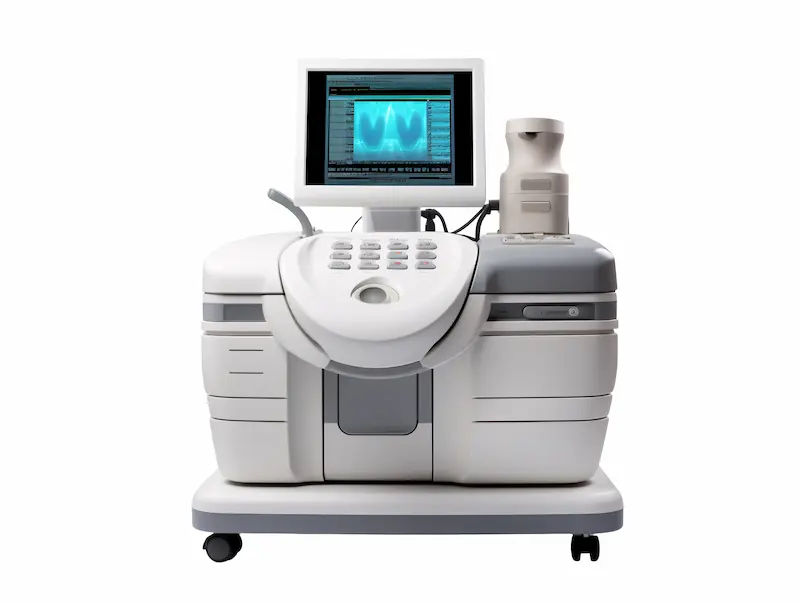
A Fibroscan is a specialised medical device that uses a technology called Vibration-Controlled Transient Elastography. In simple terms, it painlessly measures how stiff your liver is.
How Does the Fibroscan Machine Work?
The technician places a probe-like tool on your skin, between your ribs. This probe sends a gentle, low-frequency vibration through the liver. This vibration creates a shear wave that travels through the liver tissue. The Fibroscan machine then measures the speed of this wave. The fundamental principle is straightforward: the stiffer the liver, the faster the shear wave travels. The result is given in kilopascals (kPa). A higher kPa score indicates more stiffness, which correlates with more advanced fibrosis or cirrhosis.
CAP Score: Measuring Liver Fat (Steatosis)
A key feature of modern Fibroscan devices is the Controlled Attenuation Parameter (CAP). While the stiffness score measures scarring, the CAP score simultaneously quantifies fat accumulation in the liver. This is incredibly valuable for diagnosing and monitoring conditions like fatty liver disease, providing a complete picture of liver health in one single, quick session.
Who Should Get a Fibroscan Test? Know Your Risk Factors
Not everyone needs a Fibroscan. It is typically recommended for individuals with known risk factors for chronic liver disease, including:
- Individuals diagnosed with Non-Alcoholic Fatty Liver Disease (NAFLD).
- Those with chronic viral hepatitis (Hepatitis B or C).
- People with a history of significant alcohol consumption.
- Patients with type 2 diabetes or metabolic syndrome.
- Those with unexplained, persistently abnormal liver enzyme tests (ALT, AST).
- Individuals who are obese.
If you identify with one or more of these risk factors, discussing a Fibroscan test with your doctor is a proactive step. You can consult a hepatologist online with Apollo24|7 to evaluate your risk and determine if this scan is right for you.
The Fibroscan Procedure: What to Expect Step-by-Step
The experience of a Fibroscan is remarkably simple and patient-friendly, especially compared to a biopsy.
How to Prepare for Your Fibroscan Appointment?
Preparation is minimal. You are typically asked to fast for 2-3 hours before the procedure. This ensures more accurate readings, particularly for the CAP score measuring liver fat. Wear comfortable clothing that allows easy access to your right side, just below the rib cage.
During the Scan: A Quick and Painless Experience
You will lie on your back on an exam table with your right arm raised behind your head. The technician will place the probe on your skin. You will feel a slight, brief tap or vibration with each measurement—often described as a faint "flick." The entire process takes only 5 to 15 minutes. There is no sedation, no pain, and you can return to your normal activities immediately afterwards.
Interpreting Your Fibroscan Results: Stiffness (kPa) and CAP Scores
Understanding your results is crucial. Your doctor will explain them in detail, but here’s a general guide.
Fibrosis Stages: From F0 (No Scarring) to F4 (Cirrhosis)
The stiffness result (in kPa) is translated into a METAVIR score, which stages fibrosis from F0 to F4:
F0-F1 (≤7.0 kPa): No significant scarring.
F2 (7.1-9.4 kPa): Significant scarring.
F3 (9.5-12.4 kPa): Advanced scarring.
F4 (≥12.5 kPa): Cirrhosis.
Note: These ranges can vary slightly based on the underlying cause of liver disease.
What Your CAP Score Says About Fatty Liver Disease
The CAP score (in dB/m) estimates the percentage of liver fat:
- <248 dB/m: No steatosis (S0)
- 248-267 dB/m: Mild steatosis (S1)
- 268-279 dB/m: Moderate steatosis (S2)
- >280 dB/m: Severe steatosis (S3)
These results help your doctor create a tailored management plan, whether it's for weight loss, controlling diabetes, or treating viral hepatitis.
Advantages of Fibroscan Over Traditional Liver Biopsy
The benefits of this technology are profound:
- Non-Invasive and Painless: No needles or incisions.
- Immediate Results: Your doctor can discuss findings shortly after the scan.
- No Recovery Time: Walk in and walk out; no downtime required.
- Comprehensive: Measures the entire liver, reducing sampling error.
- Excellent for Monitoring: Ideal for safely tracking disease progression or regression over time.
- Cost-Effective: Generally less expensive than a biopsy procedure.
Limitations and Considerations of Fibroscan Technology
While excellent, Fibroscan isn't perfect. It can be less accurate in certain situations:
- Obesity: A thick layer of fat between the probe and the liver can make it harder to get a reliable reading. Newer probes (XL probe) have been developed to address this.
- Ascites: Fluid in the abdomen prevents the shear waves from reaching the liver, making the test impossible.
- Narrow Intercostal Spaces: In some patients, the space between the ribs is too narrow to get a good reading.
- In these cases, your doctor may recommend alternative tests like an MR Elastography.
The Future of Liver Health Monitoring with Fibroscan
Fibroscan has moved diagnosis from the reactive (waiting for symptoms) to the proactive (screening at-risk populations). It empowers doctors to detect liver disease at a stage where lifestyle interventions can truly make a difference. Its role in large-scale screening programs for diabetes and obesity clinics is expanding, promising to curb the rising tide of advanced liver disease globally.
Conclusion
The advent of Fibroscan technology is a monumental leap forward in hepatology. It demystifies liver diagnosis, removing the fear and inconvenience that once surrounded it. By providing a clear, accurate, and immediate window into the health of your liver, it places the power of early detection and prevention firmly in your hands. If you have any risk factors for liver disease, don't wait for symptoms to appear. Proactive health screening is the cornerstone of long-term well-being. Talk to your doctor today about whether a Fibroscan is appropriate for you.
Consult a General Practitioner for Personalised Advice
Consult a General Practitioner for Personalised Advice


Dr. Jawwad Mohammed Kaleem
General Practitioner
4 Years • MBBS
Hyderabad
Apollo 24|7 Clinic, Hyderabad

Dr. Mohammed Kamran
General Practitioner
5 Years • MBBS, FIDM
Nashik
Apollo 24|7 Clinic - Maharashtra, Nashik

Dr D M Karthik
General Practitioner
4 Years • MBBS, Fellowship in Diabetes Mellitus, Advance certificate in Diabetes Mellitus, Derma Nutrition Certification
Visakhapatnam
Apollo 24|7 Clinic - Andhra Pradesh, Visakhapatnam

Dr. Rajib Ghose
General Physician/ Internal Medicine Specialist
25 Years • MBBS
East Midnapore
VIVEKANANDA SEBA SADAN, East Midnapore

Dr. Ashita Kuruvilla
General Practitioner
7 Years • MBBS
Kolkata
KVC CLINIC, Kolkata
Consult a General Practitioner for Personalised Advice
Dr. Jawwad Mohammed Kaleem
General Practitioner
4 Years • MBBS
Hyderabad
Apollo 24|7 Clinic, Hyderabad
Dr. Mohammed Kamran
General Practitioner
5 Years • MBBS, FIDM
Nashik
Apollo 24|7 Clinic - Maharashtra, Nashik
Dr D M Karthik
General Practitioner
4 Years • MBBS, Fellowship in Diabetes Mellitus, Advance certificate in Diabetes Mellitus, Derma Nutrition Certification
Visakhapatnam
Apollo 24|7 Clinic - Andhra Pradesh, Visakhapatnam
Dr. Rajib Ghose
General Physician/ Internal Medicine Specialist
25 Years • MBBS
East Midnapore
VIVEKANANDA SEBA SADAN, East Midnapore
Dr. Ashita Kuruvilla
General Practitioner
7 Years • MBBS
Kolkata
KVC CLINIC, Kolkata
Frequently Asked Questions
How accurate is a Fibroscan compared to a biopsy?
Fibroscan is highly accurate for detecting significant fibrosis and cirrhosis. While a biopsy is still considered the definitive standard in very complex cases, Fibroscan's accuracy is over 90% for diagnosing advanced stages of disease (F3 and F4) and is excellent for monitoring changes over time without repeated invasive procedures.
What is the cost of a Fibroscan test in India?
The cost of a Fibroscan test can vary depending on the city and healthcare facility. It is generally more affordable than a liver biopsy. For precise pricing and availability at a centre near you, it's best to check directly with diagnostic networks or hospital websites.
Can Fibroscan detect liver cancer?
No, Fibroscan is not designed to detect liver cancer (hepatocellular carcinoma). Its primary function is to measure liver stiffness (fibrosis) and fat. To screen for liver cancer, especially in patients with cirrhosis, imaging tests like an ultrasound, CT scan, or MRI are used.
How often should I get a Fibroscan if I have fatty liver?
The frequency depends on your initial results and your doctor's recommendation. If you have simple fatty liver (no fibrosis), a repeat scan in 2-3 years might be suggested alongside lifestyle management. If you have significant fibrosis, your doctor may want to monitor it more frequently, perhaps annually, to track progression or improvement.
Are there any side effects of a Fibroscan?
There are no known side effects of a Fibroscan. It does not use ionising radiation. The procedure is completely painless and safe, and you can drive and resume all normal activities immediately afterwards.