


- male
- 60 Years
- 20/02/2025
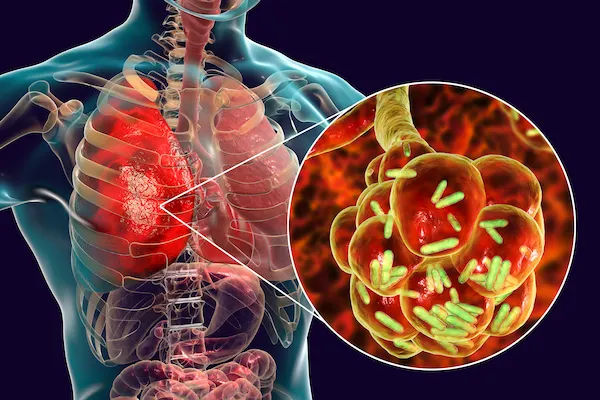
I'm a bit worried about my recent CT report, and I could really use some guidance. It mentions that there's a collapse consolidation in my left lower lobe and some specks of calcification with fibronodular changes. They also found a few confluent nodules and scattered small nodules in both lung fields, plus ground glass opacity in my right lower lobe. The impression notes something about mediastinal lymphadenopathy and a mild pleural infusion on the left. Can someone explain what all these terms mean and what I should be concerned about? Is this indicative of a serious condition or something treatable?

Answered by 1 Apollo Doctors

take antibiotics,consult pulmonologist
Dr. Anshul Suggests...
Consult a Pulmonology Respiratory Medicine Specialist
Answered 04/07/2025
0
0


Ask Apollo
AI powered Health Chatbot
-
Collapse Consolidation in Left Lower Lobe
- Indicates lung tissue collapse and fluid or infection presence. Requires further evaluation for infection or other causes.
-
Specks of Calcification with Fibronodular Changes
- Suggests old infections or granulomatous disease. Monitor for changes or symptoms.
-
Confluent and Scattered Small Nodules
- Could indicate infection, inflammation, or malignancy. Further tests like a biopsy may be needed.
-
Ground Glass Opacity in Right Lower Lobe
- May suggest inflammation, infection, or early fibrosis. Needs correlation with symptoms and possibly follow-up imaging.
-
Mediastinal Lymphadenopathy
- Enlarged lymph nodes could be due to infection, inflammation, or malignancy. Further investigation is necessary.
-
Mild Pleural Effusion on the Left
- Fluid in the pleural space; often due to infection, heart failure, or malignancy. Requires clinical correlation and possibly drainage.
Recommendations
- Consult a pulmonologist for a comprehensive evaluation.
- Consider further diagnostic tests like a PET scan or biopsy.
- Monitor symptoms and follow up with imaging as advised by your healthcare provider.
Recommended next steps
Consult a Pulmonology Respiratory Medicine Specialist
Answered 10/09/2025
0
0
More Pulmonology/ Respiratory Medicine Health Queries
View allI'm having some trouble with my breathing that's been going on for about 10-12 days. I'm constantly feeling the need to take deep breaths, yet exercising like jogging or using stairs doesnt seem to be a problem. It's odd because I'm yawning a lot during the day, and it seems to get worse at night. I'm really puzzled and a bit worried about what might be causing this. Could you help me understand what's going on?
ENT opinion is advised to the patient.


Answered by 1 Apollo Doctors
I'm really worried because about six months ago, I had a medical test for a job in the Gulf and they said I was unfit. They found an opacity in the mid-zone on the right side of my chest. I'm trying to understand what this means and if there's any medical treatment I can do to handle this issue. Could you please help me with some advice on what steps I should take?
you need to find a cause for lung opacity . consult a pulmonologist
Answered by 1 Apollo Doctors
I've had a cough and minor fever that started about 10 days ago. I took some medicine for it, but my cough still hasn't gotten any better. The fever usually kicks in during the evening, but not so much in the noon. Lately, my cough has gotten really bad, and it's so intense sometimes that it makes me vomit. I've also noticed a bit of blood in the mornings after coughing. The cough feels like it's coming from my chest rather than my throat. Could you help me figure out what might be going on?
do chest xray and sputum test
Answered by 1 Apollo Doctors
Health Articles for you
View all


Disclaimer: Answers on Apollo 247 are not intended to replace your doctor advice. Always seek help of a professional doctor in case of an medical emergency or ailment.