


- Male
- 20 Years
- 22/01/2025
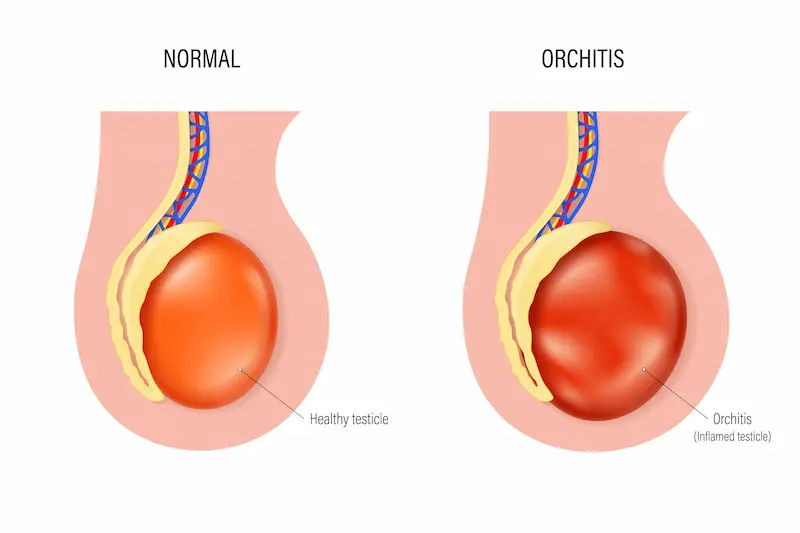
I'm really worried because I've been having issues with frequent urination and my testes are really painful. I recently had some urine culture tests done, and they came back negative. Could it still be possible that I have chlamydia, even though the test didn't show anything? I'm trying to understand what else could be causing these symptoms.

Answered by 1 Apollo Doctors

Yes, it is possible to have chlamydia even if your urine culture test is negative. Chlamydia is often diagnosed through a nucleic acid amplification test (NAAT) or a DNA probe test rather than a urine culture. Since you are experiencing symptoms such as frequent urination and testicular pain, it is advisable to get tested specifically for chlamydia using a NAAT or DNA probe test. If diagnosed with chlamydia, the treatment involves a course of antibiotics such as Azithromycin or Doxycycline, as prescribed by your healthcare provider.
Dr. Chandra Suggests...
Consult a Urologist
Answered 04/07/2025
0
0

More Urology Health Queries
View allI'm having this issue where every time I get an erection or after having sex, my penis seems to crack at one particular spot. It heals after a few days, but then it just happens again the next time. Is there any cream or solution I could use to prevent this from happening?
The recurring cracks on your penis, particularly in one position, during or after erection, may be caused by a condition called penile fissures, which can be painful and may lead to bleeding or infection; applying a topical cream or ointment, such as petroleum jelly, aloe vera gel, or a fragrance-free lubricant, may help soothe and protect the affected area


Answered by 1 Apollo Doctors
Can you help me understand why I'm frequently getting these pimple-like bumps or white pops on my urethra? It's starting to worry me, and I'm not sure what's causing it.
Your vitamin D level is low (normal range: 30-50 ngmL), and B12 is slightly below the optimal range (normal range: 200-900 pgmL). These deficiencies might contribute to your symptoms: Lethargy and fatigue (vitamin D and B12) Depression (vitamin D deficiency has been linked to depression) Consult your doctor to discuss supplementation options: Vitamin D: 1,000-2,000 IUday Vitamin B12: oral supplements or injections Additionally, consider lifestyle changes: Increase sun exposure (vitamin D) Maintain a balanced diet Exercise regularly Manage stress levels
Answered by 1 Apollo Doctors
I was born with bilateral ureterocele and have been experiencing flank pain, especially on the left side, which gets worse when I drink more water. So far, I haven't had any treatment for it. Do I need surgery to fix this? Could it lead to chronic kidney failure if I don't get it treated now? What are the risks or complications if I do go through with the surgery?
A ureterocele is a dilation of the area where the ureter inserts into the bladder. Ureteroceles are a congenital abnormality which means they are present at birth. It is thought to be due to an abnormality of the formation of the ureter tube as it inserts into the bladder. Ureteroceles occur in about one of every 1000 births and are more common in a duplex kidney, which is a kidney with two ureters that drain into the bladder. If the ureterocele is associated with a duplex kidney, it is the ureter that drains the upper part of the kidney that has the ureterocele. Kidneys that have a ureterocele often are dilated and can have obstruction to urine flow. Ureteroceles are often diagnosed by prenatal ultrasound where a dilated ureter and kidney (or upper part of a kidney) and a cystic structure (the ureterocele) in the bladder is seen. Ureteroceles can also be found by ultrasound after a child has a urinary tract infection or other reason to obtain a renal ultrasound. If the child presents with a urinary tract infection, they may have fever, chills, flank pain, pain with urination, or other urinary symptoms. A ureterocele is most commonly diagnosed by ultrasound. Treatment: In older children, ureteroceles are sometimes treated differently depending on how well the kidney functions, how big the ureterocele is, how severe the dilation of the ureter and kidney is, whether the kidney is a duplex kidney, and whether the other ureter in a duplex kidney has reflux. Treatment options range from observation to several types of reconstructive surgery for the urinary tract. Your urologist will discuss these options with you. Ureteroceles are treated for several reasons. Ureteroceles are believed to increase the risk of urinary tract infection. Ureteroceles often cause obstruction of urine flow from the kidney to the bladder which can damage the kidney over time. Occasionally, ureteroceles are so large that they block urine flow from the other kidney or they block urine flow from the bladder out the urethra. Consult urologist for furthur evaluation and treatment.
Answered by 1 Apollo Doctors
Health Articles for you
View all


Disclaimer: Answers on Apollo 247 are not intended to replace your doctor advice. Always seek help of a professional doctor in case of an medical emergency or ailment.