


- female
- 30 Years
- 20/02/2025
I've noticed that whenever I'm near an AC or when the weather gets cold, my hands and feet turn icy really fast. They get so chilly that other people comment on how cold they feel when I touch them. But when the weather is normal and there's no AC, everything seems fine. I'm curious about what could be causing this.

Answered by 1 Apollo Doctors

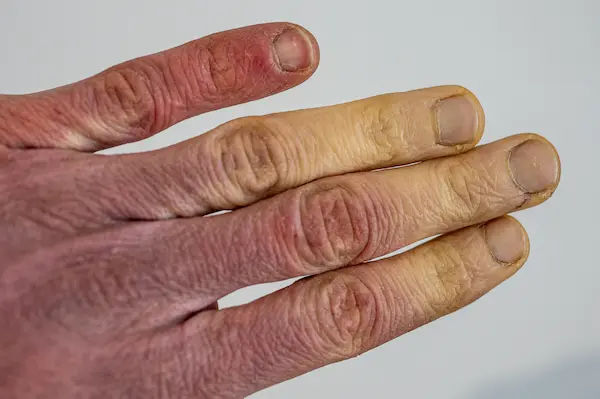
While in the vicinity of AC or cold weather, your hands and feet getting cold quickly could be due to a condition called Raynaud's disease. Raynaud's disease is a condition that causes some areas of the body, such as fingers and toes, to feel numb and cold in response to cold temperatures or stress. In such cases, it is recommended to keep your hands and feet warm by wearing gloves and socks, and avoiding exposure to cold temperatures. In severe cases, medications like nifedipine or amlodipine can be prescribed to help dilate blood vessels and improve circulation.
Dr. Mubarak Suggests...
Consult a Rheumatologist
Answered 25/07/2025
0
0

More Rheumatology Health Queries
View allMy mother has had pain in her fingers and wrist for around 23 years. Our GP prescribed her DV60K and calcium, and an X-ray showed some bone erosion in her fingers and hand. She also has pain in one shoulder when lifting her arm. Blood tests didn't show any bone infection, and homeopathy didn't help much. Right now, she's taking Newbona 10 tabs a month and Nucoxia for pain. Surgery isn't an option since the pain is in multiple places, including her legs. She can still manage light hand work what other treatments could we explore?
Apollo Hospital is best for it.


Answered by 1 Apollo Doctors
I've been having this swelling in my rib bone under my breast, and it's really huge. Plus there's one in my left shoulder and a lighter one on the right side. It really hurts when I touch it and it gets worse when I cough or sneeze. What could this be? Should I be worried?
take tablet zerodol and tablet pantop for 3 days
Answered by 1 Apollo Doctors
I'm really worried about my mom. Her ESR level is at 70 and her blood pressure is 180. Can you guide us on how to lower her ESR? Which type of doctor should we consult for this issue?
It is important to consult with a doctor before starting any medication regimen. For her high blood pressure of 180, she should consult a cardiologist for further evaluation and management. In the meantime, she can take antihypertensive medication like Amlodipine. It is important to monitor her blood pressure regularly and follow up with the appropriate specialists for further management.
Answered by 1 Apollo Doctors
Health Articles for you
View all

Disclaimer: Answers on Apollo 247 are not intended to replace your doctor advice. Always seek help of a professional doctor in case of an medical emergency or ailment.