apollo
  • male
  • 20 Years
  • 14/08/2025

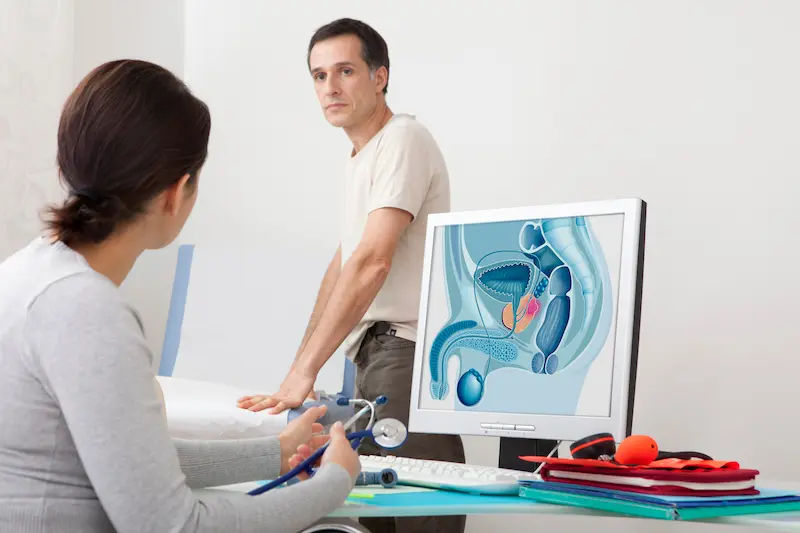
my foreskin doesn't pull back and it's really uncomfortable should i get surgery for this and how much would it cost

Doctor 1

Answered by 1 Apollo Doctors

If your foreskin doesn't pull back and is causing discomfort, it could be phimosis, a condition where the foreskin is too tight to retract. While some cases of phimosis resolve on their own, surgery might be necessary if conservative treatments don't work. The cost of surgery can vary depending on the procedure and your location, but you can expect to pay between ‚Çπ5,000 and ‚Çπ35,000 in India

Dr. Kamran Suggests...

Consult a Urologist

Answered 14/08/2025

0

0

Sick? Talk to a doctor now

More Urology Health Queries

View all

I'm experiencing some discomfort and it's been worrying me. It started with pain in my lower abdomen, and after a while, I began feeling pain in my penis and the nearby pelvic area. I've had IBS for quite some time, and I'm wondering if this penile pain could be related to my lower abdomen issues and IBS. Does that make sense? Could they be connected?

Recurrent vaginal yeast infections can be challenging to manage. Since you've already taken two doses of fluconazole (FAS 3-kit) and still experience recurring infections, it's essential to consider other factors contributing to the recurrence. *Possible Reasons for Recurrence* 1. *Hormonal changes*: Your periods might be triggering the recurrence due to hormonal fluctuations. 2. *Incomplete treatment*: The initial treatment might not have fully cleared the infection. 3. *Underlying medical conditions*: Certain conditions, such as diabetes, can increase the risk of recurrent yeast infections. 4. *Antibiotic use*: Recent antibiotic use can disrupt the natural balance of vaginal flora, leading to yeast overgrowth. *Next Steps* 1. *Consult your gynecologist again*: Discuss your recurring symptoms and ask about further treatment options. 2. *Consider alternative treatments*: Your doctor might recommend alternative antifungal medications, such as clotrimazole or miconazole, or a longer treatment course. 3. *Maintain good hygiene and lifestyle habits*: Continue to follow your doctor's advice on hygiene, fluid intake, and dietary changes. 4. *Probiotics and dietary supplements*: Certain probiotics and dietary supplements, such as lactobacillus acidophilus, may help maintain a healthy vaginal flora. *Fluconazole Use* While you can take another dose of fluconazole, it's essential to consult your doctor first. They will assess your situation and determine the best course of action.

read more
Doctor 1Doctor 2

Answered by 1 Apollo Doctors

I'm wondering if having a habit of daily masturbation is good or bad for me. How do I control or stop it if it's not a healthy practice? Are there any harms associated with it?

Daily masturbation can be a normal and healthy part of human sexuality, but excessive or compulsive masturbation can lead to negative effects such as fatigue, decreased libido, erectile dysfunction, guilt, shame, and neglect of responsibilities; to control or stop, try setting boundaries, practicing self-control, engaging in alternative activities, and seeking professional help if needed.

read more
Doctor 1Doctor 2

Answered by 1 Apollo Doctors

I was born with bilateral ureterocele and have been experiencing flank pain, especially on the left side, which gets worse when I drink more water. So far, I haven't had any treatment for it. Do I need surgery to fix this? Could it lead to chronic kidney failure if I don't get it treated now? What are the risks or complications if I do go through with the surgery?

A ureterocele is a dilation of the area where the ureter inserts into the bladder. Ureteroceles are a congenital abnormality which means they are present at birth. It is thought to be due to an abnormality of the formation of the ureter tube as it inserts into the bladder. Ureteroceles occur in about one of every 1000 births and are more common in a duplex kidney, which is a kidney with two ureters that drain into the bladder. If the ureterocele is associated with a duplex kidney, it is the ureter that drains the upper part of the kidney that has the ureterocele. Kidneys that have a ureterocele often are dilated and can have obstruction to urine flow. Ureteroceles are often diagnosed by prenatal ultrasound where a dilated ureter and kidney (or upper part of a kidney) and a cystic structure (the ureterocele) in the bladder is seen. Ureteroceles can also be found by ultrasound after a child has a urinary tract infection or other reason to obtain a renal ultrasound. If the child presents with a urinary tract infection, they may have fever, chills, flank pain, pain with urination, or other urinary symptoms. A ureterocele is most commonly diagnosed by ultrasound. Treatment: In older children, ureteroceles are sometimes treated differently depending on how well the kidney functions, how big the ureterocele is, how severe the dilation of the ureter and kidney is, whether the kidney is a duplex kidney, and whether the other ureter in a duplex kidney has reflux. Treatment options range from observation to several types of reconstructive surgery for the urinary tract. Your urologist will discuss these options with you. Ureteroceles are treated for several reasons. Ureteroceles are believed to increase the risk of urinary tract infection. Ureteroceles often cause obstruction of urine flow from the kidney to the bladder which can damage the kidney over time. Occasionally, ureteroceles are so large that they block urine flow from the other kidney or they block urine flow from the bladder out the urethra. Consult urologist for furthur evaluation and treatment.

read more
Doctor 1Doctor 2

Answered by 1 Apollo Doctors

Disclaimer: Answers on Apollo 247 are not intended to replace your doctor advice. Always seek help of a professional doctor in case of an medical emergency or ailment.