


Asthma Attack Facts: What You Need To Do Urgently?
Learn asthma attack symptoms, step-by-step emergency asthma care, and fast breathing help. Know when to call 911 and how to prevent the next attack.

Written by Dr. Mohammed Kamran
Reviewed by Dr. Shaik Abdul Kalam MD (Physician)
Last updated on 14th Jan, 2026

Introduction
An asthma attack can escalate quickly, but the right steps at the right time can protect your lungs and save your life. Knowing asthma attack symptoms, how to give emergency asthma care, and simple breathing help techniques will make you more confident in a crisis. Whether you live with asthma or care for someone who does, this is your quick, trustworthy guide to recognizing trouble early and taking action.
Recognizing Asthma Attack Symptoms Quickly
Asthma symptoms can build gradually or surge suddenly. Early recognition is key.
Common Warning Signs
• Coughing that won’t stop, especially at night or early morning
• Wheezing (a whistling or squeaky sound when breathing)
• Shortness of breath, tightness in the chest, or chest pressure
• Needing your quick-relief (rescue) inhaler more often than usual
• Drop in peak flow if you use a peak flow meter (moving from your “green zone” toward “yellow”)
Red Zone Asthma Attack Symptoms: Call Emergency Services Now
If any of these happen, call 911 (or your local emergency number) and start first aid:
• Severe shortness of breath at rest; you can’t speak full sentences
• Bluish or gray lips or fingernails (signs of low oxygen)
• Chest retractions (skin sucking in at the ribs or neck as you breathe)
• Feeling drowsy, confused, agitated, or very tired
• Little or no improvement after using your quick-relief inhaler
• A “silent chest” (wheezing stops but breathing is very hard)
• Peak flow below 50% of your personal best (in the red zone)
Step-By-Step Emergency Asthma Care You Can Start Now
In an attack, follow your written Asthma Action Plan if you have one. If not, use the steps below and seek medical help if symptoms are severe or not improving.
Step 1: Stop, Sit, And Stay Upright
• Sit upright in a comfortable position; do not lie down.
• Loosen tight clothing.
• Try to stay calm, panic can worsen shortness of breath.Consult a Top General Physician
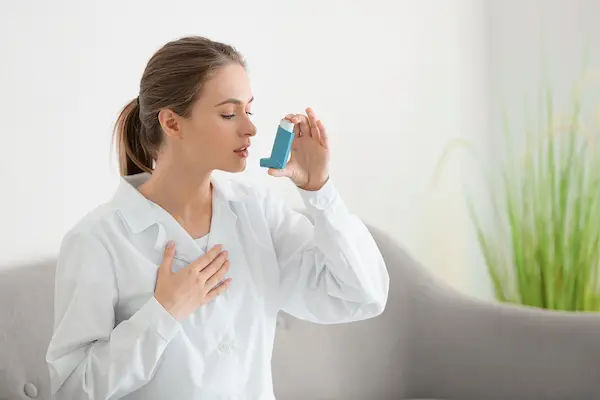
Step 2: Use Your Quick-Relief Inhaler With A Spacer
Quick-relief medicine (often albuterol/salbutamol) opens airways fast.
If you have a spacer, use it, it helps more medicine reach your lungs.
Technique tips:
• Shake the inhaler and attach it to the spacer.
• Breathe out gently, seal your lips around the spacer mouthpiece (or mask for young children).
• Press the inhaler once and breathe in slowly and deeply.
• Hold your breath for up to 10 seconds if you can, then breathe out.
• Take one puff at a time, following your action plan or label directions.
• If you use a nebulizer at home, use it as prescribed.
Step 3: Recheck Symptoms And Peak Flow (If Available)
• If you have a peak flow meter, check your number after your first round of medicine.
• Improving numbers or easier breathing are good signs, but continue to monitor closely.
Step 4: Know When To Call 911 Or Go To The Er
Seek urgent care now if:
• Breathing is hard or getting worse
• You can’t talk or walk easily because of breathlessness
• Lips or nails look blue or gray
• Your quick-relief inhaler isn’t helping or you need it again within a short time
• You’re in the red zone on your peak flow
• You’ve had a life-threatening attack in the past
Step 5: While Waiting For Help
• Keep sitting upright and stay with the person (or keep someone with you).
• Try calm, slow breathing. Pursed-lip breathing (in through the nose, out slowly through lips as if blowing out a candle) can ease air trapping and anxiety.
• If available and prescribed, use supplemental oxygen as directed by a healthcare professional.
• Do not drive yourself if you are severely short of breath, call for emergency transport.
Step 6: What Not To Do During An Attack?
• Don’t delay emergency asthma care when symptoms are severe.
• Don’t rely on your daily controller inhaler (like an inhaled steroid) to stop an attack, use your quick-relief inhaler.
• Don’t take sedatives or drink alcohol; they can slow breathing.
• Don’t use steam or essential oils as a substitute for medicine, these do not open airways during an attack and may worsen symptoms in some people.
• Avoid smoke, strong fumes, and outdoor allergens if possible.
Breathing Help Techniques That Support Your Medicines
Medicines are the main treatment during an asthma attack. However, simple breathing help techniques can make you feel more in control:
• Pursed-lip breathing: Inhale through your nose for 2 counts. Purse your lips and exhale slowly for 4 counts. This can reduce the feeling of “air trapping.”
• Diaphragmatic (belly) breathing: Place a hand on your belly. Breathe in through your nose so your belly rises, then exhale slowly through pursed lips. Keep shoulders relaxed.
• Relaxation cues: Drop your shoulders, unclench your jaw, and focus on a steady rhythm.
Important: These methods do not replace quick-relief medicine. Use them alongside your inhaler while you seek medical help if needed.
Preventing The Next Attack: Plan And Prepare
A strong prevention plan lowers the risk of severe attacks.
Create Or Update Your Asthma Action Plan
• Ask your clinician for a written plan that explains:
• Your daily controller medicines
• What to do for yellow-zone symptoms
• When to start emergency asthma care and call 911
• Keep copies on your phone and with family, caregivers, school, or work.
Keep Rescue Tools Ready
• Carry your quick-relief inhaler (and spacer) at all times.
• Check inhaler dose counters and expiration dates monthly.
• Review inhaler technique with your clinician or pharmacist regularly.
Control Triggers
• Avoid Tobacco Smoke; Ask others not to smoke around you.
• Manage allergens (dust mites, pet dander, pollen, mold) with cleaning, encasing bedding, and using certified filters as needed.
• Be mindful of air quality and extreme cold; use scarves or masks in cold, dry air.
• If exercise triggers symptoms, use pre-exercise medicines as prescribed.
• Wash hands and stay up to date with recommended vaccines (such as flu) to reduce infection-related flare-ups.
Follow Up After Any Attack
• See your healthcare provider after an ER visit or a bad flare to adjust treatment.
• You may need a short course of oral steroids or an adjustment of controller therapy.
• Ask about testing your inhaler technique and reviewing your action plan.
Helping Someone Else: Quick Checklist
If you’re with someone having an asthma attack:
• Ask if they have asthma and where their inhaler/spacer is.
• Sit them upright, keep them calm, and help them use their quick-relief inhaler.
• If symptoms are severe or not improving, call 911.
• Stay with them until help arrives.
Myths Vs. Facts In Emergency Asthma Care
• Myth: “A hot shower or steam will open the airways.” Fact: Steam is not a reliable treatment during an attack and may worsen symptoms for some.
• Myth: “Nebulizers always work better than inhalers.” Fact: For many people, a metered-dose inhaler with a spacer works as well as a nebulizer for acute symptoms when used correctly.
• Myth: “If I feel better, I can skip follow-up.” Fact: You should review the attack with your clinician to prevent the next one.Consult a Top General Physician
When To Return To Normal Activities?
• Only resume usual activities when breathing is back to your personal baseline and you’re not needing your quick-relief inhaler more than usual.
• If symptoms return with activity, slow down and follow your action plan.
Consult a Top General Physician

Dr. Rajib Ghose
General Physician/ Internal Medicine Specialist
25 Years • MBBS
East Midnapore
VIVEKANANDA SEBA SADAN, East Midnapore


Dr D M Karthik
General Practitioner
4 Years • MBBS, Fellowship in Diabetes Mellitus, Advance certificate in Diabetes Mellitus, Derma Nutrition Certification
Visakhapatnam
Apollo 24|7 Clinic - Andhra Pradesh, Visakhapatnam

Dr. Shaik Abdul Kalam
General Practitioner
3 Years • MD (Physician)
Visakhapatnam
Apollo 24|7 Clinic - Andhra Pradesh, Visakhapatnam

(225+ Patients)

Dr. M. Krishna Bharath Reddy
General Physician/ Internal Medicine Specialist
10 Years • MD General Medicine, MRCP (London) and DM( Critical Care)
Chennai
Apollo One Chennai, Chennai

Dr. Swaroopa Rani
General Physician/ Internal Medicine Specialist
9 Years • MBBS, MD (Internal Medicine)
Bengaluru
Apollo Medical Center, Marathahalli, Bengaluru
Consult a Top General Physician
Dr. Rajib Ghose
General Physician/ Internal Medicine Specialist
25 Years • MBBS
East Midnapore
VIVEKANANDA SEBA SADAN, East Midnapore
Dr D M Karthik
General Practitioner
4 Years • MBBS, Fellowship in Diabetes Mellitus, Advance certificate in Diabetes Mellitus, Derma Nutrition Certification
Visakhapatnam
Apollo 24|7 Clinic - Andhra Pradesh, Visakhapatnam
Dr. Shaik Abdul Kalam
General Practitioner
3 Years • MD (Physician)
Visakhapatnam
Apollo 24|7 Clinic - Andhra Pradesh, Visakhapatnam
(225+ Patients)
Dr. M. Krishna Bharath Reddy
General Physician/ Internal Medicine Specialist
10 Years • MD General Medicine, MRCP (London) and DM( Critical Care)
Chennai
Apollo One Chennai, Chennai
Dr. Swaroopa Rani
General Physician/ Internal Medicine Specialist
9 Years • MBBS, MD (Internal Medicine)
Bengaluru
Apollo Medical Center, Marathahalli, Bengaluru
More articles from Asthma




Frequently Asked Questions
How do I tell the difference between anxiety and an asthma attack?
Anxiety can cause fast breathing, but asthma typically includes wheezing, chest tightness, and coughing, and it improves with quick-relief asthma medicine. If you’re unsure, or symptoms are severe, treat it as asthma and seek medical care.
How many puffs of my rescue inhaler should I take in an attack?
Follow your Asthma Action Plan or the label from your clinician. Many action plans allow repeating quick-relief doses over the first hour if symptoms persist. If you don’t have a plan and symptoms are not improving or are severe, seek urgent care.
Is a nebulizer better than an inhaler with a spacer during an attack?
Not necessarily. Studies show a metered-dose inhaler with a spacer can work as well as a nebulizer for many people when used correctly. Use the device you have and know how to use; follow your clinician’s advice.
Do antihistamines, cough syrup, or steam help during an asthma attack?
They are not emergency treatments for an asthma attack. The priority is your quick-relief inhaler (or nebulizer) and urgent medical care if symptoms are severe or not improving.
What should I do if I don’t have my inhaler during an attack?
Call for help and seek urgent care. Sit upright, avoid triggers like smoke or cold air, and use calm breathing techniques. If you have a history of severe attacks, call 911 right away.