



Corns and Calluses in Diabetics Causes, Risks, and Treatments
Learn how diabetic foot care prevents corns and calluses from becoming ulcers. Understand causes, risks, safe treatments, and prevention tips you can trust.

Written by Dr. J T Hema Pratima
Reviewed by Dr. D Bhanu Prakash MBBS, AFIH, Advanced certificate in critical care medicine, Fellowship in critical care medicine
Last updated on 13th Jan, 2026

Introduction
If you live with diabetes, caring for your feet is one of the most important steps you can take to protect your health. Corns and calluses are common skin changes caused by friction and pressure. For many people, they’re a nuisance. But in diabetes, these hard skin areas can raise the risk of skin breakdown, infection, and foot ulcers if not handled properly. The good news: with smart diabetic foot care and early attention to corns and calluses, you can prevent complications and stay active and comfortable.
What Are Corns And Calluses?
• Corns are small, thicker, well-defined areas of skin that usually develop on or between toes. They often have a hard centre and can be tender when pressed.
• Calluses are larger, broader, thickened areas of skin that usually form on weight-bearing areas of the feet (like the heels or balls of the feet) due to repeated friction or pressure. They’re often less painful than corn.
Both corn and calluses are the skin’s way of protecting itself. In shoes that rub or in areas that carry extra pressure, the skin thickens. Over time, that thickened skin can crack, become painful, or press on deeper tissues.
Why Are People With Diabetes At Higher Risk?
Several diabetes-related changes make corns and calluses more likely and riskier:
• Nerve damage (diabetic neuropathy): Reduced sensation means you may not feel rubbing, a pebble in your shoe, or a blister forming. Without pain as an early warning, pressure continues, and thick skin builds up.
• Poor circulation (peripheral arterial disease): Less blood flow slows healing and makes infections harder to fight.
• Foot shape changes and deformities: Bunions, hammertoes, collapsed arches, and Charcot changes shift pressure to smaller areas, creating hot spots where corns or calluses can develop.
• Dry skin: Autonomic nerve changes can reduce sweating in the feet, leading to dryness and cracking.
• Ill-fitting footwear: Tight toe boxes, high heels, seams, or rough insides of shoes increase friction and pressure.
Consult a Top General Physician
How To Recognise Corn And Calluses Safely?
Signs To Look For
• Thick, rough, or waxy skin on the toes, heels, or ball of the foot
• A small, raised, hard spot (corn) that may be painful with pressure
• Yellowish or greyish thickening (callus), often less tender
• Cracking or fissures in thick skin, especially on heels
When Could It Be Something Else?
• A wart often shows black pinpoint dots (tiny clotted vessels) and interrupts skin lines.
• An ulcer is an open sore that may drain fluid and can look red, pink, or even black if there’s dead tissue.
• An infected area may be warm, red, swollen, painful, or have a foul odor.
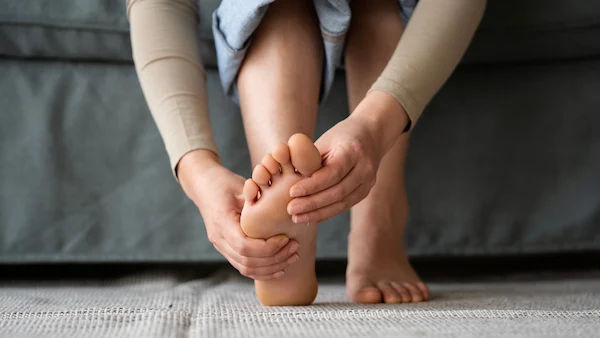
If you have diabetes, do not try to diagnose foot lesions on your own. New or changing spots should be checked by a clinician, ideally a podiatrist.
Risks And Complications In Diabetes
Without proper attention, corns and calluses can:
• Hide or turn into ulcers as pressure continues beneath the hard skin
• Crack and allow bacteria to enter, causing infection
• Lead to deeper tissue damage, bone infection (osteomyelitis), or in severe cases, amputation
These risks are higher if you have neuropathy, poor circulation, foot deformities, a history of foot ulcers, or kidney disease. Early, consistent diabetic foot care reduces these risks significantly.
Prevention: Diabetic foot care basics to stop corns and calluses before they start
Your Daily Foot Routine
• Inspect daily. Look at the tops, soles, heels, and between toes. Use a mirror or ask for help if needed.
• Wash and dry carefully. Use lukewarm water and a mild soap. Dry gently, especially between the toes.
• Moisturize. Apply lotion or cream to the tops and bottoms of feet to prevent cracking. Avoid putting moisturiser between toes (excess moisture there can invite fungus).
• Trim nails with care. Cut straight across and file edges. Never cut cuticles.
• Never go barefoot. Wear shoes or supportive slippers even indoors to protect from injury.
Footwear And Pressure Relief
• Choose shoes that fit well. Look for a wide toe box, soft uppers, and cushioning. Avoid narrow or pointed shoes and high heels.
• Check inside the shoes. Feel for seams, stones, or rough spots before putting them on.
• Wear clean, dry socks. Choose moisture-wicking, seamless socks to reduce friction.
• Use pressure-relieving supports. Ask a clinician about cushioned insoles, metatarsal pads, or custom orthotics to offload high-pressure areas.
• Rotate shoes. Let shoes dry fully between wears to reduce moisture buildup.
Smart Habits For Skin Safety
• Test water temperature with your elbow or a thermometer before bathing to prevent burns, especially if you have reduced sensation.
• Avoid heating pads, hot water bottles, or space heaters near feet.
• If you smoke, seek help to quit. Smoking reduces blood flow and delays healing.
Manage Overall Health
• Keep blood sugar as close to your target range as possible. Good glucose control helps protect nerves and blood vessels and supports healing.
• Stay active as advised by your care team to boost circulation.
• Keep regular checkups. Ask for a comprehensive foot exam at least once a year, or more often if you have neuropathy, foot deformities, or prior ulcers.
Safe Treatments For Corns And Calluses In Diabetes
Because of the added risks, treatment choices for corn and calluses are different when you have diabetes.
When To Self-Care Vs. When To See A Professional?
Okay To Do At Home
• Daily moisturiser to soften thick skin (urea, lactic acid, or ammonium lactate lotions can help keep skin supple; ask your clinician which is right for you)
• Gentle cleansing and drying
• Protective padding or toe spacers recommended by a clinician
• See a podiatrist or other trained clinician for:
• Any painful, thick, or persistent corns or calluses
• Skin breakdown, drainage, or signs of infection
• Nail problems or ingrown nails
• Fitting for orthotics or special shoes
What Might A Professional Do?
• Debridement: Carefully trimming or shaving thickened skin with sterile instruments to reduce pressure and pain. This is quick and usually painless when done by a clinician.
• Offloading: Using pads, cushioned insoles, or custom orthotics to move pressure away from high-risk areas.
• Footwear changes: Recommending properly fitted shoes, sometimes extra-depth diabetic shoes.
• Treating underlying causes: Addressing hammertoes, bunions, or other deformities; treating fungal infections; and, if needed, considering surgical options for severe deformities that cause recurrent pressure points.
• Education: Personalised diabetic foot care coaching to prevent recurrence.
Home-Care Do’s And Don’ts For People With Diabetes
Do:
• Use a moisturiser daily on dry, thickened skin (not between the toes).
• Wear protective padding (like felt rings or non-adhesive pads) recommended by your clinician to reduce friction on corns and calluses.
• Keep shoes and socks clean, dry, and well-fitting.
• Check your feet every day and after long walks or exercise.
Don’t:
• Do not cut or shave corns or calluses yourself. Accidental cuts can lead to infection.
• Avoid medicated corn and callus removers (salicylic acid plasters, liquids, or pads) unless your clinician explicitly approves them. These products can burn healthy skin and cause ulcers in people with diabetes.
• Don’t use harsh tools (razor blades, sharp files) or strong chemical peels on your feet.
• Don’t soak feet for long periods; prolonged soaking can dry skin and increase cracking.
• Avoid tight shoes, high heels, or shoes with seams that rub.
When To Seek Urgent Care?
Call your healthcare provider promptly, or seek urgent care, if you notice:
• An open sore, blister, or crack that does not improve within a day or two
• Redness, warmth, swelling, or pain around a corn or callus
• Drainage, pus, a foul odour, or blackened areas of skin
• Fever or feeling unwell with foot changes
• A sudden increase in numbness or pain
How To Work With Your Care Team?
• Ask for a foot exam at each diabetes visit, and at least yearly.
• Tell your provider if you notice new or recurring corns and calluses, changes in foot shape, or pain with walking.
• Request guidance on the best moisturiser and any safe at-home tools for you.
• If you have recurring pressure points, ask about offloading options like custom orthotics or diabetic shoes.
• If neuropathy or circulation problems are present, you may need more frequent podiatry visits.
Lifestyle Tips To Reduce Pressure And Friction
• Keep a healthy body weight to reduce pressure on the feet.
• Alternate activities to avoid repetitive stress on the same foot areas.
• Choose walking surfaces wisely; uneven terrain can increase focal pressure.
• After activity, inspect your feet and change out of damp socks promptly.
Key Takeaways
• Corns and calluses are common, but in diabetes, they need extra attention.
• Preventive diabetic foot care, daily checks, moisturising, safe footwear, and pressure relief, reduces risk.
• Avoid self-trimming and medicated corn removers unless your clinician approves them.
• Regular podiatry care and well-fitted shoes or orthotics are central to preventing complications.
• Seek help early for any changes. Prompt care protects your mobility and health.
Consult a Top General Physician
Consult a Top General Physician

Dr. Anand Ravi
General Physician
2 Years • MBBS, FEM
Bengaluru
PRESTIGE SHANTHINIKETAN - SOCIETY CLINIC, Bengaluru

Dr. Vivek D
General Physician
4 Years • MBBS
Bengaluru
PRESTIGE SHANTHINIKETAN - SOCIETY CLINIC, Bengaluru

Dr Syed Mateen Pasha
General Physician
2 Years • MBBS
Bengaluru
PRESTIGE SHANTHINIKETAN - SOCIETY CLINIC, Bengaluru


Dr. Syed Ismail Ali
General Practitioner
7 Years • MBBS
Hyderabad
Apollo 24|7 Clinic, Hyderabad

Dr. Harshendra Jaiswal
General Physician/ Internal Medicine Specialist
12 Years • MBBS , MD (General medicine)
Kolkata
108 DHANA DHANVANTARI Clinic, Kolkata

(25+ Patients)
Consult a Top General Physician
Dr. Anand Ravi
General Physician
2 Years • MBBS, FEM
Bengaluru
PRESTIGE SHANTHINIKETAN - SOCIETY CLINIC, Bengaluru
Dr. Vivek D
General Physician
4 Years • MBBS
Bengaluru
PRESTIGE SHANTHINIKETAN - SOCIETY CLINIC, Bengaluru
Dr Syed Mateen Pasha
General Physician
2 Years • MBBS
Bengaluru
PRESTIGE SHANTHINIKETAN - SOCIETY CLINIC, Bengaluru
Dr. Syed Ismail Ali
General Practitioner
7 Years • MBBS
Hyderabad
Apollo 24|7 Clinic, Hyderabad
Dr. Harshendra Jaiswal
General Physician/ Internal Medicine Specialist
12 Years • MBBS , MD (General medicine)
Kolkata
108 DHANA DHANVANTARI Clinic, Kolkata
(25+ Patients)
More articles from Foot Care
Frequently Asked Questions
1. Are corn and calluses dangerous if I have diabetes?
They can be. Thick skin increases pressure on underlying tissues. In diabetes, reduced sensation and circulation make it easier for thick skin to crack or break down into an ulcer. With early attention and good diabetic foot care, you can prevent problems.
2. Can I use over-the-counter corn removers?
If you have diabetes, don’t use medicated corn or callus removers (like salicylic acid pads) unless your clinician specifically approves them. They can damage healthy skin and cause ulcers. Safer options include clinician-guided debridement and pressure offloading.
3. Is it safe to use a pumice stone?
Only with your clinician’s guidance. For many people, gentle rubbing after bathing helps smooth thick skin. But with diabetes and neuropathy, it’s easy to rub too hard and cause injury. If allowed by your provider, use light pressure and stop immediately if you notice redness or irritation.
4. How often should I see a podiatrist?
At least once a year for a preventive foot exam, and more often if you have neuropathy, circulation problems, foot deformities, past ulcers, or recurring corns and calluses. Follow the schedule your healthcare team recommends.
5. What shoes are best to prevent corn and calluses?
Choose shoes with a wide, deep toe box, soft uppers, and good cushioning. Avoid tight or pointed shoes and high heels. Consider diabetic footwear or custom orthotics if you have pressure points or deformities. Always wear moisture-wicking, seamless socks and check inside shoes before putting them on.