


10 Benefits of Doing Plank Exercise Daily for a Strong Core
Discover 10 plank exercise benefits for a stronger core, better posture, and balance. Learn safe how-to tips, FAQs, and a quick core workout.

Written by Dr. Shaik Abdul Kalam
Reviewed by Dr. Vasanthasree Nair MBBS
Last updated on 13th Jan, 2026
Introduction
If you want a simple, effective core workout you can do almost anywhere, the plank is hard to beat. This bodyweight move trains the muscles that support your spine, hips, and shoulders, helping you move and feel better in daily life. Below, you’ll learn the top plank exercise benefits, how to do the move safely, and how to fit it into your fitness plan. Whether you’re new to exercise or looking to upgrade your routine, planks are a small habit that can deliver big, lasting results.
What Is a Plank?
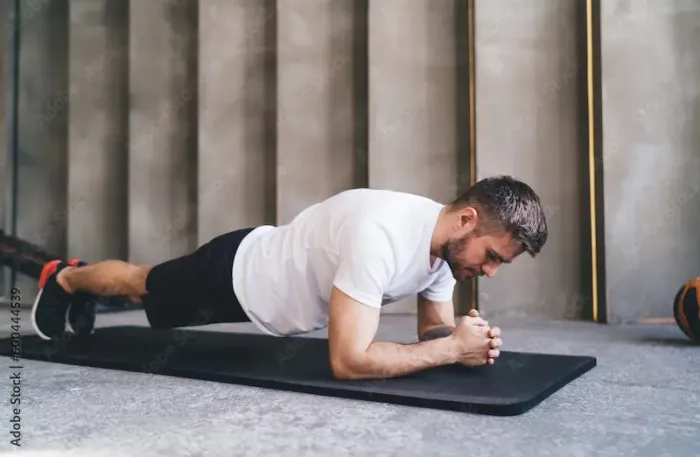
A plank is an isometric (static) exercise where you hold your body in a straight line while bracing your core, usually on your forearms or hands. It primarily trains your deep and superficial core muscles, including the transverse abdominis, rectus abdominis, obliques, and the muscles that support your back and hips. Planks also recruit your shoulders, chest, glutes, and thighs to keep your body stable.
Consult Top Specialists
10 Evidence-Informed Plank Exercise Benefits
1) Builds core strength and endurance
• Planks teach your trunk to resist sagging or arching while you move, strengthening the muscles that wrap around your midsection.
• Stronger core endurance supports everything from walking and standing to lifting, carrying, and sports.
2) Supports a healthier posture
• Holding a neutral spine in the plank reinforces the alignment you want to keep when you sit, stand, or move.
• Better postural control can help reduce the strain that long periods of sitting place on your neck, shoulders, and lower back.
3) Helps protect your lower back
• A stronger, more coordinated core can improve spinal stability, which may lower the likelihood of back discomfort during daily tasks.
• Tip: If you already have back pain, talk with a healthcare professional before starting; proper technique and the right variations matter.
4) Improves balance and stability
• Planks challenge your body to resist shifting and twisting, which trains anti-rotation and anti-extension control.
• That stability carries over to walking on uneven ground, climbing stairs, and athletic movements.
5) Enhances functional movement
• Many everyday actions—pushing a door, lifting a box, reaching for a seatbelt—start with a braced core.
• Practicing planks helps you learn that bracing pattern so you can move more efficiently and safely.
6) Engages multiple muscle groups at once
• Although known as a core workout, planks also work your shoulders, chest, glutes, and quads.
• This makes them a time-efficient, full-body stability exercise that fits easily into busy schedules.
7) Low-impact and joint-friendly
• Planks are low-impact and don’t involve jumping or deep joint angles, making them accessible for many people.
• Simple modifications (like elevating your hands on a bench) can reduce stress on the wrists and shoulders.
8) Requires no equipment and little time
• You can do planks at home, at the gym, or while traveling—no gear required.
• Even one or two focused minutes can add meaningful core work to your day.
9) Easy to progress and keep challenging
• You can gradually increase your hold time, add sets, or try variations (side planks, plank with shoulder taps, leg lifts).
• Progressions help you continue building strength without needing machines or heavy weights.
10) Complements your overall fitness routine
• Planks pair well with walking, running, cycling, and strength training by improving trunk control and force transfer.
• Major health organizations recommend including muscle-strengthening activities—planks can be one part of meeting those guidelines.
How to Do a Safe, Effective Forearm Plank? (Step-by-Step)
• Set up: Lie face down. Place your forearms on the floor with elbows under your shoulders, palms flat or hands lightly clasped.
• Legs: Extend your legs straight, feet hip-width apart. Press toes into the floor.
• Lift: Raise your body so only your forearms and toes touch the ground. Keep your body in a straight line from head to heels.
• Brace: Gently draw your belly button toward your spine, squeeze your glutes, and keep your ribs down.
• Neck: Keep your gaze slightly ahead of your hands so your neck stays neutral (not tucked or tilted up).
• Breathe: Inhale through your nose and exhale steadily—avoid holding your breath.
• Hold: Start with 10–20 seconds. Rest. Repeat for 2–3 sets, focusing on perfect form.
Common form cues
• Think “long spine”: avoid sagging through the lower back or hiking the hips too high.
• Keep shoulders away from ears; push the floor away to engage shoulder stabilizers.
• Spread the work: glutes tight, quads engaged, core braced.
Helpful variations
• Incline plank (hands on a bench or counter): reduces load on wrists/shoulders; great for beginners.
• High plank (hands under shoulders): adds wrist and shoulder demand.
• Side plank: targets obliques and lateral hip muscles; improves anti-rotation control.
• Kneeling plank: useful if you’re building up endurance or managing discomfort.
• Plank with leg lift or shoulder tap: adds challenge to balance and anti-rotation.
How Often and How Long Should You Hold a Plank?
• Frequency: Daily planks are fine for many people if you feel good and maintain proper form. If you’re sore or your form slips, add rest days.
• Duration: Quality beats quantity. Start with short, crisp holds (10–20 seconds) and add time gradually up to 30–60 seconds. When 60 seconds feels solid, progress the variation rather than chasing very long holds.
• Sets: 2–4 total sets across plank variations can be plenty for most routines.
Where planks fit in your week?
Health authorities recommend at least 150–300 minutes of moderate-intensity aerobic activity each week plus muscle-strengthening activities on 2 or more days. Planks can count toward your muscle-strengthening work as part of a balanced fitness plan that also includes other movements like squats, rows, and hip hinges.
Safety Tips and Who Should Be Careful?
Most people can perform planks safely, but consider the following:
• Shoulder, elbow, or wrist issues: Try an incline plank, use fists or push-up bars, or choose forearm variations. Stop if you feel joint pain.
• Lower back concerns: Start with an incline or kneeling plank and focus on bracing. Discontinue if you feel sharp or radiating pain and consult a clinician.
• High blood pressure or heart concerns: Isometric holds can raise blood pressure during the effort. Breathe continuously and talk with your healthcare provider if you have cardiovascular conditions or uncontrolled hypertension.
• Pregnancy and postpartum: Many people can perform modified planks, especially on an incline, but adjustments are often needed. Consult your healthcare provider or a qualified prenatal/postpartum exercise professional.
• General tip: Avoid holding your breath (the Valsalva maneuver). Breathe steadily throughout.
A 5-Minute Core Workout Featuring Planks
Try this quick routine 3–4 times per week:
• Minute 1: Forearm plank, 20–30 seconds; rest 20–30 seconds
• Minute 2: Side plank (right), 15–25 seconds; rest 20–30 seconds
• Minute 3: Side plank (left), 15–25 seconds; rest 20–30 seconds
• Minute 4: High plank with shoulder taps (slow and controlled), 20 taps total; rest as needed
• Minute 5: Forearm plank, 20–40 seconds; focus on perfect form
Adjust times based on your current ability. Progress by extending holds a few seconds at a time or by moving to a slightly harder variation.
Consult Top Specialists
Consult Top Specialists

Dr. Shiv Prakash Singh
Ayurveda Practitioner
19 Years • BAMS
Kolkata
Vedhive Ayurveda College Street, Kolkata

(50+ Patients)

Dr. Anjan Das
Ayurveda Practitioner
8 Years • Ayurvedacharya ( B.A.M.S )
Dumdum
Vedhive Ayurveda Clinic, Dumdum

Dr. Rik Sadhukhan
Ayurveda Practitioner
8 Years • BAMS
Kolkata
Vedhive Ayurveda, Ballygunge, Kolkata
Consult Top Specialists
Dr. Shiv Prakash Singh
Ayurveda Practitioner
19 Years • BAMS
Kolkata
Vedhive Ayurveda College Street, Kolkata
(50+ Patients)
Dr. Anjan Das
Ayurveda Practitioner
8 Years • Ayurvedacharya ( B.A.M.S )
Dumdum
Vedhive Ayurveda Clinic, Dumdum
Dr. Rik Sadhukhan
Ayurveda Practitioner
8 Years • BAMS
Kolkata
Vedhive Ayurveda, Ballygunge, Kolkata
More articles from General Medical Consultation




Frequently Asked Questions
Q1: Can planks burn belly fat?
Planks strengthen your core muscles, but you can’t target fat loss from one area with a single exercise. Reducing body fat requires overall activity, a balanced eating pattern, and consistent habits. Planks still help by building muscle endurance and stability, which support better performance in other activities.
Q2: How long should I hold a plank to see results?
You’ll benefit from short, high-quality holds. Start with 10–20 seconds for 2–3 sets and build to 30–60 seconds with perfect form. Progress by adding time or moving to harder variations. Consistency—several days a week over many weeks—matters most.
Q3: Are planks better than sit-ups?
Both have a place, but many people find planks more comfortable for the back and neck and more effective for training the deep core. Planks also work your shoulders, glutes, and quads. A balanced core workout can include planks, side planks, anti-rotation moves, and exercises that train the hips and back.
Q4: Is it safe to do planks every day?
Yes, if you feel good, breathe normally, and maintain proper form. If you notice joint pain or back discomfort, scale the variation, reduce the time, or add rest days. People with specific medical conditions should check with a healthcare provider.
What if my wrists or shoulders hurt during planks?
Switch to a forearm plank or incline plank (hands on a bench or counter). Keep elbows under shoulders, engage your core and glutes, and avoid sinking between your shoulder blades. If pain persists, stop and consult a professional.