


Ardha Matsyendrasana (Half Spinal Twist): Benefits and Steps
Ardha Matsyendrasana benefits, steps, and safety. Learn how this yoga twist supports mobility, posture, and stress relief.

Written by Dr. Mohammed Kamran
Reviewed by Dr. Rohinipriyanka Pondugula MBBS
Last updated on 13th Jan, 2026
Introduction
If you sit a lot, feel stiff in your back or shoulders, or want a gentle way to unwind, twisting poses can be a helpful addition to your routine. Ardha Matsyendrasana, often called the Half Spinal Twist, is a time-tested yoga twist that supports spinal mobility, posture awareness, and calm breathing. If you’re curious about Ardha Matsyendrasana benefits and how to practice it safely at home, this guide walks you through what to expect, step-by-step instructions, and practical tips.
Quick note: Yoga can complement healthy living, but it’s not a substitute for medical care. If you have pain, injuries, or health conditions, talk with a healthcare professional or a qualified yoga teacher before trying new poses.
What is Ardha Matsyendrasana (Half Spinal Twist)?
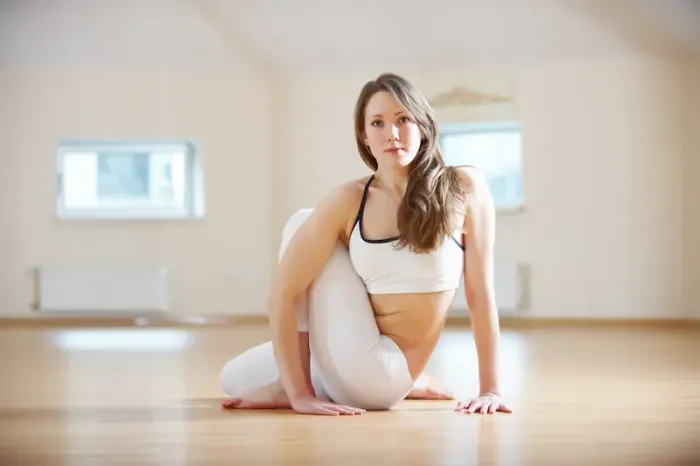
Ardha Matsyendrasana is a seated twist typically practiced near the middle or end of a yoga session, once the body is warm. In this pose, you sit upright, cross one leg over the other, and gently rotate your torso toward the top leg, using the breath to lengthen the spine on inhalations and deepen the twist slightly on exhalations.
Why is it popular?
• It’s accessible with plenty of modifications.
• It targets areas many of us feel tight in, the upper back, hips, and shoulders.
• It pairs mindful breathing with mobility, which can feel calming.
Ardha Matsyendrasana benefits: what science and experience say
There isn’t a large volume of research on this exact pose alone. However, evidence on yoga and regular physical activity can help us understand the reasonable benefits. Practiced with good form, Ardha Matsyendrasana may support:
• Spinal mobility and posture awareness: Twists mobilize the thoracic spine (mid- and upper back), which gets stiff from sitting and slouching. Over time, better awareness and mobility can support everyday posture.
• Flexibility in hips and shoulders: The pose stretches the outer hips/glutes and can open the chest and shoulders, especially when combined with steady breathing.
• Core engagement: Safe twisting encourages gentle activation of core muscles that stabilize the spine.
• Stress relief and mental focus: Slow, mindful breathing used in yoga is associated with relaxation and improved mood for many people, which can help with day-to-day stress management.
• Comfortable breathing mechanics: Keeping the chest open and spine long in a twist can make breathing feel smoother and more spacious.
What Ardha Matsyendrasana benefits should you not expect? Twists are sometimes said to “detoxify” organs or treat specific diseases, claims that are not supported by strong scientific evidence. Think of this pose as a helpful tool for mobility, body awareness, and relaxation within a balanced activity routine, not a medical treatment.
Consult a Top General Physician
Step-by-step: How to do Ardha Matsyendrasana safely?
Warm up
• Spend 5–10 minutes with gentle movements such as cat–cow, easy seated twists, shoulder rolls, and hip openers.
• Avoid deep twists when your body is cold.
The pose (right side)
1) Start seated in Staff Pose (Dandasana)
• Sit with legs extended, feet flexed, and spine tall.
• If your lower back rounds, sit on a folded blanket or yoga block to elevate your hips.
2) Cross the right foot over
• Bend the right knee and place the right foot outside the left thigh, near the knee.
• Option: Keep the left leg straight, or bend the left knee and tuck the left heel near the right hip (only if this feels comfortable in your knees and hips).
3) Lengthen before you twist
• Inhale to sit tall. Imagine lifting through the crown of the head and broadening your chest.
4) Twist gradually to the right
• Exhale and rotate from the mid- and upper back first (not by yanking the shoulders or forcing the neck).
• Place your right fingertips or palm on the floor just behind the right hip to support the lift of your spine.
5) Choose your arm position
• Gentle option: Hug your right knee with the left arm.
• Deeper option: Place the left elbow outside the right knee (forearm vertical), palm facing away, using the elbow to guide but not force the twist.
6) Keep your base steady
• Root both sit bones evenly into the mat.
• Keep the spine long; avoid slumping or leaning back.
7) Breathe and refine
• Take 3–8 slow breaths. With each inhale, grow tall. With each exhale, gently rotate a little more without strain.
• Keep the chin neutral; the head turns last and only as far as the neck feels comfortable.
8) Release and switch
• Exhale, unwind slowly. Return to the center and repeat on the left side.
How long to hold and how many rounds?
• Hold 20–45 seconds per side to start, building up to 60 seconds if it’s comfortable.
• Do 1–3 rounds per side, moving with steady breath.
Modifications, props, and variations
• If hamstrings or hips feel tight: Sit on a folded blanket or block to keep the spine upright.
• Sensitive knees: Keep the bottom leg straight (don’t tuck the heel in). Hug the top knee instead of hooking the elbow outside it.
• Lower back comfort: Place a block under the back hand to prevent leaning and keep the spine long.
• Gentle “open” twist (for pregnancy or low-back sensitivity): Instead of turning toward the bent knee, twist slightly in the opposite direction to keep the belly and chest more open. Keep the range small and prioritize comfort.
• Shoulder ease: Keep the front arm hugging the knee rather than crossing the elbow over it.
Safety tips and when to skip this yoga twist?
Ardha Matsyendrasana is generally safe when done mindfully, but caution is important. Consider skipping or modifying and consulting a qualified professional if you have:
• Recent or acute back injury, herniated disc, or spinal surgery
• Uncontrolled high blood pressure or heart concerns (avoid breath-holding and intense effort)
• Osteoporosis or low bone density (twisting range may need to be limited)
• Knee or hip injuries (keep the bottom leg straight and avoid deep knee flexion)
• Pregnancy (especially second and third trimesters): favor gentle, open twists and avoid deep compression
General safety reminders
• Never force a twist. Sensation should feel like a stretch, not sharp or pinching pain.
• Keep breathing. Avoid holding your breath; let breath guide the depth of the twist.
• Prioritize a long spine. Lift first, then rotate. Rounding reduces comfort and stability.
• If anything feels painful or “jammed,” ease out and choose a lighter variation.
Common mistakes and easy fixes
• Rounding the lower back: Sit on a blanket or block; bend the bottom knee only if it doesn’t cause the pelvis to tuck.
• Forcing the elbow outside the knee: Simply hug the knee. You’ll still get the benefits of a gentle twist without strain.
• Leaning back on the rear hand: Place that hand closer to the sacrum or on a block to help you lift instead of collapsing.
• Twisting from the neck first: Keep the neck neutral; rotate from the mid-back and let the head follow lightly.
• Letting the bent knee drift: Keep the front foot grounded and the knee pointing up, not collapsing inward.
How does Ardha Matsyendrasana fit into a healthy routine?
As part of an overall plan for well-being, this pose can complement aerobic activity, strength training, and flexibility work recommended by major health organizations. Thoughtful use of Ardha Matsyendrasana can
• Balance out sitting time by moving the thoracic spine
• Pair with hip openers (like figure-four stretch) and hamstring stretches
• Help close a yoga session with steady, calming breaths
Frequency:
• 3–5 days per week if comfortable, especially after a warm-up or at the end of a practice.
• On busy days, 1–2 mindful rounds on each side can still feel refreshing.
Top Ardha Matsyendrasana benefits at a glance
• Supports mid- and upper-back mobility and posture awareness
• Stretches the outer hip and glute muscles
• Encourages gentle core engagement
• Promotes calm focus and stress relief through steady breathing
• Adaptable to different bodies and experience levels
Using this pose consistently and safely is the best way to experience these Ardha Matsyendrasana benefits.Consult a Top General Physician
Consult a Top General Physician

Dr. Ashok M L
General Physician/ Internal Medicine Specialist
24 Years • MD Med.
Bengaluru
Apollo Hospitals Jayanagar, Bengaluru

(75+ Patients)

Dr. Rajib Ghose
General Physician/ Internal Medicine Specialist
26 Years • MBBS
Kolkata
B Ghose Foundation Doctor's Chamber, Kolkata
(50+ Patients)
Dr. Chethan T L
General Physician/ Internal Medicine Specialist
5 Years • MBBS, MD, DNB (General Medicine)
Bengaluru
Apollo Medical Center, Marathahalli, Bengaluru

Dr. Amitava Ray
General Physician/ Internal Medicine Specialist
20 Years • MBBS, DNB (Family Med.), PGDHHM, FRSTM&H. Certificate in Geriatric medicine & Diabetes Management.
Kolkata
Apollo Multispeciality Hospitals , Kolkata, Kolkata
(625+ Patients)

Dr. Rajib Ghose
General Physician/ Internal Medicine Specialist
25 Years • MBBS
East Midnapore
VIVEKANANDA SEBA SADAN, East Midnapore
Consult a Top General Physician
Dr. Ashok M L
General Physician/ Internal Medicine Specialist
24 Years • MD Med.
Bengaluru
Apollo Hospitals Jayanagar, Bengaluru
(75+ Patients)
Dr. Rajib Ghose
General Physician/ Internal Medicine Specialist
26 Years • MBBS
Kolkata
B Ghose Foundation Doctor's Chamber, Kolkata
(50+ Patients)
Dr. Chethan T L
General Physician/ Internal Medicine Specialist
5 Years • MBBS, MD, DNB (General Medicine)
Bengaluru
Apollo Medical Center, Marathahalli, Bengaluru
Dr. Amitava Ray
General Physician/ Internal Medicine Specialist
20 Years • MBBS, DNB (Family Med.), PGDHHM, FRSTM&H. Certificate in Geriatric medicine & Diabetes Management.
Kolkata
Apollo Multispeciality Hospitals , Kolkata, Kolkata
(625+ Patients)
Dr. Rajib Ghose
General Physician/ Internal Medicine Specialist
25 Years • MBBS
East Midnapore
VIVEKANANDA SEBA SADAN, East Midnapore
More articles from General Medical Consultation



Frequently Asked Questions
1) Is Ardha Matsyendrasana good for back pain?
It can help with general stiffness by improving mobility and posture awareness, which some people find helpful. If you have active back pain or a diagnosed condition, talk with a healthcare professional first and start with a very gentle range or skip twists until cleared.
2) How long should I hold this yoga twist?
Start with 20–30 seconds per side and up to 45–60 seconds if it feels good. Focus on smooth breathing rather than forcing a longer hold.
3) Should I do the version with the bottom leg bent?
Only if it’s comfortable for your knees and hips. Keeping the bottom leg straight is a perfectly effective and safer option for many people.
4) Can twists “detox” the body?
There’s no strong scientific evidence that twisting poses detoxify organs. Your liver, kidneys, lungs, and skin already do that work. Consider twists helpful for mobility, breath, and relaxation, not detox.
5) Is Ardha Matsyendrasana safe during pregnancy?
Deep, closed twists aren’t typically recommended in later pregnancy. Choose gentle, open twists that keep the belly spacious, and consult your prenatal care provider and a qualified prenatal yoga teacher.