


Shilajit in Ayurveda: Uses, Benefits & Side Effects
Curious about Shilajit Ayurveda? Learn what it is, potential benefits, side effects, and how to choose safe Ayurvedic supplements. Evidence-based and easy to read.

Introduction
If you’ve heard people call shilajit a natural vitality booster, you’re not alone. Shilajit has been part of Ayurvedic wellness practices for centuries, and today it appears in many supplements. But what is it exactly? Does research back the claims? And is it safe for everyone? This guide explains what we know clearly and responsibly, helping you make
informed choices with your healthcare professional.
What Is Shilajit?
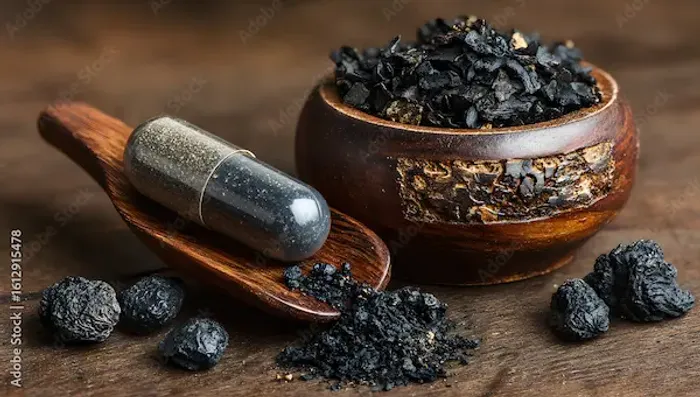
Shilajit is a sticky, tar-like substance that oozes from rocks in high mountain ranges, especially the Himalayas. It forms over long periods as plant and microbial matter slowly breaks down. Once purified, it contains humic substances (like
fulvic acid), trace minerals, and other compounds.
- Traditional view: In Ayurveda, shilajit is considered rejuvenating, supporting energy, resilience, and overall well-being.
- Modern view: Scientists are studying shilajit for potential effects on energy metabolism, antioxidant activity, and men’s
reproductive health. Evidence is mostly preliminary, and larger studies are still needed.
How Shilajit Is Used in Ayurveda?
In Ayurvedic practice, shilajit is combined with foods, milk, or herbal formulas as part of broader lifestyle guidance.
Today, it’s available as:
- Resin: Closest to traditional form.
- Capsules or tablets: Convenient modern form.
- Powder: Can be mixed into liquids per label instructions.
There is no universally accepted dose. Product strengths vary widely, so follow label directions and consult a healthcare
professional. Do not use raw or unprocessed shilajit.
Potential Benefits: What Research Suggests
Here’s a look at areas where shilajit may provide benefits, keeping in mind evidence is limited:
1) Energy and Fatigue
Shilajit may influence cellular energy, but evidence is preliminary:
- Some studies suggest it may reduce fatigue sensations.
- Human studies are small; results are not conclusive.
2) Male Reproductive Health (Testosterone and Fertility)
Shilajit is sometimes used to support men’s reproductive wellness:
- Small clinical studies suggest possible modest support for testosterone and certain semen parameters.
- Early findings may not apply universally.
3) High-Altitude Support
Shilajit is occasionally used for adaptation to altitude:
- Limited evidence suggests it may help the body cope with altitude stress.
- Not a replacement for proper acclimatisation or medical guidance.
4) Heart, Metabolic, and Brain Health
Laboratory and animal studies indicate potential antioxidant and anti-inflammatory properties:
- Human data are insufficient to confirm benefits for heart, metabolism, or cognition.
- Fulvic acid, a component, is studied for brain health, but strong clinical evidence is lacking.
Key takeaway: Shilajit may show promise, but it is not a cure or guaranteed vitality booster. Larger, well-controlled
human studies are needed.
Safety, Side Effects, and Risks
Understanding risks is essential when considering shilajit supplementation:
Possible Side Effects
- Stomach upset (nausea, diarrhoea)
- Headache or dizziness
- Allergic reactions (rare)
- Lowered blood pressure (caution if already low or taking medications)
Product Quality Concerns
- Contaminants: Heavy metals like lead can be present in improperly purified products.
- Potency varies: Dietary supplements are not strictly regulated; brands differ in quality.
Red Flags
- Avoid raw or unprocessed shilajit.
- Be cautious with products lacking third-party testing (COA).
Who Should Avoid or Use Extra Caution?
Certain groups should avoid shilajit or consult a clinician first:
- Pregnant or breastfeeding individuals
- Children and teens
- People with chronic conditions or on medications (especially blood pressure or iron-related medications)
- Anyone with history of heavy metal exposure or sensitivity
How to Choose a Quality Shilajit Product?
Tips to select safe and reliable supplements:
- Look for third-party testing (USP, NSF, or reputable labs) with a recent COA.
- Purchase from trusted sellers or the manufacturer’s website.
- Start with low doses and follow label instructions.
- Monitor for side effects: stop and consult a clinician if dizziness, rash, or stomach upset occurs.
How to Use Shilajit Safely?
Practical steps to incorporate shilajit wisely:
- Consult a healthcare professional first.
- Avoid starting multiple supplements at once.
- Set realistic expectations: benefits are likely modest and gradual.
- Maintain foundational lifestyle practices: sleep, nutrition, activity, and stress management.
Is Shilajit Right for You?
Shilajit has a long history in Ayurveda and is popular in modern wellness routines. Early research suggests potential
benefits for energy, male reproductive health, and altitude adaptation, but stronger evidence is needed. Safety depends
on product quality, proper use, and individual health factors. Discuss with a clinician before starting, and choose
rigorously tested supplements.
Conclusion
Shilajit is a traditional Ayurvedic substance with potential health-supporting properties, particularly for energy, reproductive health, and stress adaptation. However, scientific evidence in humans is limited and preliminary. Safety relies heavily on choosing high-quality, purified products and consulting a healthcare professional before use. Incorporating shilajit responsibly - alongside balanced nutrition, regular activity, adequate sleep, and stress management - ensures a practical and cautious approach to this ancient supplement.
Consult Top Specialists
Consult Top Specialists

Dr Syed Mateen Pasha
General Physician
2 Years • MBBS
Bengaluru
PRESTIGE SHANTHINIKETAN - SOCIETY CLINIC, Bengaluru

Dr. Vivek D
General Physician
4 Years • MBBS
Bengaluru
PRESTIGE SHANTHINIKETAN - SOCIETY CLINIC, Bengaluru

Dr. Anand Ravi
General Physician
2 Years • MBBS, FEM
Bengaluru
PRESTIGE SHANTHINIKETAN - SOCIETY CLINIC, Bengaluru

Dr. Ajay K Sinha
General Physician/ Internal Medicine Specialist
30 Years • MD, Internal Medicine
Delhi
Apollo Hospitals Indraprastha, Delhi

(225+ Patients)

Dr. Harshendra Jaiswal
General Physician/ Internal Medicine Specialist
12 Years • MBBS , MD (General medicine)
Kolkata
108 DHANA DHANVANTARI Clinic, Kolkata
(25+ Patients)
More articles from General Medical Consultation


Frequently Asked Questions
1) What exactly is shilajit?
Shilajit is a mineral-rich, tar-like substance that seeps from rocks in high mountains. After purification, it’s used in some Ayurvedic supplements and studied for potential effects on energy, antioxidants, and men’s reproductive health.
2) Is shilajit a proven vitality booster?
Not proven. Some small studies and traditional use suggest it may help with energy and resilience, but larger, high-quality human trials are needed. Consider it experimental and use only with guidance.
3) How long does it take to notice effects?
If benefits occur, they’re generally gradual over weeks. Responses vary. Track your symptoms and check in with your healthcare professional after 4–8 weeks.
4) Can women take shilajit?
There’s limited research in women. Because safety data in pregnancy and breastfeeding are insufficient, those populations should avoid it. Others should consult a clinician before use.
5) Can I combine shilajit with other Ayurvedic supplements?
Possibly, but be cautious. Combining products can increase side effects or contamination risk. Work with a qualified clinician, introduce one product at a time, and use tested brands.