


Best Yoga Positions to Relieve Gas and Bloating
Ease discomfort fast with gentle yoga for gas and bloating relief. Step-by-step poses, breathing tips, and safety guidance from trusted health sources.

Written by Dr. Dhankecha Mayank Dineshbhai
Reviewed by Dr. Md Yusuf Shareef MBBS, Advanced Certificate Course in Dermatology
Last updated on 13th Jan, 2026
Introduction
Gas and bloating are extremely common, and while they are usually harmless, they can cause discomfort, heaviness, abdominal tightness, embarrassment, and difficulty concentrating. Many people reach for quick solutions, yet gentle movement, mindful breathing, and specific yoga positions can help your digestive system naturally release trapped gas and ease pressure.
Yoga for gas works by facilitating movement — the physical movement of your body gently encourages the movement of gas through the intestines. At the same time, stretches, twists, and deep breathing can reduce stress, which is closely linked to digestive tension. This guide explains easy yoga poses for gas relief, a short routine you can do anytime, breathing strategies, and safety tips, so you can practise confidently at home.
Why Yoga Can Help with Gas and Bloating?
The digestive system responds strongly to movement and breath. Unlike intense exercises, yoga uses slow, focused movement that massages the abdomen from all angles.
Key reasons yoga helps:
- Movement helps move gas: Gentle activity increases circulation and stimulates the intestines, helping trapped gas travel through the colon.
- Abdominal compression and twists: When you gently hug your knees to your chest or twist your torso, you create light compression that encourages trapped gas to move.
- Diaphragmatic breathing: Deep belly breathing moves the diaphragm up and down, indirectly massaging the organs and encouraging the release of pressure.
- Stress reduction: Digestive symptoms often worsen when the body is in a stress response. Yoga stimulates relaxation, reducing digestive tension.
Consult a Top General Practitioner for Personalised Advice
Yoga is supportive, not a cure. It helps your body do what it is already designed to do — naturally move gas along.
Note: If your bloating or digestive discomfort is frequent, severe, or comes with concerning symptoms, seek medical advice for assessment.
Before You Start: Safety and When to Seek Care
Yoga is generally safe for most adults, and for gas relief, gentle movement is the focus — not intensity or flexibility. The guidelines are:
General guidelines:
- Stop the moment you feel sharp pain, dizziness, or worsening symptoms.
- Move slowly and with intention — rushing can increase abdominal tension.
- Use props to support comfort: pillows, cushions, blocks, or folded blankets.
Speak with a clinician first if you:
- Are pregnant or have you recently given birth
- Had recent abdominal, spinal, pelvic, or hernia surgery
Have existing conditions such as:
- Hernia
- Bowel obstruction
- Severe osteoporosis
- Glaucoma
- Uncontrolled high blood pressure
- Significant spinal problems
Seek prompt medical care if you experience:
- Severe abdominal pain or persistent swelling
- Fever, vomiting, blood in stool, or black stools
- Unexplained weight loss
- Persistent constipation or diarrhoea
- Symptoms that wake you from sleep
These symptoms require professional evaluation.
Best Yoga Positions for Gas and Bloating Relief
Move slowly and breathe deeply through your nose. Hold each pose for 5–10 slow breaths unless otherwise noted. Some of the best yoga positions are:
Knees-to-Chest (Wind-Relieving Pose)
Purpose: Creates gentle abdominal compression and supports the movement of trapped gas.
How to:
- Lie on your back.
- Bend both knees and draw them toward your chest.
- Hold your shins or the back of your thighs and gently hug your knees in.
- Rock side to side if that feels soothing.
Optional variation:
Try one knee at a time (hug right knee, then left) if two knees feel too strong.
Support tip:
Place a pillow under your head for neck comfort.
Child’s Pose
Purpose: Calms the nervous system and gently massages the abdomen, reducing bloating-related stress.
How to:
- Kneel with big toes touching and knees apart.
- Sit back on your heels and fold forward, resting your torso between your thighs.
- Rest your forehead on the mat or on a cushion.
- Extend your arms forward or place them beside you.
Modifications:
- Place a cushion between calves and thighs.
- Use pillows under the chest or shoulders for comfort.
Supine Twist (Reclined Spinal Twist)
Purpose: Twisting helps stimulate digestion and may encourage gas to move through the intestines.
How to:
- Lie on your back and draw your knees toward your chest.
- Let your knees fall gently to one side while your head turns in the opposite direction.
- Keep shoulders grounded.
Modifications:
Place a pillow under your knees if they don’t reach the floor comfortably.
Avoid:
Deep twists if pregnant; opt for a very mild twist under guidance.
Cat–Cow Flow
Purpose: Mobilises the spine and massages the abdomen because the digestive organs shift as the spine moves.
How to:
- Begin on hands and knees.
- Inhale: Drop your belly, lift your chest and tailbone (Cow).
- Exhale: Round your spine, tuck your chin and tailbone (Cat).
- Repeat slowly for 6–10 rounds.
Prop support:
Place padding under knees or wrists.
Seated Forward Bend (Gentle Version)
Purpose: Provides mild abdominal compression and relaxes the nervous system.
How to:
- Sit with legs extended (bend knees if needed).
- Hinge from your hips and fold forward gently.
- Rest your hands on your legs, feet, or a strap.
Modifications:
- Sit on a blanket to make folding easier.
- Rest your torso on a pillow.
Happy Baby Pose
Purpose: Light abdominal compression plus hip opening helps release tension and gas.
How to:
- Lie on your back.
- Bend knees toward the armpits.
- Hold the outer edges of feet, ankles, or shins.
- Gently rock side to side.
Modifications:
Hold behind the thighs if reaching feet is uncomfortable.
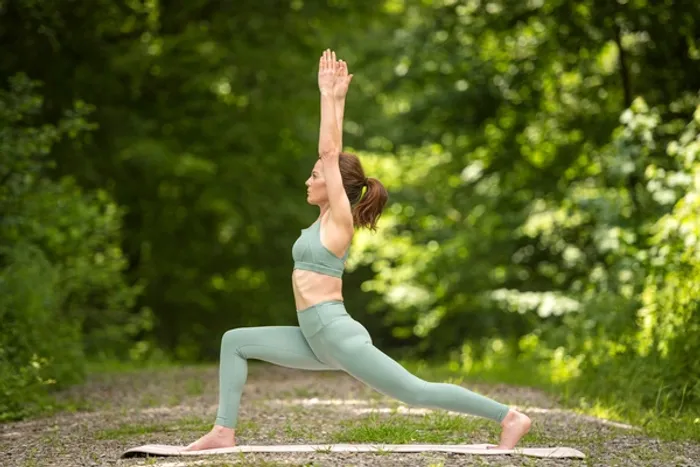
Low Lunge with Gentle Twist
Purpose: Opens hips and provides a light twist to stimulate digestion.
How to:
- Step right foot forward into a low lunge.
- Keep left knee down and torso upright.
- Place your left hand on the floor or a block.
- Gently rotate your chest toward the right.
Tip:
Lead from the upper back, not the lower back.
Deep Supported Squat
Purpose: Opens the hips and pelvis, helping encourage downward movement of gas.
How to:
- Stand with feet slightly wider than hips.
- Bend knees and lower into a squat.
- Bring palms together and press elbows into knees.
Modifications:
- Sit on a yoga block or low stool for support.
- Use a rolled towel under heels.
Breathing Techniques That Support Digestion
The techniques include:
Diaphragmatic (Belly) Breathing
How to:
- Sit or lie down comfortably.
- Place one hand on your chest and the other on your belly.
- Inhale through the nose for 4 counts — belly rises.
- Exhale through the nose for 4–6 counts — belly falls.
- Repeat for 3–5 minutes.
Why it helps:
- The diaphragm moves downward on inhalation and upward on exhalation.
- This movement lightly massages the digestive organs.
- Encourages relaxation, reducing tension-related bloating.
A 10-Minute Yoga for Gas and Bloating Routine
Use this routine when you feel gassy, bloated, or uncomfortable. Practise gently.
- Minute 0–2: Diaphragmatic breathing (lying down)
- Minute 2–3: Knees-to-Chest (both knees; then one knee at a time)
- Minute 3–4: Happy Baby Pose (gentle rocking)
- Minute 4–6: Supine Twist (right, then left)
- Minute 6–8: Cat–Cow Flow (slow and steady)
- Minute 8–9: Child’s Pose
- Minute 9–10: Seated Forward Bend
You can repeat the routine after meals or any time bloating appears.
Tips for Success
The tips for success are:
- Go slow — fast movements can worsen discomfort.
- Never push into pain — discomfort is a signal to adjust.
- Use props generously — comfort improves effectiveness.
- Consider a short walk after meals — 10–20 minutes supports digestion.
- Hydrate regularly — water helps stool and gas move more easily.
- Small habits make a big difference.
Lifestyle Steps That Complement Yoga
To experience longer-term improvements, try pairing these practices with daily habits:
- Eat and drink mindfully: Slowing down and chewing thoroughly reduces swallowed air.
- Identify triggers: Common contributors include beans, certain vegetables, fizzy drinks, and sugar alcohols — but triggers vary by person.
- Increase fibre gradually: Introducing too much too fast can cause gas.
- Consider lactose or other sensitivities: Speak to a clinician if symptoms follow dairy or certain foods.
- Stay active: Regular movement supports digestion and bowel function.
Yoga helps the body, and lifestyle supports the result.
When to Consider Professional Help
Professional help is needed when:
- Persistent or worsening bloating
- Digestive symptoms that interfere with daily life
- Pain, fever, vomiting, blood in the stool, or unexplained weight loss
- A clinician can help determine whether symptoms relate to:
Constipation - Food sensitivity or intolerance
- Reflux or irritable bowel syndrome
Conclusion
Gas and bloating can be uncomfortable, distracting, and frustrating, but you don’t have to tolerate them helplessly. Gentle yoga gives you an effective, natural way to reduce pressure, soothe your abdomen, and calm your nervous system. By combining movement, focused breathing, and mindful positioning, yoga helps improve digestive comfort from the inside out. Consistency matters more than intensity — a few minutes daily can make a noticeable difference. Use this guide as a small, practical toolkit to support ease, relaxation, and digestive comfort at home.
Consult a Top General Practitioner for Personalised Advice
Consult a Top General Practitioner for Personalised Advice

Dr Suseela
General Physician
5 Years • MBBS
Bengaluru
Apollo Medical Center, Marathahalli, Bengaluru


Dr. D Bhanu Prakash
General Practitioner
10 Years • MBBS, AFIH, Advanced certificate in critical care medicine, Fellowship in critical care medicine
Hyderabad
Apollo 24|7 Clinic, Hyderabad

Dr D M Karthik
General Practitioner
4 Years • MBBS, Fellowship in Diabetes Mellitus, Advance certificate in Diabetes Mellitus, Derma Nutrition Certification
Visakhapatnam
Apollo 24|7 Clinic - Andhra Pradesh, Visakhapatnam

Dr. Anand Ravi
General Physician
2 Years • MBBS, FEM
Bengaluru
PRESTIGE SHANTHINIKETAN - SOCIETY CLINIC, Bengaluru

Dr. Vivek D
General Physician
4 Years • MBBS
Bengaluru
PRESTIGE SHANTHINIKETAN - SOCIETY CLINIC, Bengaluru
Consult a Top General Practitioner for Personalised Advice
Dr Suseela
General Physician
5 Years • MBBS
Bengaluru
Apollo Medical Center, Marathahalli, Bengaluru
Dr. D Bhanu Prakash
General Practitioner
10 Years • MBBS, AFIH, Advanced certificate in critical care medicine, Fellowship in critical care medicine
Hyderabad
Apollo 24|7 Clinic, Hyderabad
Dr D M Karthik
General Practitioner
4 Years • MBBS, Fellowship in Diabetes Mellitus, Advance certificate in Diabetes Mellitus, Derma Nutrition Certification
Visakhapatnam
Apollo 24|7 Clinic - Andhra Pradesh, Visakhapatnam
Dr. Anand Ravi
General Physician
2 Years • MBBS, FEM
Bengaluru
PRESTIGE SHANTHINIKETAN - SOCIETY CLINIC, Bengaluru
Dr. Vivek D
General Physician
4 Years • MBBS
Bengaluru
PRESTIGE SHANTHINIKETAN - SOCIETY CLINIC, Bengaluru
More articles from General Medical Consultation




Frequently Asked Questions
Which pose works fastest for gas?
Many people find immediate relief from:
- Knees-to-Chest
- Child’s Pose
- Supine Twist
How often should I practise for bloating relief? A
Short daily sessions (5–15 minutes) are more helpful than long, occasional sessions.
Can yoga make bloating worse?
It can if:
- Movements are too intense
- You twist too deeply
- You practise immediately after a large meal
Is this safe during pregnancy?
Gentle movement may feel good, but avoid deep twists and lying flat on your back after the first trimester. Always consult your prenatal provider.
What else can help besides yoga?
Follow the tips below:
- Walking
- Hydration
- Gradual fibre increases
- Reducing carbonated drinks