



The Dangers of Passive Smoking in Public Places
Learn how secondhand smoke harms health, why smokefree public places matter, and simple ways to protect your family. Clear facts and tips inside.

Written by Dr. Mohammed Kamran
Reviewed by Dr. Shaik Abdul Kalam MD (Physician)
Last updated on 14th Jan, 2026
Introduction
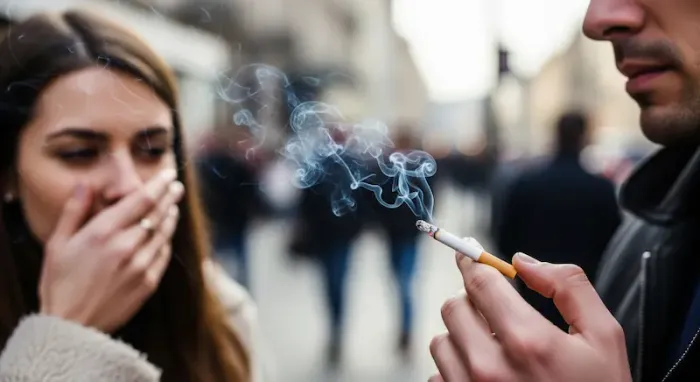
Breathing someone else’s cigarette smoke isn’t just unpleasant—it can harm your health. Secondhand smoke carries toxic chemicals that can trigger immediate and long-term problems for the heart, lungs, and brain. Understanding passive smoking risks in public places helps you make safer choices and encourages community steps that protect everyone’s health. This is a public health issue because exposure often happens where many people gather—transport hubs, restaurants, parks, and shared housing—affecting children, older adults, workers, and people with medical conditions.
What is secondhand smoke?
Secondhand smoke is the mix of smoke from a burning tobacco product and the smoke exhaled by a smoker. It contains thousands of chemicals, including many that are toxic and dozens known to cause cancer. Health authorities are clear: there is no safe level of exposure to secondhand smoke. Even brief exposure can be harmful, especially for people with heart or breathing problems and for young children.
Passive smoking risks: who is most vulnerable?
Some groups are more likely to be harmed by exposure in public places and shared spaces:
Babies and children:
• Higher risk of sudden infant death syndrome (SIDS)
• More ear infections, asthma attacks, bronchitis, and pneumonia
Pregnant people and their babies:
• Greater chance of low birth weight and pregnancy complications
People with asthma, COPD, or heart disease:
• Smoke can trigger asthma attacks, chest pain, and breathing trouble
Older adults:
• More sensitive to the effects on the heart and lungs
Workers in hospitality, casinos, and transportation:
• Repeated exposure in smokeallowed settings increases health risks
Residents of multiunit housing:
• Smoke can travel through vents, cracks, and hallways, exposing neighbors who do not smoke Consult a Top General Physician
The science: how secondhand smoke harms the body?
Heart and blood vessels:
• Even short exposure can damage the lining of blood vessels and make blood more likely to clot, raising the risk of heart attacks and strokes over time.
Lungs and airways:
• Irritates and inflames the airways, worsening asthma and chronic lung disease.
• Increases the risk of lung infections and lung cancer with ongoing exposure.
Brain and metabolism:
• Exposure increases the risk of stroke; it can also worsen headaches and trigger migraines in sensitive people.
Children’s development:
• More respiratory infections and reduced lung function growth.
Pregnancy:
• Exposure raises the risk of low birth weight and other complications.
Why is secondhand smoke in public places a public health issue?
Public places bring many people together—including infants, elders, pregnant people, and those with heart or lung disease. When smoking is allowed in shared environments, exposure becomes difficult to avoid. This is why smokefree laws are a cornerstone of public health: they decrease exposure to toxins for everyone and help reduce tobacco use overall.
Settings where exposure is common
• Restaurants, bars, and entertainment venues
• Entrances and outdoor waiting areas (bus stops, stadium lines)
• Parks, beaches, and outdoor dining when people are seated close together
• Workplaces and vehicles used for work
• Multiunit housing, hallways, and shared ventilation systems
Myths vs. facts about passive smoking risks
• Myth: “A little smoke won’t hurt.”
Fact: There is no safe level of exposure. Even brief exposure can be harmful to the heart and lungs.
• Myth: “Opening a window or using a fan solves the problem.”
Fact: Ventilation and air cleaning cannot remove all the toxic particles and gases in secondhand smoke. Only 100% smokefree environments genuinely protect health.
• Myth: “E cigarette vapor is just water.”
Fact: E cigarette aerosol is not harmless; it can contain nicotine, ultrafine particles, and other substances that may affect health.
How smokefree public places protect health?
Immediate protection:
• Reduces exposure for everyone, especially children and people with asthma or heart disease.
Community benefits:
• Smokefree policies are linked with better air quality and improvements in health outcomes, such as fewer heart-related emergencies.
Equity:
• Protects workers and residents who cannot easily avoid exposure at their jobs or in their homes.
Long-term impact:
• Encourages quitting and reduces how often people smoke, strengthening public health over time.
What about vaping and heated tobacco in public?
Secondhand aerosol from e cigarettes:
• Not just water vapor; it can contain nicotine and tiny particles that are inhaled by bystanders. Health experts recommend avoiding exposure, especially around children and pregnant people.
Heated tobacco products:
• These still release substances that can affect indoor air quality.
Policy note:
• Many communities include vaping in smokefree laws to keep shared air cleaner.
Thirdhand smoke in shared spaces
Thirdhand smoke is the residue left behind by tobacco smoke on surfaces, dust, furniture, clothing, and walls. It can linger long after smoking stops and can be stirred back into the air. This residue is especially concerning for babies and toddlers who crawl and put their hands in their mouths. Regular cleaning helps but does not eliminate all contamination. The most effective approach is to keep homes and public places completely smokefree.
Practical steps to reduce exposure today
Choose smokefree spaces:
• Look for restaurants, hotels, parks, and events with clear smokefree policies.
Keep your distance:
• If you encounter smoke outdoors, move away from the source and upwind when possible.
Ask politely:
• A friendly request can often lead to a quick adjustment from someone nearby.
Support smokefree housing:
• If you live in multiunit housing, ask your landlord or homeowners’ association about a smokefree policy for indoor and shared outdoor areas.
Use evidence-based protections:
• Air purifiers and open windows may reduce odor, but they do not fully remove harmful chemicals in secondhand smoke. They should not be relied on as the primary protection.
Community actions that strengthen public health
Comprehensive smokefree laws:
• Cover indoor workplaces, restaurants, bars, public transport, and shared housing areas.
Clear signage and enforcement:
• Visible reminders help people follow the rules and keep spaces healthy.
Education and support:
• Offer quitting resources and share facts about the harms of secondhand smoke.
Partnerships:
• Schools, healthcare providers, local businesses, and community groups can work together to create smokefree norms and protect public health.
If you must be around smoke: shortterm tips
• Step away from the smoke source; choose outdoor, well-ventilated areas.
• Avoid standing downwind or close to cluster areas (like entrances).
• If you have asthma or heart disease, keep your rescue inhaler or medications accessible and leave the area if symptoms start.
• Change clothes and wash exposed skin after heavy exposure to reduce thirdhand residue.
For people who smoke: ways to protect others and yourself
Make a plan to quit:
• Talk with your healthcare provider about FDA approved quit aids such as nicotine patches, gum, lozenges, varenicline, or bupropion.
Get support:
• Call 1800QUITNOW (in the U.S.) for free counseling and resources.
Create smokefree rules:
• Never smoke inside your home or car, even with windows open; avoid smoking near children, pregnant people, and pets.
Consider timing and location:
• If you choose to smoke, do so far from building entrances and away from crowds.
Consult a Top General Physician
Consult a Top General Physician

Dr. Vivek D
General Physician
4 Years • MBBS
Bengaluru
PRESTIGE SHANTHINIKETAN - SOCIETY CLINIC, Bengaluru

Dr. Anand Ravi
General Physician
2 Years • MBBS, FEM
Bengaluru
PRESTIGE SHANTHINIKETAN - SOCIETY CLINIC, Bengaluru

Dr. Harshendra Jaiswal
General Physician/ Internal Medicine Specialist
12 Years • MBBS , MD (General medicine)
Kolkata
108 DHANA DHANVANTARI Clinic, Kolkata

(25+ Patients)

Dr Syed Mateen Pasha
General Physician
2 Years • MBBS
Bengaluru
PRESTIGE SHANTHINIKETAN - SOCIETY CLINIC, Bengaluru

Dr. Ajay K Sinha
General Physician/ Internal Medicine Specialist
30 Years • MD, Internal Medicine
Delhi
Apollo Hospitals Indraprastha, Delhi
(225+ Patients)
Consult a Top General Physician
Dr. Vivek D
General Physician
4 Years • MBBS
Bengaluru
PRESTIGE SHANTHINIKETAN - SOCIETY CLINIC, Bengaluru
Dr. Anand Ravi
General Physician
2 Years • MBBS, FEM
Bengaluru
PRESTIGE SHANTHINIKETAN - SOCIETY CLINIC, Bengaluru
Dr. Harshendra Jaiswal
General Physician/ Internal Medicine Specialist
12 Years • MBBS , MD (General medicine)
Kolkata
108 DHANA DHANVANTARI Clinic, Kolkata
(25+ Patients)
Dr Syed Mateen Pasha
General Physician
2 Years • MBBS
Bengaluru
PRESTIGE SHANTHINIKETAN - SOCIETY CLINIC, Bengaluru
Dr. Ajay K Sinha
General Physician/ Internal Medicine Specialist
30 Years • MD, Internal Medicine
Delhi
Apollo Hospitals Indraprastha, Delhi
(225+ Patients)
More articles from General Medical Consultation



Frequently Asked Questions
1. Is any level of secondhand smoke safe?
No. Health experts agree there is no safe level of exposure. Even brief exposure can be harmful, especially for sensitive groups.
2. Is outdoor exposure dangerous too?
Outdoor smoke dissipates more quickly, but exposure can still occur if you’re close to the source or in crowded areas. It’s best to keep distance and avoid smoke when possible.
3. Do air purifiers or opening windows protect me?
These steps may reduce odor and some particles, but they do not remove all the toxic chemicals. Only 100% smokefree environments fully protect health.
4. How does secondhand smoke affect pregnancy and children?
It is linked with low birth weight and other complications during pregnancy. For children, it raises the risk of ear infections, asthma attacks, and serious lung infections.
5. Is secondhand aerosol from e cigarettes safe?
No. E cigarette aerosol is not harmless. It can contain nicotine and tiny particles that are inhaled by others. Avoid using or being around e cigarettes near children and pregnant people.