


Is Soybean Oil Bad for You?
Is soybean oil bad for you? See what science says about heart health, inflammation, cooking uses, and whether soybean oil is healthy in a balanced diet.

Written by Dr. M L Ezhilarasan
Reviewed by Dr. Md Yusuf Shareef MBBS, Advanced Certificate Course in Dermatology
Last updated on 13th Jan, 2026
Introduction
Seed oils spark big debates online, and soybean oil is often at the center of the conversation. Is soybean oil bad for you, or is soybean oil healthy when it’s used the right way? The truth is more balanced than headlines suggest. What matters most is how much you use, what you use it for, and what you’re replacing in your diet. Below, we unpack the science in clear, simple terms so you can decide how soybean oil fits into your kitchen and your health goals.
What Is Soybean Oil?
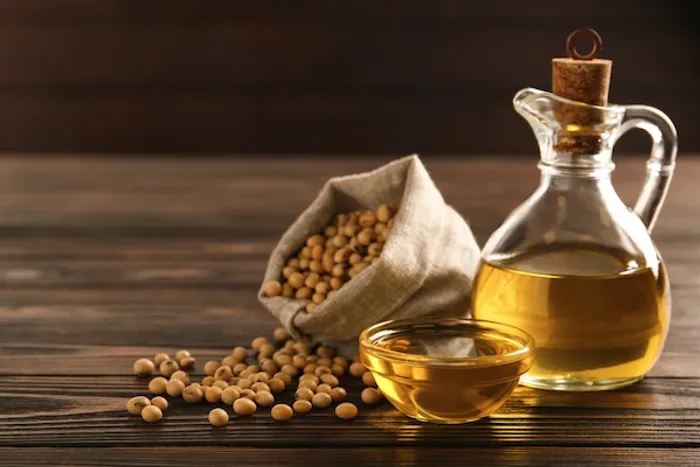
Soybean oil is a widely used vegetable oil pressed from soybeans. The refined version is light in color and taste, which makes it versatile for cooking and baking.
Key facts:
- It’s mostly unsaturated fat, especially polyunsaturated fats (PUFAs).
- It provides essential omega-6 fat (linoleic acid) and a smaller amount of plant omega-3 (alpha-linolenic acid, or ALA).
- It contains small amounts of vitamin E and vitamin K.
- Like all oils, it’s calorie-dense, so portion size matters.
Is Soybean Oil Healthy for Your Heart?
Short answer: It can be. Multiple major health organizations emphasize that replacing saturated fats (like those in butter, fatty meats, and some tropical oils) with unsaturated fats (like those in soybean, olive, canola, and sunflower oils) helps lower LDL (“bad”) cholesterol and supports heart health.
What The Evidence Says
- WHO recommends limiting saturated fat, eliminating industrial trans fat, and choosing unsaturated fats to reduce heart disease risk.
- Harvard Health Publishing notes that unsaturated fats, including the PUFAs in soybean oil, are linked to lower LDL cholesterol when they replace saturated fat.
- Mayo Clinic echoes this: swapping saturated fats for unsaturated fats is a heart-smart move.
- Cleveland Clinic similarly advises using vegetable oils rich in unsaturated fats as part of a heart-healthy diet.
So, if your question is “is soybean oil healthy for my heart?”, the best-supported answer is: it can be, when it replaces higher-saturated-fat options and is used in moderation within an overall healthy eating pattern.
Consult a Top General Physician
Does Soybean Oil Cause Inflammation?
You may have heard that omega-6 fats are “inflammatory.” The best available research does not support that claim. Linoleic acid (the main omega-6 fat in soybean oil) does not appear to raise inflammation in healthy people when eaten in reasonable amounts as part of a balanced diet.
What To Know?
- Harvard’s nutrition experts report that higher linoleic acid intake is not linked to systemic inflammation and may be associated with a lower risk of heart disease.
- Cleveland Clinic similarly notes that seed oils are not inherently inflammatory and can fit into a healthy diet.
Bottom line: In the context of a varied diet, with adequate omega-3s from sources like fish, flax, chia, or walnuts, omega-6 fats from soybean oil are not shown to drive inflammation.
Soybean Oil and Omega-3s: Helpful but Not a Standalone Source
Soybean oil contains a small amount of ALA, a plant omega-3. That’s a nutritional plus, but it’s still important to include other omega-3 sources. Fatty fish (like salmon and sardines) provide EPA and DHA, which the body uses readily. If you don’t eat fish, consider plant sources of ALA (flaxseed, chia, walnuts) regularly.
Trans Fats and Soybean Oil: What’s Changed?
- Years ago, some foods used partially hydrogenated soybean oil (a source of artificial trans fats).
- That’s largely gone in the U.S., thanks to regulatory action to remove industrial trans fats from the food supply. Today:
- Refined soybean oil that is not partially hydrogenated contains virtually no trans fat.
- WHO and CDC advise avoiding industrial trans fats, which have been phased out in many countries.
Note: Any oil heated repeatedly to very high temperatures can degrade and form unwanted byproducts. For home cooking, avoid reusing frying oil multiple times.
Is Soybean Oil Healthy for Everyday Cooking?
Refined soybean oil has a relatively high smoke point and neutral flavor, making it practical for many techniques.
Good Uses
- Sautéing and stir-frying
- Roasting vegetables
- Baking
- Homemade mayonnaise and dressings (for a mild, neutral taste)
Smart Kitchen Tips
- Use fresh oil and store it in a cool, dark place with the cap tightly sealed.
- Avoid repeatedly re-heating the same batch of oil.
- Rotate oils. Olive oil (great for dressings and medium-heat cooking) and canola, peanut, avocado, and sunflower oils each bring different benefits and flavors.
- Aim for overall balance: include omega-3-rich foods alongside omega-6 sources.
Who Might Want to Be More Careful?
- People with soy allergy: Highly refined soybean oil contains very low levels of soy protein and is often tolerated, but sensitivities vary. If you have a soy allergy, talk with your allergist or clinician about what’s safe for you.
- People watching calories: All oils are calorie-dense. Using a smaller amount (measure rather than pouring) helps manage calorie intake.
- People who rarely eat omega-3s: If you seldom eat fish or other omega-3 sources, be intentional about adding them to your week to support balance.
Soybean Oil vs. Olive Oil: Which Is “Better”?
It depends on your goal and how you use them:
- Heart health: Both can support heart health when they replace saturated fats. Olive oil is rich in monounsaturated fats and polyphenols (especially extra-virgin), while soybean oil is rich in polyunsaturated fats, including essential linoleic acid and some ALA.
- Flavor: Olive oil (especially extra-virgin) adds distinct flavor and antioxidants. Soybean oil is neutral and versatile when you don’t want the oil to stand out.
- Heat: Refined soybean oil tolerates higher heat; extra-virgin olive oil is best at low-to-medium heat and for finishing dishes.
Think “both/and,” not “either/or.” Keeping a few oils on hand lets you choose the right tool for the job.
How Much Soybean Oil Is Okay?
There’s no one-size-fits-all amount. General guidance from major health organizations is to:
- Emphasize unsaturated fats.
- Limit saturated fat.
- Avoid industrial trans fat.
- Watch total calories.
Practically Speaking
- Use the smallest amount of oil needed for cooking.
- Prioritize whole foods (vegetables, fruits, beans, whole grains, nuts/seeds, fish, lean proteins).
- Let oil enhance meals, not dominate them.
What About GMOs and Processing?
- GMOs: Most soybeans grown in the U.S. are genetically engineered. According to the World Health Organization, GM foods on the market have passed safety assessments and are not likely to pose risks to human health.
- Processing: Refined soybean oil undergoes steps like bleaching and deodorizing to make it stable and neutral in taste. This is common for many vegetable oils and is considered safe. If you prefer minimally processed flavors, use extra-virgin olive oil for dressings and finishing, and refined oils (including soybean) when you need neutral taste and higher heat tolerance.
Making Soybean Oil Work for You: Simple Tips
- Swap smartly: Replace butter or shortening with soybean oil in baking or cooking to reduce saturated fat.
- Mix your fats: Keep extra-virgin olive oil for dressings and finishing, and use soybean oil when you need neutral flavor or higher-heat performance.
- Add omega-3s: Build in fish twice a week or add flax, chia, or walnuts to your meals.
- Measure your pour: Use a teaspoon or a measured squeeze to manage calories.
- Don’t overheat: Cook at appropriate temperatures and avoid reusing oil multiple times.
The Bottom Line: Is Soybean Oil Bad for You?
Soybean oil is not “good” or “bad” in isolation. When used in moderation to replace saturated fats, within a diet rich in vegetables, fruits, whole grains, legumes, nuts/seeds, and lean proteins, soybean oil can support heart health. Current evidence does not show that reasonable intakes of omega-6 fats from soybean oil drive inflammation in healthy people. If you were wondering, “Is soybean oil healthy?” the balanced answer is yes, it can be, especially when you use it thoughtfully and pair it with omega-3-rich foods and other wholesome choices.
Consult a Top General Physician
Consult a Top General Physician

Dr. Rajib Ghose
General Physician/ Internal Medicine Specialist
25 Years • MBBS
East Midnapore
VIVEKANANDA SEBA SADAN, East Midnapore

Dr. Impana G N
Physician/ Internal Medicine/ Covid Consult
11 Years • MBBS,DNB FAMILY MEDICINE, MNAMS ,CCEBDM
Mysuru
Apollo BGS Hospital Adichuchanagiri Road, Mysuru

Dr. Pinaki Mukhopadhyay
General Practitioner
33 Years • MBBS
Kolkata
MCR SUPER SPECIALITY POLY CLINIC & PATHOLOGY, Kolkata

(25+ Patients)

Dr. Sumanjita Bora
Cardiologist
9 Years • MBBS, PGDCC
Bengaluru
Apollo Clinic, Sarjapur Road, Bengaluru

Dr. Vishal Kumar H
General Physician/ Internal Medicine Specialist
8 Years • MBBS, master class in critical care medicine, Advanced Post Graduate Diploma in Non Invasive Cardiology, certificate course in Cardiovascular Disease & Stroke, Certificate course in Common Mental Disorder
Bengaluru
Apollo Clinic, Basavanagudi, Bengaluru
Consult a Top General Physician
Dr. Rajib Ghose
General Physician/ Internal Medicine Specialist
25 Years • MBBS
East Midnapore
VIVEKANANDA SEBA SADAN, East Midnapore
Dr. Impana G N
Physician/ Internal Medicine/ Covid Consult
11 Years • MBBS,DNB FAMILY MEDICINE, MNAMS ,CCEBDM
Mysuru
Apollo BGS Hospital Adichuchanagiri Road, Mysuru
Dr. Pinaki Mukhopadhyay
General Practitioner
33 Years • MBBS
Kolkata
MCR SUPER SPECIALITY POLY CLINIC & PATHOLOGY, Kolkata
(25+ Patients)
Dr. Sumanjita Bora
Cardiologist
9 Years • MBBS, PGDCC
Bengaluru
Apollo Clinic, Sarjapur Road, Bengaluru
Dr. Vishal Kumar H
General Physician/ Internal Medicine Specialist
8 Years • MBBS, master class in critical care medicine, Advanced Post Graduate Diploma in Non Invasive Cardiology, certificate course in Cardiovascular Disease & Stroke, Certificate course in Common Mental Disorder
Bengaluru
Apollo Clinic, Basavanagudi, Bengaluru
More articles from General Medical Consultation




Frequently Asked Questions
Is soybean oil healthy or bad for your heart?
When it replaces saturated fats like butter or lard, soybean oil’s unsaturated fats can help lower LDL cholesterol and support heart health. The overall pattern of your diet matters most.
Does soybean oil cause inflammation?
No strong evidence shows that typical amounts of omega-6 fats from soybean oil cause inflammation in healthy people. Major nutrition reviews indicate linoleic acid is not pro-inflammatory when part of a balanced diet.
Is refined soybean oil safe if I have a soy allergy?
Highly refined soybean oil contains very little soy protein and is often tolerated, but individual responses vary. If you have a soy allergy, check with your allergist or healthcare provider before using it.
Which is better: soybean oil or olive oil?
Both can be part of a healthy diet. Olive oil (especially extra-virgin) is rich in monounsaturated fats and antioxidants and shines in dressings and low-to-medium heat cooking. Soybean oil is neutral, versatile, and higher in polyunsaturated fats, with a higher smoke point. Use each where it fits best.
Does soybean oil contain trans fat?
Non-hydrogenated soybean oil contains virtually no trans fat. Industrial trans fats from partially hydrogenated oils have been removed from many food supplies. Avoid foods that still use partially hydrogenated oils in regions where they remain.