

Anti Hcv Test Normal Range

Written by
Last updated on 31st Jan, 2026
Introduction
If you’ve just received an “Anti HCV” test or you’re wondering what the normal range should be, you’re not alone. The anti HCV test (hepatitis C virus antibody test) is a common screening tool that looks for antibodies your immune system makes after exposure to hepatitis C. Unlike cholesterol or blood sugar, this test doesn’t use a numeric “normal range.” Instead, it’s usually reported as nonreactive (negative) or reactive (positive), and that difference matters because a reactive result needs a confirmatory test to tell if you have a current infection. In this guide, you’ll learn exactly what an anti HCV test normal range means (and doesn’t mean), how to interpret results like “nonreactive,” “reactive,” or “equivocal,” and what to do next. We’ll cover timing after exposure, false positives, pregnancy and newborn scenarios, and the latest testing recommendations. We’ll also share a simple flow that shows where RNA and core antigen tests fit. If you need help, Apollo 24|7 offers convenient home sample collection and online doctor consultations, so you can act promptly and confidently.
Consult Top Specialists
Anti HCV test at a glance
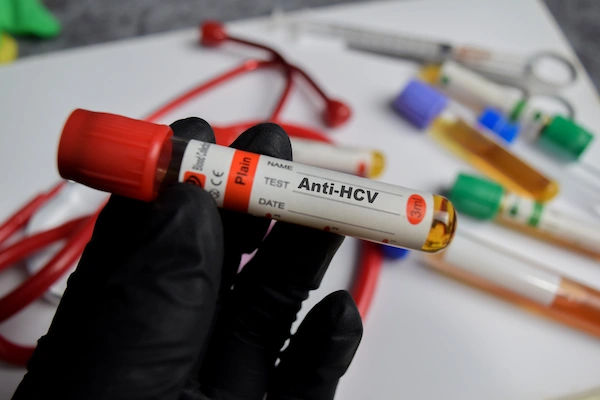
The anti HCV test looks for antibodies that your immune system produces after exposure to the hepatitis C virus. It does not look for the virus itself. That’s an important distinction: antibodies can persist for years—even after you’ve cleared the virus, either naturally or after treatment—so a positive (reactive) antibody test alone doesn’t tell you if you currently have hepatitis C. That’s why confirmatory testing with HCV RNA (a viral load test) is standard practice.
Doctors order the anti HCV test for a few reasons:
• Routine screening: Today, many health systems recommend at least one-time screening for all adults and during every pregnancy to catch silent infections early.
• After a potential exposure: Unregulated tattoos, shared needles, needlestick injuries, or blood-to-blood contact all warrant testing.
• Ongoing risk: People who inject drugs or have other ongoing risks may need periodic retesting.
Results are usually reported as:
• Nonreactive (negative): No antibodies detected.
• Reactive (positive): Antibodies detected—needs an HCV RNA test to check for current infection.
• Equivocal or indeterminate: Borderline signal; repeat or confirmatory testing is needed.
Practical tip: If your lab orders a “reflex to RNA” panel, you’ll automatically get the confirmatory RNA test if your antibody is reactive, saving you time and an extra visit.
What “normal range” means for anti HCV?
When people ask about the “anti HCV test normal range,” they’re often expecting a number (like 70–99 mg/dL for fasting glucose). But antibody tests are different. The normal result for an anti HCV test is nonreactive—a qualitative outcome meaning “antibodies not found.” There is no numeric normal range to track.
Why there’s no number: The assay measures a signal compared to a cutoff (the “signal-to-cutoff” or S/CO ratio) to decide whether antibodies are present. Labs may record an internal index value, but they report results to you as nonreactive, reactive, or equivocal because that’s what guides next steps.
Common wording you might see:
• Nonreactive / Negative / Not detected: This is the normal result. If you were exposed very recently or have ongoing risk, your clinician may still recommend repeat testing after the window period (see below).
• Reactive / Positive: Antibodies detected—now you need an HCV RNA test to determine if the infection is currently active.
• Equivocal / Indeterminate / Borderline: The test signal is near the cutoff. The lab or your doctor may repeat the antibody test or move directly to RNA testing, depending on the situation.
Unique insight: Think of “normal range” here as a gate. Nonreactive = gate stays closed. Reactive = gate opens to the next test (RNA) that actually determines whether you have a current infection.
Testing methods: Antibody, RNA and Core antigen
• Antibody test (anti HCV): A screening test that answers, “Have I ever been exposed?” It’s inexpensive, widely available, and highly sensitive, but it cannot tell if infection is current.
• HCV RNA NAAT (nucleic acid amplification test): A confirmatory test that detects viral genetic material and answers, “Do I have a current infection?” It can detect infection as early as 1–2 weeks after exposure and is the gold standard for confirmation and monitoring during treatment.
• HCV core antigen: A protein component of the virus detected by immunoassays. It’s less sensitive than RNA but can be a useful, lower-cost alternative to confirm current infection when RNA testing isn’t available.
When to get tested: Who, When and How Often?
Here’s who should be screened:
• All adults at least once in their lifetime, and during every pregnancy, per CDC recommendations.
• Anyone with risk factors: history of injection drug use (even once), recipients of unregulated tattoos or piercings, people with HIV, hemodialysis patients, recipients of blood products before robust screening was in place, and those with abnormal liver tests without explanation.

After potential exposure:
• If you’ve had a needlestick, shared needles, or a blood-to-blood exposure, talk to a healthcare professional right away. An HCV RNA test can detect infection earlier than the antibody test, often within 1–2 weeks.
Ongoing risk
• People with ongoing risk (e.g., current injection drug use) should be tested periodically. Your clinician can tailor the interval (often annually or more frequently).
The window period: timing after exposure matters
After exposure to HCV, there are distinct timelines:
• HCV RNA: Often detectable within 1–2 weeks, certainly earlier than antibodies.
• HCV core antigen: Generally detectable a bit later than RNA but earlier than antibodies.
• Anti HCV antibodies: Typically detectable around 8–11 weeks after exposure (can be 4–10+ weeks, depending on individual factors).
Why this matters:
• A nonreactive antibody result soon after exposure does not rule out infection—antibodies may not have formed yet. If exposure was recent, ask for RNA testing or plan to repeat the antibody test after the window period.
Reading your lab report: s/co index and “equivocal”
Signal-to-cutoff (S/CO) ratio:
• The assay measures a signal and compares it to a cutoff; the ratio (S/CO) helps the instrument decide reactive vs nonreactive.
• Some labs list the S/CO index (e.g., S/CO 0.3 = nonreactive; ≥1.0 = reactive). Others show only the qualitative result.
Equivocal or weakly reactive:
• If your result is borderline or “equivocal,” your provider may repeat the antibody test or proceed directly to RNA testing. Historically, higher S/CO ratios correlated with true positives, but modern assays and low-prevalence settings mean confirmatory RNA is still crucial—don’t rely on the S/CO number alone.
Reflex testing:
• Many test orders include reflex to HCV RNA. If your antibody is reactive, the lab automatically runs RNA on the same sample, simplifying the process.
Special Situations You Should Know
You should test your HCV levels when:
1. Pregnancy
• CDC recommends hepatitis C screening during each pregnancy.
• Vertical transmission risk from mother to infant is about 5–6% in the absence of HIV; it is higher with uncontrolled HIV coinfection.
• Antiviral treatment is typically deferred until after delivery; however, identifying infection allows appropriate follow-up for both parent and infant.
2. Newborns and infants
• Maternal anti HCV antibodies can persist in infants for up to 18 months, making early antibody testing hard to interpret.
• Testing options include HCV RNA testing at or after 2–3 months and/or antibody testing at or after 18 months to confirm clearance of maternal antibodies.
3. Immunosuppressed or hemodialysis patients
• Antibody responses may be blunted. If clinical suspicion is high, prioritize RNA testing even if antibodies are nonreactive.
Accuracy, false positives, and limitations
Modern third-generation antibody assays are highly sensitive and specific, but no test is perfect. In populations with very low prevalence, the chance that a reactive result is a false positive is higher due to lower positive predictive value. That’s another reason confirmatory RNA testing is critical.
S/CO thresholds and predictive value
• Historically, high S/CO values were more likely to represent true positives. However, because assay performance and prevalence vary, using S/CO to “skip” confirmatory RNA can lead to errors. Standard practice: always confirm reactive antibody with RNA (or core antigen).
When to repeat or add tests
• Early after exposure: If the antibody is nonreactive but suspicion is high, repeat after the window period or go directly to RNA.
• Equivocal results: Repeat antibody and/or run RNA.
• Immunosuppressed patients: Use RNA as primary test when appropriate.
Unique insight: If you live in an area with limited lab access, ask whether an anti HCV + core antigen approach is available. WHO notes it can significantly expand case-finding where RNA is constrained.
Preparing for the Test and What to Expect
Here’s how to prepare for the tets:
Preparation
• No fasting is needed for the anti HCV test.
• Most medications do not affect the result, but always inform your provider about your current drugs and supplements.
Process and logistics
• It’s a simple blood draw. If your order includes reflex to RNA and the antibody is reactive, no second visit is needed.
Turnaround time: Antibody results often return within 1–2 days; RNA may take a bit longer depending on the lab.
Home collection and convenience
• Apollo 24|7 offers home sample collection for many lab tests, including hepatitis panels, which can be especially helpful if you need reflex testing or repeat tests.
Cost considerations
• Screening tests are often covered or relatively low cost. Reflex RNA adds expense but prevents delays. Ask your provider or lab about bundled tests.
Prevention, Daily Life and What to Do While Waiting
There’s no vaccine for hepatitis C yet, so prevention focuses on avoiding blood exposure:
• Do not share needles, syringes, or drug-preparation equipment.
• Use licensed, regulated tattoo and piercing services with proper sterilisation.
• Avoid sharing razors, toothbrushes, or anything that may have blood.
• Practice safer sex; while sexual transmission is less common, risk increases with HIV and certain practices.
While you wait for confirmatory results:
• It’s normal to feel anxious. Focus on the next step: RNA confirmation.
• Avoid alcohol to protect your liver.
• If symptoms persist beyond two weeks or you have concerns, consult a doctor online with Apollo 24|7 for further evaluation. Consult Top Specialists
After Diagnosis: Cure Rates and Treatment Today
Today’s direct-acting antivirals (DAAs) cure the vast majority of people with hepatitis C—often over 95%—with short, well-tolerated regimens (commonly 8–12 weeks). After confirming RNA positivity and evaluating your liver health (blood tests, noninvasive fibrosis scores, sometimes imaging), your clinician will select a regimen based on your genotype (if needed), liver status, and prior treatments.
Monitoring includes:
• Baseline labs and fibrosis assessment.
• On-treatment check-ins (side effects are usually minimal).
• RNA testing 12 weeks after completing therapy (SVR12); an undetectable RNA at this point means you’re cured.
Public health impact: Every cured person is one fewer potential source of transmission. Many countries aim to eliminate hepatitis C as a public health threat; expanding testing and treatment is core to that goal.
Conclusion
Understanding the anti HCV test normal range starts with reframing the question: for this test, “normal” means nonreactive—not a number. If your result is reactive, don’t panic. It simply means you’ve had exposure at some point, and the next step is an HCV RNA test (or core antigen where RNA isn’t available) to check for a current infection. Because antibodies can stick around for life, only RNA tells you what’s happening today. If your test is early after exposure, remember the window period: a nonreactive antibody may still miss a new infection, so RNA or repeat testing can be prudent. If you do have a current infection, the outlook is overwhelmingly positive—today’s antiviral medications cure most people within a few months. If you’re due for screening or need retesting, Apollo 24|7 offers convenient home collection and online consultations to help you move forward. With clear results, timely confirmation, and effective treatment, you can protect your health and contribute to wider community efforts to eliminate hepatitis C.
Consult Top Specialists


Dr. D Bhanu Prakash
General Practitioner
10 Years • MBBS, AFIH, Advanced certificate in critical care medicine, Fellowship in critical care medicine
Hyderabad
Apollo 24|7 Clinic, Hyderabad

Dr. Md Yusuf Shareef
General Practitioner
8 Years • MBBS, Advanced Certificate Course in Dermatology
Hyderabad
Apollo 24|7 Clinic, Hyderabad

Dr. Syed Ismail Ali
General Practitioner
7 Years • MBBS
Hyderabad
Apollo 24|7 Clinic, Hyderabad

Dr Summaiya Banu
General Practitioner
8 Years • MBBS
Hyderabad
Apollo 24|7 Clinic, Hyderabad

(325+ Patients)

Dr D M Karthik
General Practitioner
4 Years • MBBS, Fellowship in Diabetes Mellitus, Advance certificate in Diabetes Mellitus, Derma Nutrition Certification
Visakhapatnam
Apollo 24|7 Clinic - Andhra Pradesh, Visakhapatnam
Consult Top Specialists
Dr. D Bhanu Prakash
General Practitioner
10 Years • MBBS, AFIH, Advanced certificate in critical care medicine, Fellowship in critical care medicine
Hyderabad
Apollo 24|7 Clinic, Hyderabad
Dr. Md Yusuf Shareef
General Practitioner
8 Years • MBBS, Advanced Certificate Course in Dermatology
Hyderabad
Apollo 24|7 Clinic, Hyderabad
Dr. Syed Ismail Ali
General Practitioner
7 Years • MBBS
Hyderabad
Apollo 24|7 Clinic, Hyderabad
Dr Summaiya Banu
General Practitioner
8 Years • MBBS
Hyderabad
Apollo 24|7 Clinic, Hyderabad
(325+ Patients)
Dr D M Karthik
General Practitioner
4 Years • MBBS, Fellowship in Diabetes Mellitus, Advance certificate in Diabetes Mellitus, Derma Nutrition Certification
Visakhapatnam
Apollo 24|7 Clinic - Andhra Pradesh, Visakhapatnam
Consult Top Specialists
Dr. D Bhanu Prakash
General Practitioner
10 Years • MBBS, AFIH, Advanced certificate in critical care medicine, Fellowship in critical care medicine
Hyderabad
Apollo 24|7 Clinic, Hyderabad
Dr. Md Yusuf Shareef
General Practitioner
8 Years • MBBS, Advanced Certificate Course in Dermatology
Hyderabad
Apollo 24|7 Clinic, Hyderabad
Dr. Syed Ismail Ali
General Practitioner
7 Years • MBBS
Hyderabad
Apollo 24|7 Clinic, Hyderabad
Dr Summaiya Banu
General Practitioner
8 Years • MBBS
Hyderabad
Apollo 24|7 Clinic, Hyderabad
(325+ Patients)
Dr D M Karthik
General Practitioner
4 Years • MBBS, Fellowship in Diabetes Mellitus, Advance certificate in Diabetes Mellitus, Derma Nutrition Certification
Visakhapatnam
Apollo 24|7 Clinic - Andhra Pradesh, Visakhapatnam

Frequently Asked Questions
1) What is the normal range for the anti HCV test?
There’s no numeric range. The normal result is “nonreactive,” meaning no hepatitis C antibodies were detected.
2) My anti HCV test is reactive but RNA is negative—what does that mean?
It means you don’t have a current infection. You may have cleared the virus naturally, been cured in the past, or had a false positive antibody test. Keep documentation of the RNA-negative result.
3) How long after exposure should I take the hepatitis C test?
HCV RNA can be detected as early as 1–2 weeks; antibodies usually appear around 8–11 weeks. After recent exposure, ask about RNA testing or plan to repeat the antibody test after the window period.
4) Do I need to fast or stop medicines before the anti HCV test?
No fasting is required, and most medications don’t affect the result. Tell your provider about your medications and health conditions.
5) Is there a home collection option for hepatitis C screening?
Yes. Apollo 24|7 offers convenient home collection for tests. If your condition does not improve or you have symptoms, you can also consult a doctor online with Apollo 24|7 for further evaluation.