


- male
- 50 Years
- 20/02/2025
I'm really worried about my incomplete RBBB turning into a complete RBBB in the future. Are there treatments like an angiogram or angioplasty that can help prevent this from happening? Is there any way to make my RBBB go back to normal, like it was before, so there's no block at all?

Answered by 1 Apollo Doctors

Its reversible,visit Cardiologist for appropriate management and have a regular follow up
Dr. Ibrahim Suggests...
Consult a Cardiologist
Answered 04/07/2025
0
0


Ask Apollo
AI powered Health Chatbot
Understanding Incomplete Right Bundle Branch Block (RBBB)
- Incomplete RBBB: A condition where electrical impulses are delayed in the right bundle branch of the heart. It is often benign and may not require treatment.
Causes and Risks of Progression to Complete RBBB
- Progression Factors: Underlying heart conditions like hypertension or coronary artery disease can contribute to progression.
Diagnostic Evaluation
- Cardiac Evaluation: Essential tests include ECG and echocardiogram.
- Angiogram: Considered if coronary artery disease is suspected.
Treatment and Management Options
- General Approach: Focus on monitoring and managing any underlying conditions.
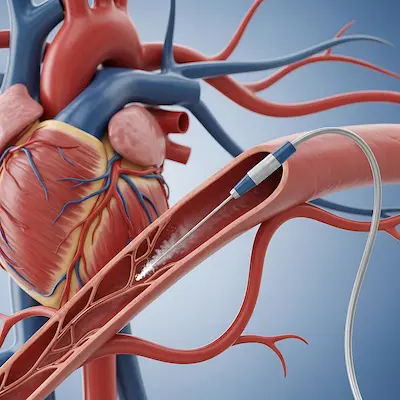
- Angioplasty: Used for coronary artery disease, not directly for RBBB.
- Medications and Lifestyle: Support heart health through prescribed medications and lifestyle changes.
Possibility of Reversal of Incomplete RBBB
- Reversal: Often does not revert completely. Focus on controlling contributing factors to prevent progression.
When to Consult a Cardiologist
- Specialist Evaluation: Important for personalized advice and follow-up.
Summary and Reassurance
- Reassurance: Incomplete RBBB is generally benign. Regular check-ups and a heart-healthy lifestyle are crucial.
Recommended next steps
Consult a Cardiologist
Answered 10/09/2025
0
0
More Cardiology Health Queries
View allIs Apple good for heart?
They're high in soluble fiber, which helps lower cholesterol. They also have polyphenols, which are linked to lower blood pressure and stroke risk.
read more![Doctor 1]()
![Doctor 2]()


Answered by 1 Apollo Doctors
I've been feeling really anxious ever since I lost my job last month. The anxiety seems to be affecting my heart rate too. It was usually under 90, but in the last 20 days, I've noticed it's been higher. I've recently managed to get my resting heart rate down to under 75 by starting brisk walking and taking an arjuna tablet once a day. However, I've been experiencing some chest pain on the left side during my walks, and my heart rate shoots up to 130. I just did an ECG test because of this. Can you take a look at my ECG report and let me know what might be going on and the best way to handle it?
start doing exercises, drink plenty of water
read more![Doctor 1]()
![Doctor 2]()
Answered by 1 Apollo Doctors
I'm trying to make sense of my Echo Report, and it's causing me a bit of concern. It mentions things like a normal LV with normal systolic function and no segmental wall motion abnormalities, which I think sounds good. However, what got my attention was the mention of mild PAH and a mild TR. I'm a bit worried if the fast heart rate during the test, which was likely due to my anxiety, might have affected the results and led to a possible misdiagnosis of PAH. I mean, I haven't really had any symptoms other than a brief episode of PVC and sometimes a slightly fast heart rate. My resting rate stays between 50-65 BPM. I'm hoping for a little clarity on whether these findings are something to be concerned about. Can fast heart rate really make a difference in diagnosis, or am I misunderstanding things here?
normal.
read more![Doctor 1]()
![Doctor 2]()
Answered by 1 Apollo Doctors
Health Articles for you
View all

Disclaimer: Answers on Apollo 247 are not intended to replace your doctor advice. Always seek help of a professional doctor in case of an medical emergency or ailment.