


Guide to Innovations In Orthopedic Surgery
Explore the cutting-edge innovations in orthopaedic surgery, from robot-assisted procedures and 3D printing to advanced biologics. Stay ahead of the curve with this comprehensive guide.

Written by Dr. Dhankecha Mayank Dineshbhai
Reviewed by Dr. Rohinipriyanka Pondugula MBBS
Last updated on 14th Jan, 2026
Introduction
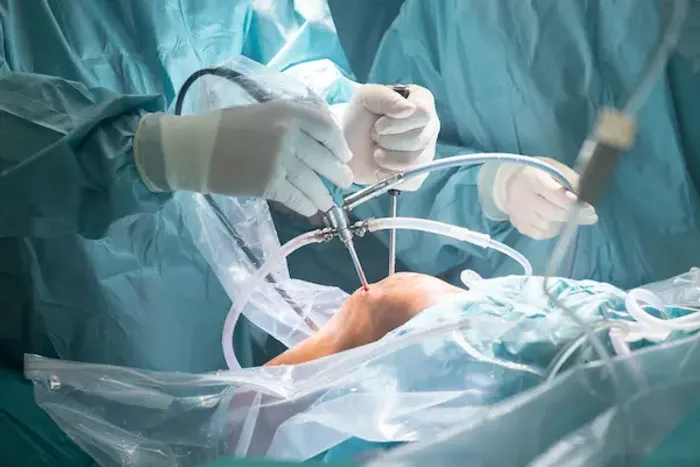
Orthopedic surgery is changing fast—and for patients, that’s good news. Today’s innovations blend precision engineering, digital tools, and regenerative science to make care more personal, less invasive, and more predictable. From robotic-assisted knee and hip replacement to 3D-printed, patient-specific implants, and from smart implants that stream your recovery data to your surgeon, to biologic options that may help your body heal itself—modern orthopedic surgery is evolving on many fronts. If you’re living with joint pain, a sports injury, or a chronic condition like osteoarthritis, understanding these innovations can help you make informed, confident choices.
In this guide, we’ll explain how leading-edge orthopedic surgery technologies work, what real-world evidence says about benefits and limits, and who may benefit most. We’ll explore robotics and navigation, 3D printing, smart implants, orthobiologics, outpatient surgery, infection prevention, and digital rehab—while offering practical questions to ask your care team. Along the way, you’ll find examples, emerging data, and a few pitfalls to avoid, all in plain language. Whether you’re preparing for surgery now or just exploring options, this overview can help you partner with your surgeon to choose the right innovation at the right time.
Why Innovation Matters in Orthopedic Surgery Today?
Innovation in orthopedic surgery focuses on solving three patient priorities: less pain, faster recovery, and longer-lasting results. The biggest shifts are about precision—placing implants more accurately, balancing soft tissues better, and customizing treatment to your anatomy and activity goals. Just as important is predictability: patients want fewer complications and fewer surprises. New tools like computer navigation, robotics, and 3D printing aim to increase
consistency in the operating room, while enhanced recovery protocols and tele-rehabilitation shorten downtime.
What “innovation” means for patients?
- Fewer hospital days: Outpatient joint replacement is now common for healthy candidates, supported by better
anesthesia, pain control, and early mobility. - Personalization: Patient-specific guides and implants designed from your CT/MRI; smart implants tuning rehab based
on real-time data. - Better decision support: AI helps spot fractures on X-rays and triage care more quickly, especially in busy emergency
settings.
How to evaluate new technologies safely?
- Ask about evidence: Does the innovation improve function, reduce complications, or cut costs? Some technologies
improve precision but have not yet shown superior long-term outcomes. - Surgeon experience matters: A skilled surgeon using familiar tools often outperforms a novice with the latest device.
Volume and training are strong predictors of results. - Fit to your goals: The best innovation is the one that supports your lifestyle, bone quality, and health status—not
necessarily the newest.
Consult a Top Orthopedic
Robotics and Computer-Assisted Orthopedic Surgery
Robotic-assisted and computer-navigated orthopedic surgery use preoperative imaging and intraoperative sensors to
help surgeons plan and execute procedures more precisely. In knee and hip replacement, a CT-based plan maps your
joint and creates a “digital twin.” In the operating room, robotic arms or handheld systems guide bone cuts within
predefined boundaries, often with haptic feedback that resists unintended motion.
Benefits, limits, and what the evidence shows
- Precision and alignment: Studies show robotics can improve component positioning and soft-tissue balance, which may
translate into smoother function early on - Early recovery and satisfaction: Some centers report faster functional milestones and fewer early outliers, but definitive
long-term superiority over conventional techniques remains under study. - Learning curve and cost: Robotics adds operative time initially; value depends on surgeon experience and institutional
efficiency. Not all patients or centers need a robot for excellent outcomes.
Who may benefit most and questions to ask
Complex anatomy (prior deformity, hardware) can benefit from navigation assistance.
Active patients may value precise soft-tissue balance for stability during sports.
Questions to ask:
- Why are you recommending robotics for me?
- How many robotic procedures have you performed?
- What outcomes (pain, function, complication rates) does your program track?
Unique insight: Robotics is as much a data project as a device. Programs that rigorously collect pre- and post-op functional data see the most benefit—they iterate faster and individualize care based on what actually works in their population.
3D Printing and Patient-Specific Implants
3D printing (additive manufacturing) enables patient-specific surgical guides and implants shaped to your anatomy. For
complex reconstruction—such as pelvic tumors, severe acetabular defects, or revision surgeries—custom implants can
improve fit and fixation. In routine arthroplasty, patient-specific cutting blocks can streamline surgery and reduce
instrument trays.
Materials, fit, and the FDA’s guardrails
- Porous titanium and tantalum structures mimic cancellous bone, encouraging biologic ingrowth and stable fixation .
- FDA guidance requires robust design controls, materials validation, and documentation for patient-matched devices,
emphasizing safety and reliability . - Benefits: Better fit, potentially shorter OR time, less bone removal in selected cases.
- Challenges: Lead times, cost, and the need for high-quality imaging; not every case warrants customization.
Real-world examples and where 3D printing shines
- Custom acetabular cups in complex hip revisions with severe bone loss show improved stability and early outcomes in
case series . - Personalized jigs in knee replacement can reduce cutting errors and instrument burden; functional advantages over
standard techniques are mixed and center-dependent. - Trauma and spine: 3D-printed models help plan difficult deformity corrections and rehearsals, benefiting both surgeons
and patients with clearer informed consent.
Unique insight: Ask whether the “custom” offering is truly patient-specific or simply a limited size expansion. True personalization starts at imaging and ends at validated, fit-for-purpose device testing—details your team should be able to explain clearly.
Smart Implants, Sensors, and Remote Monitoring
Smart implants embed sensors that measure metrics like step count, range of motion, and activity patterns after joint
replacement. Some systems pair with wearable devices, enabling continuous, at‑home monitoring with secure data
sharing.
What data your joint can now send home
- Daily steps and cadence, knee flexion/extension, and gait symmetry are commonly tracked.
- Surgeons use trends to identify early warning signs—plateaus in motion, decreasing activity, or asymmetry that may
signal stiffness, pain, or implant issues.
Early results and how clinicians use these insights
- Early clinical reports suggest sensor data correlates with rehabilitation milestones and can support earlier
interventions—such as targeted physical therapy or scar mobilization—to avoid stiffness and manipulation under
anesthesia [HSS summaries; manufacturer-sponsored early studies]. - Patient engagement improves when people can “see” their recovery path and compare progress to anonymized benchmarks.
Privacy, consent, and opting in or out
- Participation is voluntary. Data are de-identified and protected under medical privacy laws; patients can revoke access.
- Clarify what is collected, who sees it, how long it’s stored, and how it informs your care plan.
Unique insight: Smart implants are most valuable when paired with responsive care teams. The tech is a spotlight; it’s the rapid coaching or clinical action—often via virtual visits—that changes outcomes.
Orthobiologics and Tissue Regeneration
Orthobiologics leverage the body’s own healing potential. Options include platelet-rich plasma (PRP), bone marrow
aspirate concentrate (BMAC), and cartilage restoration procedures. These are used for tendinopathies, early
osteoarthritis, and focal cartilage lesions, with the goal of pain relief and function improvement.
What the research says—and where it’s still evolving
- PRP for knee osteoarthritis shows modest improvements in pain and function at 6–12 months compared with some
injectables, though protocols vary widely and not all studies agree. - Tendon conditions (tennis elbow, plantar fasciitis): PRP can help in selected cases after failed conservative care, but
benefits depend on preparation and technique. - Cartilage repair (microfracture with biologic augmentation, osteochondral grafts, cell-based techniques): promising for
focal lesions in younger, active patients; not a cure for widespread arthritis.
Safety, costs, and expectations
- Safety: Autologous (your own) products reduce immunologic risks; infection risk is low when performed under sterile
conditions. - Costs: Often self-pay. Ask for transparent pricing and realistic outcome timelines.
- Expectations: Orthobiologics may delay, not eliminate, the need for surgery. A structured rehab program is crucial for
success.
If symptoms persist beyond two weeks despite rest, activity modification, and basic care, consult a doctor online with Apollo 24|7 for further evaluation. For some patients, lab tests like vitamin D or HbA1c help optimize bone and soft-tissue healing; Apollo 24|7 offers a convenient home collection for tests like vitamin D or HbA1c.
Unique insight: Protocol discipline matters more than branding. Success with PRP or BMAC hinges on correct diagnosis, precise targeting, post‑procedure loading progressions, and consistent follow-up.
Faster, Safer Recovery: Outpatient Surgery and Enhanced Protocols
Same-day joint replacement (outpatient total joint arthroplasty) is now mainstream for healthy candidates. Enhanced
Recovery After Surgery (ERAS) protocols combine patient education, optimized nutrition, multimodal analgesia,
regional anesthesia, and early mobilization.
Who qualifies for outpatient surgery?
- Generally healthier adults with controlled medical conditions, strong home support, and a commitment to
prehab/rehab. Selection is key. - Evidence shows comparable safety to inpatient care for the right patients, with reduced costs and high satisfaction .
Opioid-sparing pain control and regional anesthesia
- Multimodal regimens pair acetaminophen, NSAIDs, nerve blocks, local anesthetics, and non-opioid adjuncts to reduce
opioid needs while controlling pain. - Adductor canal and IPACK blocks can ease knee pain while preserving motor function, promoting early walking.
Infection prevention advances you should know
- Standard bundles (nasal decolonization, skin prep, antibiotic timing) plus adjuncts like antiseptic drapes and meticulous room protocols reduce risk.
- Optimizing blood sugar, treating skin conditions, and smoking cessation further protect against infection.
Unique insight: Expect “prehabilitation”—strength, flexibility, and education before surgery—to be part of the plan. The best outcomes come from work you do before you ever reach the operating room.
If your condition does not improve after following your surgeon’s recovery plan, book a physical visit to a doctor with Apollo 24|7 to reassess pain, swelling, or wound concerns promptly.
Digital Tools: AI, Imaging, AR/VR, and Tele‑Rehabilitation
AI in orthopedics is already helping spot fractures on radiographs with expert-level performance in some studies, serving
as a second reader to reduce misses during busy shifts. Advanced imaging like EOS (low‑dose, standing, full-body) improves alignment assessments in spine and lower limb deformities. Augmented reality (AR) overlays guide screw placement and implant alignment during complex cases, while virtual reality (VR) boosts surgeon training and patient education.
AI for fracture detection and planning
- Triage support: AI can flag likely fractures for faster review, accelerating care in emergency departments.
- Preoperative planning: AI tools are emerging to predict implant sizes, optimize alignment targets, and simulate
outcomes.
AR/VR in the OR and training
- AR headsets or displays project navigational cues in real time, potentially reducing radiation and improving accuracy in
spine and trauma procedures. - VR training shortens learning curves by allowing repeated, feedback-rich practice before live surgery.
Wearables and tele-physiotherapy after surgery
- Connected sensors track range of motion, step counts, and adherence, enabling tailored virtual rehab—especially
helpful for patients far from specialty centers. - For many, tele-rehab yields similar functional outcomes at lower cost and greater convenience when combined with
occasional in-person check-ins.
Unique insight: The winning digital programs aren’t “digital-only.” They blend virtual touchpoints with human
coaching and selective in-person visits—a hybrid model that meets patients where they are.
Conclusion
Orthopedic surgery is in a golden era of innovation, but the real goal remains simple: help you move better, hurt less, and get back to the life you love. Robotics and navigation improve surgical precision; 3D printing personalizes implants for challenging anatomy; smart sensors and tele-rehab keep your recovery on track at home. Orthobiologics may offer nonoperative or joint-sparing options for select patients, while enhanced recovery and outpatient protocols make the overall experience safer and faster.
As you weigh options, focus on fit, not flash. Ask your surgeon how a specific innovation will improve your odds of a great outcome given your anatomy, activity goals, and medical profile—and what data supports that choice. Consider the entire journey: prehab, anesthesia, pain control, infection prevention, and rehabilitation. That integrated plan matters as much as any single device.
If you’re dealing with persistent joint pain or considering surgery, consult a doctor online with Apollo 24|7 to discuss candidacy, risks, and next steps. Need pre-op labs or a bone health check? Apollo 24|7 offers a convenient home collection for tests like vitamin D or HbA1c. With the right team and the right innovations, orthopedic surgery can be safer, more personal, and more effective than ever.
Consult a Top Orthopedic
Consult a Top Orthopedic

Dr. Anil Pradeep Jadhav
Orthopaedician
23 Years • MBBS MS (Ortho)
Nashik
Apollo Hospitals Nashik, Nashik

(25+ Patients)

Dr. Susheel B
Orthopaedician
13 Years • MBBS, MS, Ortho Fellowship in Trauma ( Germany) Fellowship in Arthroscopy and Arthroplasty ( Switzerland)
Bengaluru
Apollo Medical Center, Marathahalli, Bengaluru

Prof. Dr. Jambu N
Orthopaedician
23 Years • MBBS, M.S Ortho, FRCS ,FACS
Chennai
Apollo Speciality Hospitals Vanagaram, Chennai
(150+ Patients)

Dr. Sundar Kumar B
Orthopaedician
23 Years • MBBS, MS ORTHO, FTRS(GERMANY)
Chennai
Apollo Clinic, Velachery, Chennai

Dr. Santhosh Kumar Raju K
Orthopaedician
8 Years • MBBS,MS Orthopaedics
Bengaluru
Apollo Hospitals Bannerghatta Road, Bengaluru
Consult a Top Orthopedic
Dr. Anil Pradeep Jadhav
Orthopaedician
23 Years • MBBS MS (Ortho)
Nashik
Apollo Hospitals Nashik, Nashik
(25+ Patients)
Dr. Susheel B
Orthopaedician
13 Years • MBBS, MS, Ortho Fellowship in Trauma ( Germany) Fellowship in Arthroscopy and Arthroplasty ( Switzerland)
Bengaluru
Apollo Medical Center, Marathahalli, Bengaluru
Prof. Dr. Jambu N
Orthopaedician
23 Years • MBBS, M.S Ortho, FRCS ,FACS
Chennai
Apollo Speciality Hospitals Vanagaram, Chennai
(150+ Patients)
Dr. Sundar Kumar B
Orthopaedician
23 Years • MBBS, MS ORTHO, FTRS(GERMANY)
Chennai
Apollo Clinic, Velachery, Chennai
Dr. Santhosh Kumar Raju K
Orthopaedician
8 Years • MBBS,MS Orthopaedics
Bengaluru
Apollo Hospitals Bannerghatta Road, Bengaluru
More articles from General Medical Consultation

 Benefits and How to Practice It.webp)


Frequently Asked Questions
Is robotic-assisted knee replacement better than traditional surgery?
Robotic systems can improve implant alignment and soft-tissue balance, which may support smoother early recovery. Long-term superiority over traditional techniques is still being studied; surgeon experience remains critical. Consider this if you’re researching robotic-assisted knee replacement outcomes
Are 3D-printed orthopedic implants safe?
Yes, when produced under FDA guidance and rigorous testing. 3D-printed, patient-specific implants are most useful in complex reconstructions. Ask your team how patient-specific instrumentation in arthroplasty applies to your case .
What are smart implants, and do I need one?
Smart implants embed sensors to monitor activity and knee motion, enabling remote patient monitoring after surgery. They may help tailor rehab and catch issues early. They’re optional; discuss benefits, data use, and privacy before opting in.
Do orthobiologics like PRP replace joint replacement?
No. PRP and related biologics can reduce pain and improve function in some conditions (e.g., early knee OA, tendinopathy), potentially delaying surgery. Results vary; align expectations and consider costs. Search terms to explore: orthobiologics PRP vs hyaluronic acid.
Is outpatient total joint arthroplasty safe?
For carefully selected patients, outpatient total joint arthroplasty safety is comparable to inpatient care, with lower costs and high satisfaction. Selection, home support, and adherence to ERAS protocols are key. If you’re unsure, book a physical visit with Apollo 24|7 to review your medical readiness.